

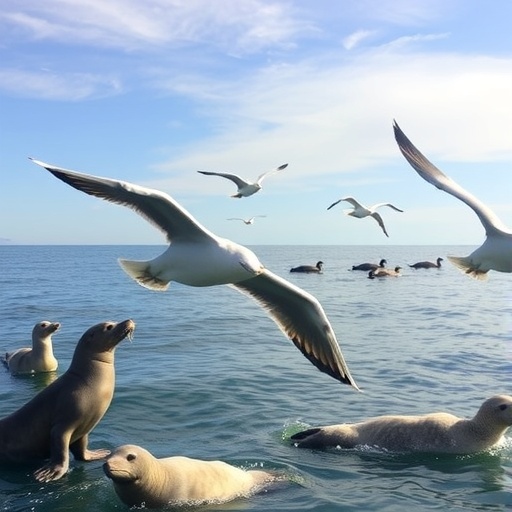
In 1996, the highly pathogenic avian influenza virus H5N1 emerged on a poultry farm in Asia, with little indication of the profound global impact it would eventually have. Over the course of three decades, this formidable virus has expanded its reach, infiltrating every continent except Oceania. It has led to the infection and decimation of an estimated 400 million poultry worldwide, while also spilling over into wild mammal populations, including tens of thousands of elephant seals and sea lions. Human cases, though relatively limited at approximately 1,000, highlight the zoonotic potential of this evolving pathogen, which continues to challenge both animal and public health sectors.
Pinnipeds—marine mammals such as seals and sea lions—have experienced an unprecedented mortality rate due to H5N1 outbreaks. This alarming trend raises significant conservation concerns, especially considering the ecological roles these animals play in coastal ecosystems. A comprehensive study conducted by researchers at the University of California, Davis, has recently synthesized the worldwide effects of high pathogenicity avian influenza on pinniped populations, drawing attention to the urgent need for robust monitoring frameworks and targeted intervention strategies to mitigate the virus’s impact on these vulnerable marine species.
Published in the prestigious journal Philosophical Transactions B as part of the themed issue on managing infectious marine diseases, this study provides critical insights into how H5N1 has devastated pinniped communities across South America, particularly within Peru, Chile, Brazil, Uruguay, and Argentina. In these regions, documented outbreaks have resulted in the deaths of over 36,000 South American sea lions, 17,400 southern elephant seals, and approximately 1,000 South American fur seals. These figures underscore the virus’s catastrophic effects on marine biodiversity and the pressing need for coordinated conservation efforts.
Christine Johnson, director of the Institute for Pandemic Insights at the UC Davis School of Veterinary Medicine, emphasized the complex challenges posed by influenza viruses. “Influenza is constantly evolving,” she explained, underscoring the difficulty of controlling a virus that mutates and circulates across multiple species reservoirs. This dynamic nature complicates efforts to predict outbreaks and necessitates continuous surveillance and rapid response capabilities to protect both wildlife and human health.
A compelling illustration of the virus’s threat came in 2023 when southern elephant seals in Argentina suffered a massive H5N1 outbreak. Veterinarian and coauthor Marcela Uhart, affiliated with the UC Davis Karen C. Drayer Wildlife Health Center, documented the severity of the event, describing southern elephant seals as a “canary in the coal mine,” signaling broader risks to pinnipeds globally. Such sentinel events highlight the interconnectedness of marine and terrestrial ecosystems and the potential for emerging diseases to cascade across species boundaries.
The early detection of H5N1 in northern elephant seals along the California coast in February 2026 marks a crucial milestone in wildlife disease surveillance. This first documented case of the virus in a marine mammal in the state was achieved through proactive and routine monitoring led by UC Davis, the Año Nuevo Natural Reserve, and collaborators from UC Santa Cruz. Starting in late 2025, intensified surveys of affected seabird populations and vigilant health assessments during elephant seal breeding seasons enabled rapid identification and response, exemplifying best practices for managing infectious disease outbreaks in free-ranging wildlife populations.
Key recommendations emanating from this research emphasize the fundamental role of sustained wildlife health surveillance long before outbreaks occur. Continuous monitoring, coupled with enhanced interagency communication networks, can facilitate early detection of viral circulations, allowing interventions to be deployed swiftly to avert large-scale mortality events. The integration of public health expertise and social science perspectives is also highlighted as vital to managing zoonotic threats and educating communities who are at the interface of wildlife and human activity.
The study advocates for the normalization of wildlife health assessments within broader conservation programs, stressing innovation in non-invasive monitoring technologies. Advanced tools such as auditory and thermal imaging, combined with satellite data, are being developed by interdisciplinary teams at the UC Davis Institute for Pandemic Insights to detect subtle changes in animal behavior or physiology that may signal emerging infections. These technological interventions could revolutionize our ability to anticipate tipping points that precipitate outbreaks and enhance ecological surveillance.
On the policy front, the authors call for decisive actions and international cooperation to tackle the root drivers of avian influenza emergence, including habitat destruction, agricultural intensification, and global trade. They stress that while avian influenza poses a significant threat, it is only one among many mounting stressors—such as climate change, food scarcity, and habitat fragmentation—that together exacerbate the vulnerability of marine mammals. Particularly at risk are species with small population sizes, whose genetic diversity and resilience are intrinsically limited.
Elizabeth Ashley, a graduate student and first author of the study, emphasized the urgent need for ecological epidemiology to discern transmission pathways in coastal zones. “Understanding how H5N1 spreads in these complex ecosystems is paramount for safeguarding at-risk marine mammals,” she stated. Such comprehension will inform targeted interventions and enable the development of management strategies optimized for the dynamic and multifaceted nature of viral transmission in marine environments.
Collaborations across governmental agencies, academic institutions, and conservation organizations underpin this work. Contributions from experts like Ralph Vanstreels, Michelle Barbieri, Wendy Puryear, Frances Gulland, and Cara Field lend multidisciplinary perspectives that enrich the understanding of disease dynamics and conservation biology. This consortium embodies the integrative approach needed to address the intricate challenges posed by infectious marine diseases now threatening biodiversity worldwide.
The ongoing pandemic of H5N1 highlights the critical intersection of wildlife conservation, human health, and ecosystem stability. As the virus continues to evolve and infiltrate new hosts, the imperative to establish resilient wildlife health infrastructures and adopt adaptive, evidence-based management practices grows ever more urgent. This research sets a pivotal benchmark in marine disease ecology, propelling forward our capacity to recognize, respond to, and ultimately mitigate the emergent threats afflicting our planet’s vulnerable pinniped populations.
Subject of Research: Impacts of highly pathogenic avian influenza (H5N1) on pinniped conservation and strategies for monitoring and managing infectious diseases in marine mammals.
Article Title: High pathogenicity avian influenza in pinniped conservation
News Publication Date: March 5, 2026
Web References:
Image Credits: Ralph Vanstreels/UC Davis
Keywords: Influenza, Biodiversity conservation, Endangered species, Pinnipeds, Marine life


