


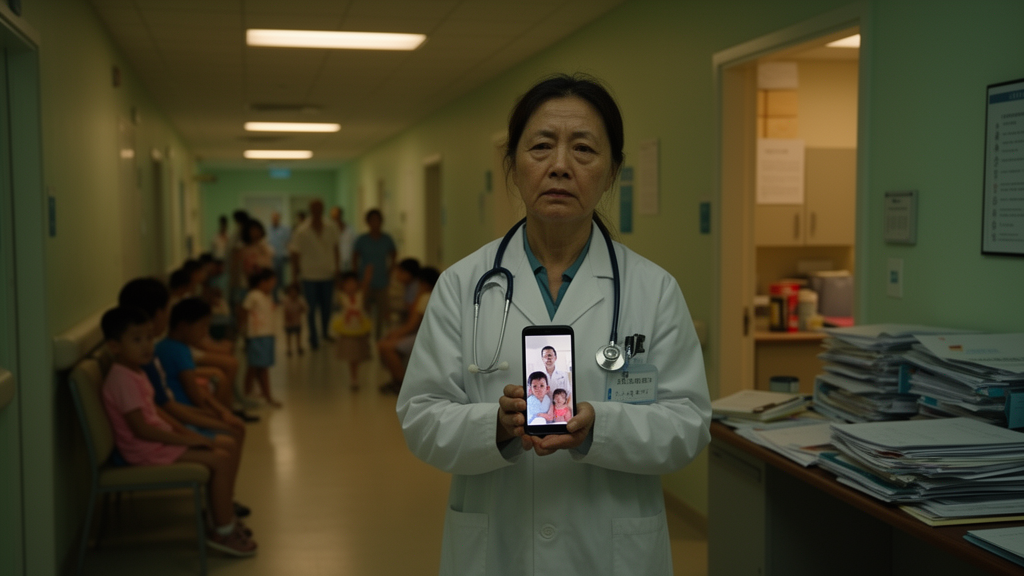
China’s persistent shortage and uneven distribution of paediatricians have made keeping doctors in child health a pressing workforce question, but a new qualitative study suggests that recruiting people into paediatrics is only half of the problem. The research, conducted in Guangdong province between July and August 2024, explored how paediatricians and paediatric trainees experience their work and how those experiences feed into career decisions, with particular attention to residents’ longer-term intentions and to doctors who had already left paediatric clinical roles.
The team carried out semi-structured interviews with 15 participants: eight paediatric residents, five former paediatricians no longer working in paediatric clinical care, and two practising paediatricians. The two practising doctors provided contextual accounts of current practice rather than serving as a separate comparison group. Interviews were analysed with a team-based codebook approach to thematic analysis, informed by Braun and Clarke’s six-phase framework, allowing the researchers to distil recurring patterns across the accounts.
Six themes emerged from the interviews. Participants described the professional meaning and emotional strain of paediatric work, the assessment and communication demands of caring for children within families, and the heavy workload that constrained rest and family life. They also reported that rewards and support did not consistently match the demands of the job, that the certainty and enactment of career decisions varied widely between individuals, and that they had concrete proposals for changes that might improve retention.
One of the study’s most striking observations concerns paediatric residents. Some participants distinguished between simply completing their residency and actually deciding whether to remain in paediatrics over the long term, indicating that finishing training does not by itself settle the question of staying in the specialty. This separation between programme completion and career commitment suggests that the years immediately after residency may be a critical window for retention efforts.
The accounts of former paediatricians added a retrospective dimension to the findings. These doctors described transitions away from paediatric clinical work, and their narratives linked those changes to sustained workload, conflict between work and family life, and limited opportunities for career development. Because these are self-reported accounts from a small qualitative sample, they illuminate perceived reasons for leaving rather than establishing statistical causes, but they align closely with the pressures described by those still in training.
Participants did not stop at describing problems; they proposed improvements aimed at strengthening retention. Their suggestions centred on remuneration, staffing levels, scheduling arrangements and broader organisational support. Taken together, these proposals point to working conditions after entry into the specialty as a decisive factor, rather than recruitment alone.
The authors conclude that recruitment and longer-term retention should be addressed together in paediatric workforce planning. In their view, attention to post-entry working conditions, particularly staffing, scheduling, remuneration and opportunities for professional development, should accompany recruitment initiatives if China is to build a stable paediatric workforce. The findings come from a single province and a small interview sample, so they are best read as a detailed picture of perceived experiences rather than a national measurement, yet they offer concrete direction for policymakers weighing where to intervene.
For a health system grappling with shortages and maldistribution of child health doctors, the study’s central message is that the pipeline into paediatrics and the conditions that keep people in it are inseparable. Doctors who feel that rewards, rest, family life and career prospects do not match the demands of the work may complete their training and still walk away, and the interviews suggest that reversing that pattern will require changes that reach well beyond the recruitment stage.
Subject of Research: A qualitative interview study of paediatric residents, former paediatricians and practising paediatricians in Guangdong, China, examining occupational experiences and career decisions relevant to workforce retention.
Article Title: Occupational experiences and career decisions among paediatricians: a qualitative study
Article References: Jia, M., Lan, Y., Gan, L., Liu, Y., Yu, X., & Xia, O. (2026). Occupational experiences and career decisions among paediatricians: a qualitative study. BMC Health Services Research. https://doi.org/10.1186/s12913-026-15864-6
Image Credits: AI Generated
DOI: 10.1186/s12913-026-15864-6
Keywords: paediatrics, workforce retention, qualitative research, China, residency training, work-life conflict, health workforce, career decisions, Guangdong, BMC Health Services Research, Occupational, experiences
Cite Scienmag News
Harold Sullivan. (October 26, 2026). Workload, family conflict and career limits shape paediatricians’ decisions in China. Scienmag. https://scienmag.com/workload-family-conflict-and-career-limits-shape-paediatricians-decisions-in-china/
Harold Sullivan. "Workload, family conflict and career limits shape paediatricians’ decisions in China." Scienmag, 26 October 2026, https://scienmag.com/workload-family-conflict-and-career-limits-shape-paediatricians-decisions-in-china/. Accessed 26 October 2026.
Harold Sullivan. "Workload, family conflict and career limits shape paediatricians’ decisions in China." Scienmag. October 26, 2026. https://scienmag.com/workload-family-conflict-and-career-limits-shape-paediatricians-decisions-in-china/


