

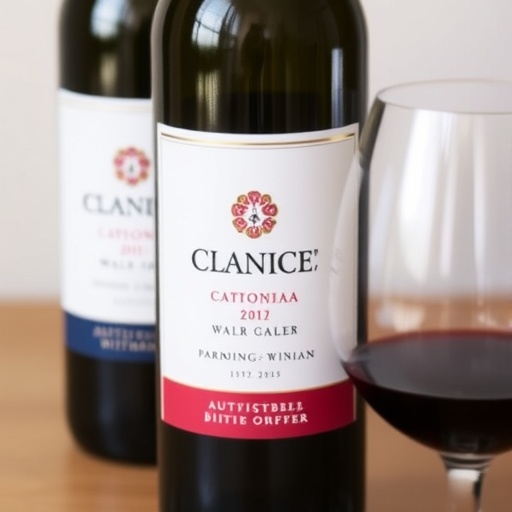
In a groundbreaking study that promises to reshape the marketing strategies within the wine industry, researchers from Washington State University and Auburn University have uncovered compelling evidence that emphasizing women’s ownership in wineries can significantly influence the purchasing decisions of women consumers, who constitute the majority demographic in the U.S. wine market. The study elucidates that when wine labels proudly proclaim “woman-made” or “proudly made by a woman winemaker” and incorporate feminine visual cues, such as floral designs, women shoppers demonstrate an increased propensity to purchase these products and exhibit a readiness to pay premium prices.
The significance of these findings is underscored by the statistic that women account for roughly 59% of all wine purchases in the United States, positioning them as the dominant force driving sales and preferences within the industry. Dr. Christina Chi, a coauthor of the study and professor at WSU’s Carson College of Business, highlights how the winemaker’s identity is an integral component of the cultural product that wine represents, influencing brand perception and ultimately consumer behavior.
Despite the promising market potential, female winemakers remain underrepresented in their visibility on wine packaging, often omitting their names or any reference to their gender. The study suggests this reticence stems from apprehensions about bias or discrimination in a traditionally male-dominated field. However, the new research advocates for greater transparency and visibility of women’s ownership as a powerful marketing tool, encouraging women winemakers to confidently display their gender affiliation as a strategic advantage rather than a vulnerability.
Methodologically, the research deployed an experimental approach, engaging over one thousand women consumers across the United States. The experiment involved a three-phase study centered around a fabricated Columbia Valley red table wine, systematically manipulating label design and marketing messages to observe variations in purchase intent and willingness to pay. The initial phase reaffirmed previous studies, demonstrating that feminine visual elements like flower bouquets on wine labels yield higher purchase intentions and an increase in the average price consumers are willing to pay—approximately $3.50 more per bottle—compared to masculine-themed labels.
In the subsequent experimental phase, researchers incorporated explicit marketing statements attesting to women’s ownership and winemaker involvement. This augmented emphasis on female proprietorship, coupled with feminine artwork, resulted in an even stronger purchase intent among women consumers. These signals of gender identity effectively communicated authenticity and relatability, fostering a sense of trust and preference towards the showcased wines.
Counterintuitively, the study’s final phase introduced photographs of women winemakers alongside the wine labels. Rather than boosting purchase intent, the inclusion of personal imagery produced a nuanced effect: women consumers became less inclined to buy feminine-label wines featuring female winemaker photos. Researchers hypothesize that consumer identification with the specific individuals may have influenced these outcomes, potentially triggering subjective biases that outweighed the generalized appeal of the “woman-made” narrative.
Interestingly, the trials also investigated wines with traditionally masculine labels, revealing that even in such contexts, the addition of a “woman-made” statement elevated appeal among women consumers. When photographs of female winemakers accompanied masculine labels, consumers demonstrated a willingness to pay an extra $3 per bottle. This nuanced dynamic suggests that women’s ownership disclosure transcends visual gender signaling and can effectively augment the marketability of wines regardless of label style.
The implications of these findings extend beyond marketing strategies, underscoring the broader societal impact of elevating women’s roles within the wine industry. Dr. Demi Deng of Auburn University, first author of the study and former sommelier, articulates a vision where increased visibility of women winemakers not only bolsters commercial success but also furthers recognition of women’s contributions to an industry where they comprise approximately 18% of winemakers.
This research navigates complex intersections between consumer psychology, gender studies, and the cultural economics of wine. It spotlights how gendered cues, both visual and textual, mediate perceptions and purchasing decisions in a market historically shaped by tradition and entrenched gender roles. By harnessing experimental rigor, the study delivers actionable insights for winery owners and marketers aiming to capitalize on the preferences of a predominantly female consumer base.
Moreover, the findings champion a shift in narrative control, empowering women winemakers to foreground their identities confidently. This strategy not only aligns with increasing consumer demand for authenticity and socially conscious branding but also challenges longstanding industry norms that have marginalized women’s visibility.
Perhaps most compelling is the clarity with which the research reveals the monetary value of gender transparency in wine marketing. The willingness of consumers to pay higher prices for wines labeled with feminist cues and women’s ownership declarations signals a market ripe for innovative branding strategies. These insights equip industry stakeholders with empirical support for revising product labels, promotional materials, and retail presentations to harness the purchasing power of women.
The study also opens pathways for future research, particularly exploring the interplay of personal identification and broader gendered messaging, as evidenced by the divergent effects seen when consumer responses encountered photographs of women winemakers. Understanding these subtleties may guide more refined, personalized marketing that resonates authentically with diverse consumer segments.
In essence, this investigation elevates the dialogue surrounding gender and commerce in the wine industry, offering a robust evidence base for amplifying women’s ownership as a catalyst for consumer engagement and financial performance. By integrating such gender-informed marketing techniques, wineries can not only enhance their brand appeal but also contribute to a more equitable industry landscape that celebrates women’s roles both behind the bottle and on the label.
Subject of Research:
People
Article Title:
Her wine, her way: How women’s ownership disclosure in wine marketing shapes women consumers’ choices
News Publication Date:
6-Feb-2026
Web References:
http://dx.doi.org/10.1016/j.ijhm.2026.104596
References:
Chi, C., Deng, D., Cai, R., & Harrington, R. (2026). Her wine, her way: How women’s ownership disclosure in wine marketing shapes women consumers’ choices. International Journal of Hospitality Management. DOI: 10.1016/j.ijhm.2026.104596
Keywords:
Wine marketing, women winemakers, consumer behavior, gender cues, purchase intention, wine industry, experimental study, women ownership disclosure


