


For nearly two decades, behavioural ecologists have been fascinated by the fact that animals are not simply bundles of independent traits. A bold individual tends to be an aggressive one; a curious animal often takes more risks. These consistent suites of behaviour, known as behavioural syndromes or animal personalities, have profound implications: they can constrain how populations evolve, channel evolutionary trajectories down particular paths, and even determine which individuals survive and reproduce. But a fundamental puzzle has remained largely unsolved. If behavioural correlations are so important, why do they weaken, and sometimes vanish, as animals grow older? A new study of field crickets, published in the journal Heredity, provides one of the most detailed answers yet, showing that the breakdown of behavioural correlations in later life is not the product of any single force but the combined result of natural selection and genetic variation in how behaviour changes with age.
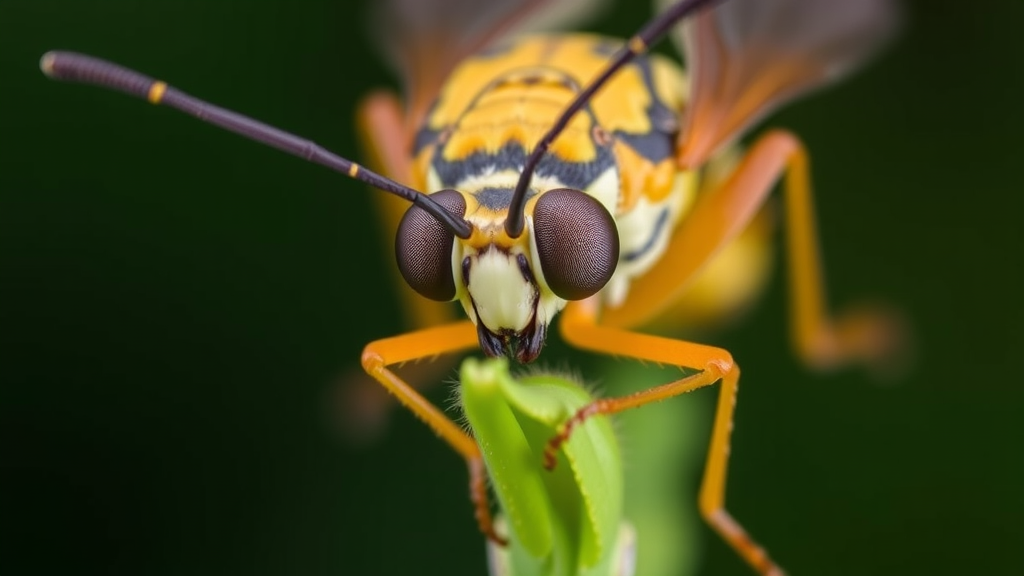
The research, conducted by Chang S. Han of Kyung Hee University and LMU Munich, Cristina Tuni of LMU Munich and the University of Turin, and Niels J. Dingemanse of the University of Turin, focused on male two-spotted field crickets, Gryllus bimaculatus, drawn from a pedigreed laboratory population. The pedigree is crucial. Because the relatedness of every individual in the population is known, the researchers could apply quantitative genetic techniques, including animal model analyses, to separate the genetic contribution to behaviour from environmental effects. This allowed them to ask not merely whether the correlation between aggression and exploration declines with age, but whether the genetic underpinning of that correlation does too, and if so, why.
The behaviours in question are staples of personality research. Aggression was measured through staged contests in which males fought one another, with researchers scoring the intensity and outcome of each interaction. Exploration was assessed by observing how readily individuals moved through and investigated novel environments. Both are labile traits, meaning they can change from moment to moment, yet individuals differ consistently from one another in their typical expression. In this population, more aggressive males also tended to be more exploratory, producing a positive among-individual correlation of the kind documented across fishes, birds, mammals and insects, and central to the pace-of-life syndrome framework, which links behavioural types to differences in growth, reproduction and lifespan.
The study’s central finding is that this positive correlation, robust across the nymphal and young adult stages, steadily eroded as males aged through adulthood. At first glance, this pattern might suggest a simple developmental story: perhaps the developmental processes that synchronise aggression and exploration early in life simply dissolve over time. But the quantitative genetic analysis revealed something more intricate. The genetic correlation between the two behaviours, an estimate of the extent to which the same genes influence both traits, followed a parallel trajectory, remaining strong in early stages and weakening significantly in older adults. Crucially, the researchers found no evidence that short-term permanent environmental correlations were responsible for the observed age-related change. The similarity between the among-individual and genetic patterns pointed instead to causes operating at the level of genes and selection.
The first such cause is survival selection, a form of natural selection in which an individual’s phenotype determines whether it lives long enough to appear in the older age classes. In this population, selection at the young adult stage tended to favour less explorative males, meaning that highly exploratory individuals were disproportionately likely to die before reaching later ages. Because exploration was genetically linked to aggression, the selective removal of certain exploratory genotypes dragged the aggression-exploration correlation along with it. As the composition of surviving genotypes shifted with age, the tight coupling between the two behaviours weakened. This is a mechanism familiar from evolutionary genetics: selection on one trait can reshape the genetic architecture of correlated traits, and when selection is age-specific, that reshaping unfolds along the lifespan.
The second mechanism is arguably more surprising: genetic variation in age-related behavioural plasticity, sometimes described through genotype-by-age interactions. Different genotypes, the researchers found, do not all change their exploratory behaviour at the same rate as they age. Some genotypes maintain high exploration into old age, while others decline earlier or follow entirely different trajectories. This heritable variation in the age-specific expression of exploration meant that the genetic relationships among individuals were not fixed across the lifespan. As genotypes diverged in their ageing patterns, the genetic correlation between aggression and exploration diminished, independently of whether any individual survived or died. In other words, the genetic architecture of behaviour is itself dynamic, and genes that bind two traits together at one age may loosen their grip at another.
The significance of these findings extends well beyond crickets. Behavioural syndromes are widely regarded as evolutionary constraints: when the same genes influence multiple traits, selection cannot freely optimise one trait without dragging the other along. This idea has been formalised in models showing that behavioural correlations can slow or redirect adaptive evolution, and empirical work in wild birds, marmots, fishes and insects has repeatedly documented heritable correlations among personality traits. Yet most such studies capture a snapshot, typically of adult animals of unspecified or unremarked age. The new results warn that such snapshots may be misleading. A genetic correlation measured in young adults may overstate the constraint operating in older individuals, and predictions of evolutionary response that ignore age structure may therefore be systematically wrong.
The study also connects to a broader literature on the evolutionary genetics of ageing. Research on wild passerine birds, swans, houbara bustards and other organisms has shown that genetic variances and covariances of traits can change with age, consistent with theoretical predictions from mutation-accumulation and antagonistic pleiotropy theories of senescence. Previous work, including studies reporting that strong genetic correlations underlying behavioural syndromes disappear during development through genotype-age interactions, hinted at the kind of dynamics now documented in crickets. What distinguishes the new research is its explicit attempt to weigh competing mechanisms against one another within a single pedigreed population. By jointly estimating genetic correlations, age-related plasticity and survival selection, the authors demonstrated that age-related change in behavioural architecture is a multi-causal phenomenon, produced by both the selective sorting of genotypes and the age-dependent expression of behaviour within genotypes.
For evolutionary biologists, the practical message is that age must enter the models. Quantitative geneticists have developed powerful tools, notably the animal model, to partition phenotypic variance into additive genetic and environmental components, and these tools can now be extended to ask how the entire genetic covariance matrix, often abbreviated as the G-matrix, transforms across the lifespan. The cricket results suggest that the G-matrix is not a static property of a population but a moving target, reshaped continuously by mortality and by the plastic, genotype-specific unfolding of behaviour over time. Studies of morphological integration and developmental modularity have made similar arguments for structural traits; this work brings labile behavioural traits squarely into that conversation.
For anyone who has watched a young animal grow calmer, slower or more predictable with age, the findings offer a mechanistic explanation grounded in genetics and selection. The personalities we observe are not engraved once at birth and fixed forever; they are the output of genes whose effects shift as organisms age, filtered by the unforgiving arithmetic of survival. As highly exploratory crickets are weeded out and as different genotypes age along different behavioural paths, the once-tight bonds between boldness and aggression loosen. What looks like the mellowing of old age is, at the genetic level, a population’s architecture being rewritten. Understanding that rewriting, the authors argue, is essential if we hope to predict how animal populations will respond to selection in a changing world, one behavioural correlation at a time.
Subject of Research: Age-related changes in genetic correlations between aggression and exploration in male field crickets
Article Title: Selection and genetic variation in age-related plasticity drive the erosion of among-individual behavioural correlations in later life
Article References: Han, C. S., Tuni, C., & Dingemanse, N. J. (2026). Selection and genetic variation in age-related plasticity drive the erosion of among-individual behavioural correlations in later life. Heredity. https://doi.org/10.1038/s41437-026-00884-z
Image Credits: AI Generated
DOI: 10.1038/s41437-026-00884-z
Keywords: behavioural syndromes, animal personality, genetic correlation, age-related plasticity, survival selection, genotype-by-age interactions, quantitative genetics, field crickets, Gryllus bimaculatus, pace-of-life syndrome, aggression, exploration
Cite Scienmag News
Juliet Wilcox. (September 12, 2026). Why Personality Links Fade with Age: Cricket Study Reveals Genetics and Survival Reshape Behaviour. Scienmag. https://scienmag.com/why-personality-links-fade-with-age-cricket-study-reveals-genetics-and-survival-reshape-behaviour/
Juliet Wilcox. "Why Personality Links Fade with Age: Cricket Study Reveals Genetics and Survival Reshape Behaviour." Scienmag, 12 September 2026, https://scienmag.com/why-personality-links-fade-with-age-cricket-study-reveals-genetics-and-survival-reshape-behaviour/. Accessed 5 October 2026.
Juliet Wilcox. "Why Personality Links Fade with Age: Cricket Study Reveals Genetics and Survival Reshape Behaviour." Scienmag. September 12, 2026. https://scienmag.com/why-personality-links-fade-with-age-cricket-study-reveals-genetics-and-survival-reshape-behaviour/


