


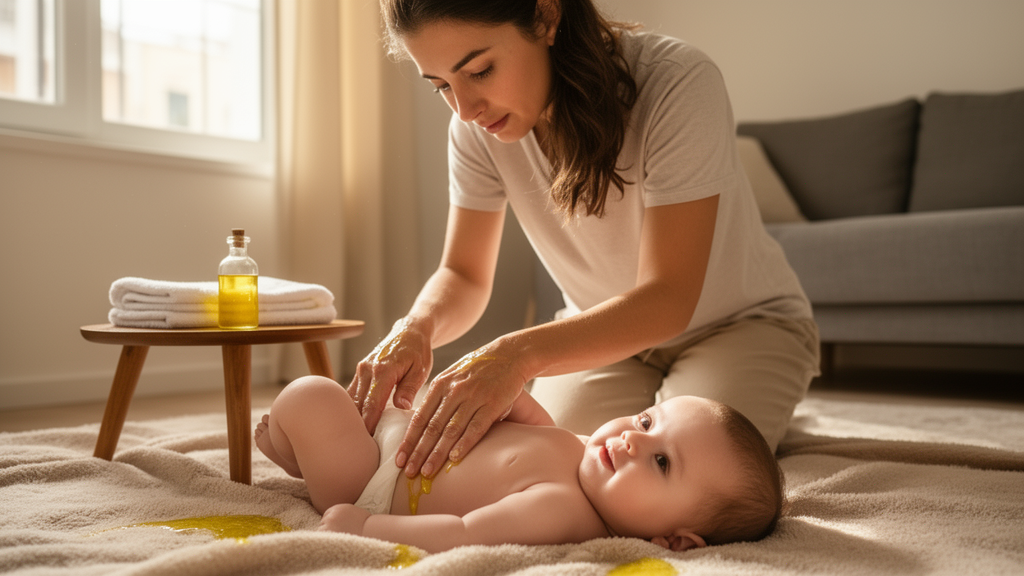
Infant massage is one of humanity’s oldest caregiving rituals, and in many cultures it comes with a bottle of oil within arm’s reach. A new qualitative study from Türkiye, published in BMC Complementary Medicine and Therapies, offers one of the most detailed looks yet at why parents reach for aromatic oils during infant massage, what they believe those oils do, and how they weigh the risks. The findings reveal a caregiving practice shaped less by medical guidance and more by intuition, word of mouth, and a powerful cultural belief in the healing authority of plants.
The research team, led by midwifery and nursing researchers at Istanbul Esenyurt University and partner institutions, interviewed 21 parents who reported using oils during infant massage. Participants were recruited through criterion-based purposive sampling, meaning the researchers deliberately sought out parents with direct experience of the practice rather than a random sample of the general population. Data were collected through semi-structured, face-to-face interviews and analyzed using Braun and Clarke’s six-phase thematic analysis approach, supported by MAXQDA 24 software. The study was reported in accordance with the Consolidated Criteria for Reporting Qualitative Research, or COREQ, a guideline designed to make qualitative studies more transparent and reproducible.
One of the study’s most important methodological choices was its use of the term aromatic oils as an umbrella category. In everyday parenting conversations, people rarely distinguish between essential oils, which are highly concentrated plant extracts, and carrier oils such as almond or olive oil, which are used to dilute them or applied on their own. The researchers deliberately grouped both under one term to capture the full range of products parents discussed. However, the authors themselves caution that this grouping was an analytical decision, not necessarily a reflection of how parents mentally categorize these products in daily life.
The analysis generated three major themes. The first, which the researchers described as meaning-making within the framework of natural and relaxing, captured how parents perceived oils as plant-based and calming. Parents described obtaining information or advice from other parents, friends, and, in one account, from social media and healthcare professionals. This pattern is consistent with a well-documented phenomenon in health psychology: when formal medical guidance is sparse, informal networks become the primary information infrastructure. Parents are not simply applying oils; they are participating in a social exchange of caregiving knowledge.
The second theme, from need to routine, described how oil use typically began in response to a specific infant complaint, such as restlessness, gas-related discomfort, or skin dryness. Over time, however, many parents described incorporating oil use into a regular massage practice, transforming a reactive remedy into a proactive ritual. This transition from targeted intervention to embedded routine is a common pattern in complementary care adoption and helps explain why such practices persist across generations even in the absence of clinical evidence.
Participants also reported taking precautions such as diluting oils, testing them on a small area of skin before broader application, and carefully selecting products. These self-directed safety behaviors suggest that parents are not blindly trusting of natural products. Instead, they operate with an intuitive risk framework, one that balances faith in nature with an awareness that even plant-derived substances can cause harm, particularly on the delicate skin of newborns.
The third theme, balancing expected benefits and risk concerns, encompassed parents’ perceived changes in relaxation, sleep, and skin condition, alongside concerns about allergies, misinformation, and product safety. Parents expressed conditional willingness to recommend oil use to other parents, meaning they would do so only if certain safety conditions were met. This nuance is significant: parents are not uncritical evangelists of natural remedies but thoughtful decision-makers navigating uncertainty with limited formal guidance.
Crucially, the study’s authors emphasize that these were parents’ reported perceptions, not measured infant outcomes. The interviews captured what parents believed and observed, not what clinical trials would recognize as verified effects. This distinction matters enormously for how the findings should be interpreted and applied. The study cannot establish that aromatic oils cause improved sleep, reduced gas discomfort, or better skin condition in infants. What it can establish is how parents think, decide, and act, which is itself valuable knowledge for healthcare providers.
The practical implications are directed squarely at healthcare professionals. The authors recommend that providers identify the specific product a parent is using and how it is being applied, particularly for neonates, whose skin is thinner, more permeable, and less mature than that of older infants. They also suggest discussing the reliability of the advice parents receive, given that much of it originates from informal sources rather than clinical guidelines. This approach respects parental autonomy while introducing evidence-based safety considerations into the conversation.
Published on 15 October 2026 as an open-access article, the study received no external funding and was approved by the Ethics Committee of Istanbul Gelisim University in April 2025. All participants provided written informed consent, and the research was conducted in accordance with the Declaration of Helsinki. The authors declare no competing interests. As a qualitative descriptive study with 21 participants recruited purposively in Türkiye, its findings are context-specific and cannot be generalized to all populations. Nevertheless, it adds an important layer to the growing body of research on complementary care in early childhood, illuminating the beliefs, routines, and risk calculations that shape one of parenting’s most intimate practices.
Subject of Research: Parents’ experiences, risk perceptions and decision-making regarding aromatic oil use during infant massage in Türkiye: a qualitative study
Article Title: Parents’ experiences, risk perceptions and decision-making regarding aromatic oil use during infant massage in Türkiye: a qualitative study
Article References: Parents’ experiences, risk perceptions and decision-making regarding aromatic oil use during infant massage in Türkiye: a qualitative study. (n.d.). https://doi.org/10.1186/s12906-026-05636-4
Image Credits: AI Generated
DOI: 10.1186/s12906-026-05636-4
Keywords: aromatherapy, infant massage, qualitative research, parental decision-making, complementary medicine, Türkiye, Parents, experiences, risk, perceptions, decision-making, regarding
Cite Scienmag News
Harold Sullivan. (October 15, 2026). Why Parents Reach for Oils During Infant Massage: New Qualitative Study From Türkiye. Scienmag. https://scienmag.com/why-parents-reach-for-oils-during-infant-massage-new-qualitative-study-from-turkiye/
Harold Sullivan. "Why Parents Reach for Oils During Infant Massage: New Qualitative Study From Türkiye." Scienmag, 15 October 2026, https://scienmag.com/why-parents-reach-for-oils-during-infant-massage-new-qualitative-study-from-turkiye/. Accessed 15 October 2026.
Harold Sullivan. "Why Parents Reach for Oils During Infant Massage: New Qualitative Study From Türkiye." Scienmag. October 15, 2026. https://scienmag.com/why-parents-reach-for-oils-during-infant-massage-new-qualitative-study-from-turkiye/


