


That drying grip of a big red wine, the slow burn of a chili-laden noodle broth, the electric buzz of Szechuan pepper, the phantom taste of an iron-fortified drink, all of these experiences shape what we eat and buy, yet none of them belongs to the five basic tastes. A new critical review published in Frontiers in Nutrition argues that food science has been measuring these sensations all wrong, and that even when researchers have nailed the molecular mechanism behind a sensation, that knowledge rarely predicts how the food will actually feel in your mouth.
The review, written by a team at Beijing Technology and Business University and the University of Sargodha, synthesizes evidence on nine non-basic oral sensations: astringency, pungency, cooling, metallic sensation, fatty mouthfeel, oleogustus, tingling, numbing, and kokumi. Crucially, the authors treat pungency as two separate phenomena, splitting it into TRPV1-mediated burning, triggered by capsaicin and its relatives, and TRPA1-mediated sharpness, triggered by electrophilic compounds such as allyl isothiocyanate in mustard and wasabi. That decision produces ten mechanistic entries, each graded on two distinct axes: how strongly the principal mechanism is supported by evidence, and how reliably that mechanism predicts perception in real food.
The headline result of the two-axis assessment is striking. Four entries, TRPV1-mediated pungency, TRPM8-mediated cooling, astringency, and fatty mouthfeel, reached high confidence on mechanism, yet not a single one of the ten entries reached high confidence on food-matrix translation. Five entries, including TRPA1-mediated pungency, tingling, numbing, oleogustus, and kokumi, were rated low on translation. In other words, knowing the receptor does not mean knowing the food.
Take chili heat, the best-characterized case. Capsaicin activates the TRPV1 ion channel on trigeminal nerve fibers at low micromolar concentrations, a mechanism described as well established. But what you actually perceive depends on the matrix. Capsaicin is highly lipophilic, so it partitions into fat phases and binds to hydrophobic protein sites, delaying and dampening its contact with the mucosa. A trained-panel study across model matrices and commercial salsas found that increasing starch, fat, and sugar content reduced perceived pungency, with starch particularly influential. Chili matrices even contain endogenous compounds that suppress pungency, meaning the sensation you feel reflects the balance between activating and suppressing constituents, not the capsaicin concentration alone.
Astringency tells a similar story but through physics rather than receptors. The dominant framework attributes the drying, puckering feeling to polyphenols binding and precipitating salivary proteins, especially proline-rich proteins, stripping away the lubricating pellicle and increasing friction at the tongue surface. That proximal mechanism is well supported, which is why the review rates astringency high on mechanistic confidence. But downstream neural transduction remains unresolved, candidate receptors such as TRPV2 and TRPC5 rest mainly on heterologous expression evidence, and recent work on plant-based protein foods shows that pea, lupin, and potato proteins may themselves contribute to astringency through salivary and mucin interactions that wine-derived binding assays cannot capture. Astringency is best understood as a tactile, tribological phenomenon governed by oral friction, not a taste at all.
The review also untangles a pair of fat-related sensations that are routinely conflated. Fatty mouthfeel, the creamy, coating, smooth quality of well-emulsified fat, arises from elastohydrodynamic lubrication at the tongue-palate interface and oral mechanosensation; it does not require a taste receptor, although it is multidimensional and tribology alone does not fully explain creaminess. Oleogustus, by contrast, is a proposed taste-like quality elicited specifically by free fatty acids, with candidate receptors CD36 and GPR120 on taste-bud cells. Human evidence is suggestive: a common CD36 variant corresponded to roughly eight-fold higher oral detection thresholds for oleic acid and triolein in obese subjects, and cultured human taste cells show CD36 responding to low fatty-acid concentrations while GPR120 responds only to high concentrations. But thresholds may exceed the free-fatty-acid levels of fresh food-grade fats, retronasal aroma is hard to exclude, and whether these receptors act primarily as taste sensors or post-ingestive satiety signals is contested. Oleogustus remains a debated candidate, not an established sixth basic taste.
Metallic sensation may be the strangest case of all. No specific human metallic taste receptor has ever been identified. The best-evidenced pathway, particularly for iron, is not a receptor at all but chemistry: iron catalyzes the oxidation of oral lipids, generating volatile compounds such as 1-octen-3-one and 1-nonen-3-one that are smelled retronasally. In nasal-occlusion experiments, metallic ratings for ferrous sulfate fell to baseline when the nose was blocked, while copper sulfate showed more persistent ratings, hinting at minor unresolved trigeminal or gustatory contributions. The heterogeneity across metals means lipid oxidation explains ferrous systems best, and the absence of any validated instrumental proxy leaves iron-fortification formulation heavily dependent on sensory panels.
Szechuan pepper delivers another mechanistic surprise. Hydroxy-alpha-sanshool produces its fizzy, electric tingling by inhibiting two-pore-domain potassium channels, KCNK3, KCNK9, and KCNK18, on low-threshold mechanoreceptor neurons, depolarizing them and creating abnormal tactile sensation without any applied force. The numbing component at higher concentrations is less securely resolved, and intriguingly, numbing orosensation is not limited to sanshools: coumarins in pomelo peel appear to produce similar effects through chemically distinct means. Meanwhile kokumi, the mouthfulness and thickness of fermented foods, is attributed to gamma-glutamyl peptides activating the calcium-sensing receptor in taste-bud cells, supported by receptor, structural, and human antagonist evidence in model solutions, but its exclusivity and predictive value in finished foods remain unresolved. A real-food demonstration does exist: adding the peptide gamma-Glu-Val-Gly to chicken consommé significantly increased perceived umami, mouthfulness, and mouth-coating among trained panelists.
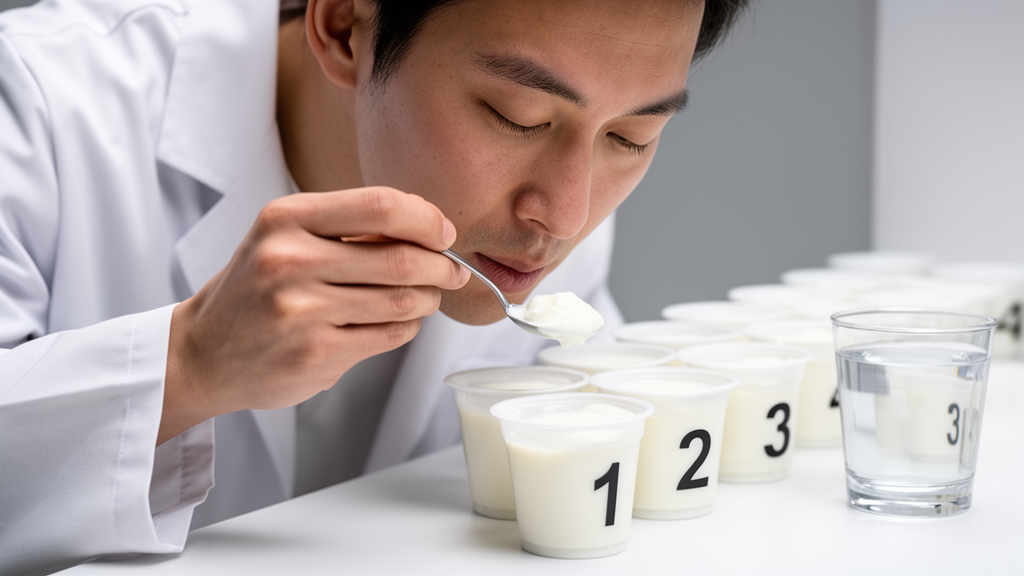
Why does the translation gap persist? The review points to the ecological-validity problem. TRP channels and CaSR are studied in heterologous cell systems using pure agonists in buffer, an environment fundamentally unlike the mouth, which is a dynamic multiphase system with continuous salivary flow, masticatory shear, thermal gradients, mucoadhesive barriers, and lipid-protein partitioning of bioactives. Static single-time-point intensity ratings compound the problem, because these sensations unfold over time: cooling adapts, capsaicin sensitizes, and astringency accumulates across sips. The authors argue that oral tribology, time-intensity profiling, and temporal dominance of sensations are more ecologically valid tools, and that an emerging human TRPM8 biosensor, while useful for screening coolant mixtures, has not been validated across finished foods. Individual variability adds another layer: salivary protein output, oral microbiome composition, cultural exposure, and aging all shift perception, yet trained panels exclude that variability by design.
The authors are candid about limitations. The review is integrative rather than systematic, the confidence ratings are qualitative author judgments rather than a validated scoring instrument, and coverage is uneven, sparsest precisely for numbing, oleogustus, and kokumi. Still, the practical message is clear. Reformulating plant-based proteins, cutting fat, or fortifying with iron cannot be solved by receptor pharmacology alone; matrix composition, salivary dilution, and oral processing reshape perception at every step. For anyone hoping to engineer better-tasting low-salt, low-fat, or plant-forward foods, the frontier is not another cell assay but the messy, dynamic physics and chemistry of eating itself.
Subject of Research: Mechanisms and measurement of non-basic oral sensations beyond the five basic tastes
Article Title: Beyond basic taste: mechanisms, measurement, and food-matrix translation of non-basic oral sensations
Article References: Ameer, M., Saeed, S., Zafar, M. S., & Huang, M. (2026). Beyond basic taste: mechanisms, measurement, and food-matrix translation of non-basic oral sensations. Frontiers in Nutrition, 13, Article 1962396. https://doi.org/10.3389/fnut.2026.1962396
Image Credits: AI Generated
DOI: 10.3389/fnut.2026.1962396
Keywords: astringency, chemesthesis, TRP channels, oleogustus, oral tribology, fatty mouthfeel, kokumi, metallic sensation, pungency, food matrix, sensory science, taste receptors
Cite Scienmag News
Daisy Hatcher. (October 24, 2026). Why Food Scientists Still Cannot Predict How Your Mouth Feels. Scienmag. https://scienmag.com/why-food-scientists-still-cannot-predict-how-your-mouth-feels/
Daisy Hatcher. "Why Food Scientists Still Cannot Predict How Your Mouth Feels." Scienmag, 24 October 2026, https://scienmag.com/why-food-scientists-still-cannot-predict-how-your-mouth-feels/. Accessed 24 October 2026.
Daisy Hatcher. "Why Food Scientists Still Cannot Predict How Your Mouth Feels." Scienmag. October 24, 2026. https://scienmag.com/why-food-scientists-still-cannot-predict-how-your-mouth-feels/


