


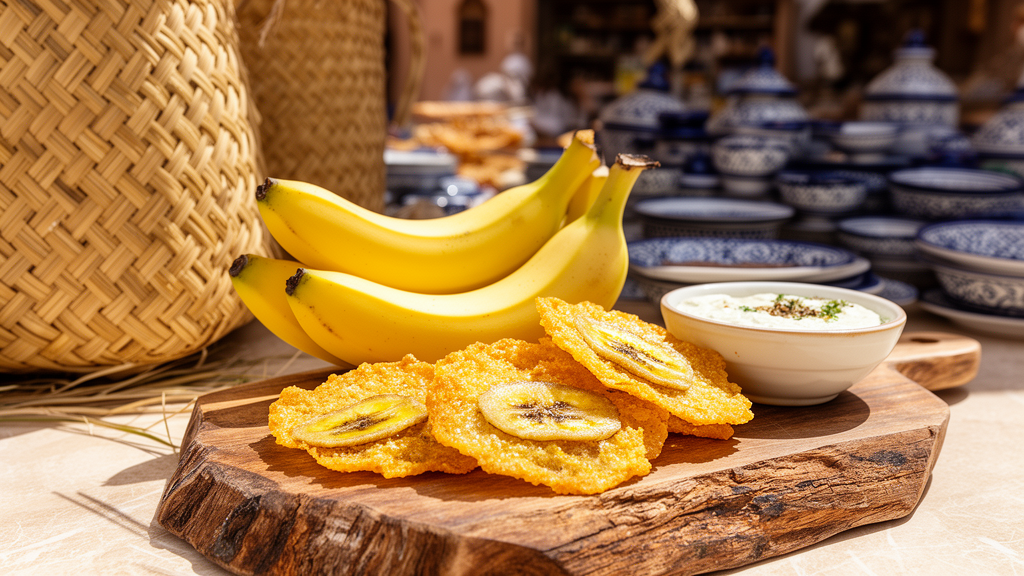
What makes a young consumer decide to buy a banana cracker? It sounds like a trivial question, but for food scientists and policymakers in Oman it is a serious one. Bananas are among the most widely consumed fruits in the world, and in Oman they rank second in quantity after local dates. Yet a large share of the fruit ends up as waste or is sold cheaply in saturated local markets. Turning surplus bananas into dried snacks such as banana crackers could add value to local farming, reduce food loss, and create a new sustainable food industry. A new study published in Discover Sustainability by Mohammed Al-Rizeiqi and colleagues at Sultan Qaboos University set out to measure exactly what drives university students’ intention to consume locally produced banana crackers, combining the theory of planned behaviour with a sustainability awareness approach.
The theory of planned behaviour is one of the most widely used psychological models for predicting consumer actions. It proposes that a person’s behavioural intention is shaped by three factors: attitude, or how positively they evaluate the behaviour; subjective norms, or the social pressure they feel from family and peers; and perceived behavioural control, or how easy they believe the behaviour is to perform. The researchers applied this framework to Sultan Qaboos University students, asking whether attitudes, subjective norms, and perceived behavioural control significantly influenced their behavioural intention toward banana crackers, with statistical significance set at p ≤ 0.05.
Beyond the classical model, the team added two extra predictors. The first was past experience, meaning whether students had previously tried banana-based products and how satisfying that experience was. The second was sustainability awareness, capturing how conscious students were of environmental and food-waste issues and whether they saw sustainable consumption as part of their values. The researchers also examined sociodemographic variables such as academic specialization to see whether students’ fields of study shaped their food preferences. The goal was to build a more complete picture of what pushes young consumers toward a locally produced sustainable snack.
The results were striking. Attitude, subjective norms, and perceived behavioural control all significantly influenced students’ behavioural intentions, confirming the classical theory in the Omani context. But the strongest effects came from attitude (β1 = 0.5983) and past experience (β4 = 1.0915), with experience exerting the single largest influence on purchasing behaviour. In practical terms, students who had already tasted banana crackers or similar banana products and enjoyed them were far more likely to say they would buy them again. Sustainability awareness also played a significant role (β5 = 0.4514), showing that environmental consciousness measurably shapes food choices among young consumers.
The study also revealed a significant effect of academic specialization (β6 = 0.0326) on students’ food preferences, among other sociodemographic variables. Although the effect size was small, the finding suggests that what students study, whether food science, agriculture, business, or humanities, subtly shapes how they evaluate new foods. This has implications for how food companies and policymakers segment young markets: a one-size-fits-all marketing campaign may miss important differences between student groups. The researchers argue the study is helpful for banana processors and policymakers in expanding banana farming, investment, and the manufacturing of banana crackers in the Sultanate of Oman.
From a technical standpoint, banana crackers are more than a novelty snack. Dried banana peel and dried banana flour are both utilized as ingredients in various food industry applications, from bakery products to functional foods rich in dietary fiber and bioactive compounds. Banana flour, made from unripe or surplus fruit, can substitute wheat flour in gluten-free formulations, while banana peel powder adds fiber and antioxidants to processed foods. This means that a product like banana crackers could simultaneously reduce banana waste, diversify local food manufacturing, and offer consumers a healthy snack with genuine nutritional value.
For Oman, the stakes are considerable. The country’s banana farming sector faces pressure from cheap imports and saturated local markets, and much of the fruit is perishable and prone to post-harvest loss. Processing bananas into dried, shelf-stable products such as crackers could extend their market life, add value for farmers, and attract investment in local food manufacturing. The study’s authors argue that understanding what drives young consumers is a key step in this transition, because students represent a large, trend-setting consumer segment whose preferences will shape the future food market.
The research was supported by the Deanship of Research at Sultan Qaboos University under Internal Research Grant Number IG/DVC/ITTC/24/01, and ethical approval was obtained from the Sultan Qaboos University Institutional Research Ethics Review Committee, with informed consent sought from all participants. The survey was anonymous and voluntary, and participants were informed of both conditions before taking part. The authors acknowledge Dr. Lyutha Al Subhi for reviewing the survey questions and all participants for their cooperation during the survey.
The broader message of the study is that sustainable food innovation succeeds not only on technical merit but on consumer psychology. A banana cracker can be nutritionally sound, environmentally friendly, and locally produced, yet still fail if young consumers do not perceive it as tasty, socially acceptable, and easy to buy. By quantifying the roles of attitude, social norms, perceived control, past experience, and sustainability awareness, the researchers have given food processors and policymakers a data-driven roadmap for introducing sustainable banana products. As food systems worldwide grapple with waste reduction and value addition, studies like this one show how behavioural science can turn surplus fruit into a viable, sustainable snack industry.
Subject of Research: Consumer adoption of banana crackers using the theory of planned behaviour and the sustainability awareness approach
Article Title: Consumer adoption of banana crackers using the theory of planned behaviour and the sustainability awareness approach
Article References: Al-Rizeiqi, M., Al-Sheidi, A. Z., Pathare, P. B., Al-Kalbani, D., & Al-Busaidi, A. S. (2026). Consumer adoption of banana crackers using the theory of planned behaviour and the sustainability awareness approach. Discover Sustainability. https://doi.org/10.1007/s43621-026-04846-7
Image Credits: AI Generated
DOI: 10.1007/s43621-026-04846-7
Keywords: Consumer, adoption, banana, crackers, theory, planned, behaviour, sustainability, awareness, approach, scientific research
Cite Scienmag News
Violet Maxwell. (October 17, 2026). Why Banana Crackers Could Be Oman’s Next Sustainable Snack Sensation. Scienmag. https://scienmag.com/why-banana-crackers-could-be-omans-next-sustainable-snack-sensation/
Violet Maxwell. "Why Banana Crackers Could Be Oman’s Next Sustainable Snack Sensation." Scienmag, 17 October 2026, https://scienmag.com/why-banana-crackers-could-be-omans-next-sustainable-snack-sensation/. Accessed 17 October 2026.
Violet Maxwell. "Why Banana Crackers Could Be Oman’s Next Sustainable Snack Sensation." Scienmag. October 17, 2026. https://scienmag.com/why-banana-crackers-could-be-omans-next-sustainable-snack-sensation/


