

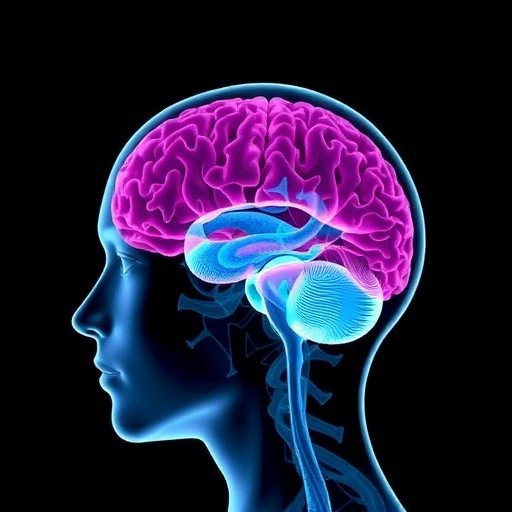
In a groundbreaking synthesis of nearly a hundred neuroimaging studies, researchers have revealed compelling evidence that psychotic and mood disorders such as schizophrenia and bipolar disorder share key alterations in white matter integrity. This landmark meta-analysis, published in Nature Mental Health, amalgamates data from over 9,400 individuals spanning the psychosis spectrum disorder (PSD) continuum, unveiling consistent patterns in brain connectivity that challenge traditional diagnostic boundaries. These findings not only bolster the hypothesis of a shared neurobiological substrate across psychotic conditions but also bring new insights into biomarkers that could transform diagnosis and treatment.
At the heart of this comprehensive review lies diffusion tensor imaging (DTI), an advanced MRI technique that maps the microstructural integrity of white matter pathways in the brain. White matter, composed primarily of myelinated nerve fibers, is essential for efficient neural communication between brain regions. Fractional anisotropy (FA) and mean diffusivity (MD)—two primary DTI metrics—serve as proxies for white matter health. FA quantifies the directional coherence of water diffusion, reflecting fiber density and myelination, whereas MD measures the overall magnitude of water diffusion, indicative of tissue integrity.
From an impressive sample including 4,424 individuals with PSD and 5,004 healthy controls for FA evaluation, alongside 1,607 PSD subjects and 1,709 controls for MD assessment, this study discerns a remarkable pattern. The corpus callosum, the brain’s largest white matter structure responsible for interhemispheric communication, exhibits widespread FA reductions in PSD patients. This diminution in anisotropic diffusion suggests impaired coherence or microstructural disruption of callosal fibers, possibly underpinning interregional dysconnectivity frequently implicated in psychosis-related cognitive and sensory disturbances.
Concurrently, mean diffusivity increases localize predominantly to corticospinal projections—crucial descending pathways that mediate motor control. Elevated MD within these tracts hints at microstructural decay or increased neuroinflammation, which might relate to motor abnormalities observed in psychotic disorders. Notably, these changes in WM microstructure persisted even after rigorously controlling for age and gender variables, reinforcing the notion that such abnormalities contribute fundamentally to disease pathophysiology rather than representing mere artifacts of aging or clinical progression.
A key innovation of this investigation is its transdiagnostic approach, probing white matter impairments across the psychosis continuum rather than isolated disorders. Subgroup analyses reveal overlapping yet nuanced divergences: while FA reductions in the corpus callosum are a shared feature of both schizophrenia and bipolar disorder, differential patterns emerge within other white matter tracts. This suggests that despite common underlying neurobiological disruptions, disorder-specific white matter signatures might modulate unique clinical phenotypes and symptomatology.
The study’s integrative scope resolves longstanding ambiguities in the literature regarding white matter abnormalities across psychotic disorders. Previous investigations often yielded inconsistent or disorder-confined findings, reflecting methodological heterogeneity and limited sample sizes. By synthesizing data across 96 robust studies, the meta-analysis provides unprecedented statistical power and consensus, advancing white matter dysconnectivity to the forefront as a unifying hallmark of psychosis.
Importantly, the identification of the corpus callosum as a consistent locus for FA reductions underscores its potential as a reliable neuroimaging biomarker. Given the corpus callosum’s pivotal role in synchronizing bilateral cortical activity, disruptions here could cascade into widespread network dysfunctions that manifest as the complex cognitive and affective symptoms characterizing psychosis. These insights open avenues for early diagnosis and targeted interventions aimed at restoring interhemispheric communication.
This evidence further supports evolving models of psychosis as a spectrum disorder, transcending conventional diagnostic partitions between schizophrenia and affective psychosis. By illuminating shared biological substrates, the study calls for refining clinical frameworks to accommodate overlapping pathophysiological mechanisms. Such an approach could foster personalized psychiatric care tailored to neurobiological profiles rather than symptom clusters alone.
Nonetheless, the authors emphasize the necessity for future longitudinal studies to unravel causality and temporal dynamics. Understanding whether white matter abnormalities precede symptom onset or arise as a consequence of illness progression remains crucial. Longitudinal imaging efforts could elucidate trajectories of white matter change, potentially distinguishing vulnerability markers from pathological sequelae.
Moreover, integrating multimodal imaging with genetic and environmental data could deepen mechanistic insights and inform preventive strategies. White matter integrity is influenced by myriad factors—ranging from neurodevelopmental insults and neuroinflammation to psychosocial stressors—requiring holistic investigations to disentangle their relative contributions.
From a clinical perspective, these findings invigorate the quest for novel therapeutics focused on white matter repair and neuroplasticity enhancement. Current antipsychotic treatments primarily target neurotransmitter systems with limited efficacy on neural connectivity. Strategies that promote myelination or reduce neuroinflammation might address core structural deficits more effectively, potentially improving function and prognosis.
The meta-analysis thus heralds a paradigm shift in how psychiatry conceptualizes and studies psychotic illnesses by embracing a transdiagnostic, neurobiologically grounded perspective. The integration of advanced neuroimaging data consolidates the corpus callosum’s centrality in psychosis pathology and lays the groundwork for biomarker-driven clinical applications. In an era where precision medicine is transforming health care, these discoveries represent a profound leap toward decoding the intricate biology underpinning some of the most debilitating mental disorders.
As the field advances, it will be critical to translate these neuroimaging insights into accessible clinical tools. Developing standardized DTI protocols and normative databases could enable routine white matter assessments in psychiatric settings, facilitating early detection and monitoring of psychosis risk. Such integration promises to revolutionize mental health diagnostics, shifting the paradigm from subjective symptom evaluations to objective biological markers.
In conclusion, this expansive systematic review and meta-analysis unifies decades of fragmented research to conclusively demonstrate that white matter microstructural impairments, most notably in the corpus callosum, are hallmark features across the psychosis spectrum. These alterations transcend traditional diagnostic categories, underscoring a shared neuropathological foundation and opening promising avenues for biomarker identification and therapeutic innovation. The onus now lies on the scientific and clinical community to harness these revelations, advancing toward a future where precision diagnostics and targeted treatment improve outcomes for millions affected by psychotic disorders worldwide.
Subject of Research:
Investigation of white matter microstructural impairments across the psychosis spectrum disorders using diffusion tensor imaging, focusing on fractional anisotropy and mean diffusivity metrics.
Article Title:
A systematic review and meta-analysis of transdiagnostic impairments in white matter integrity across the psychosis continuum.
Article References:
Merola, G.P., Tarchi, L., Saccaro, L.F. et al. A systematic review and meta-analysis of transdiagnostic impairments in white matter integrity across the psychosis continuum. Nat. Mental Health (2026). https://doi.org/10.1038/s44220-025-00573-6
Image Credits: AI Generated


