


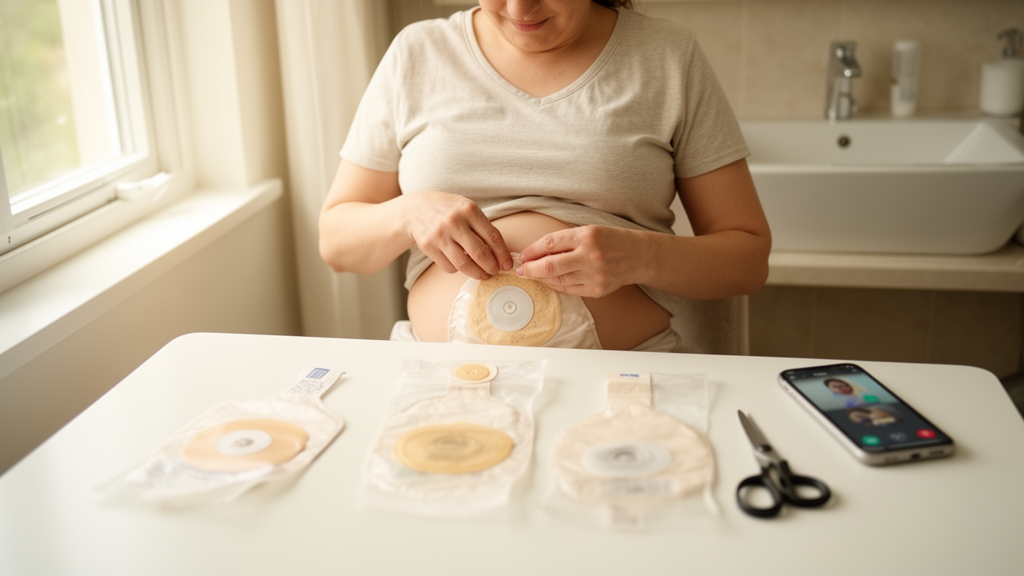
For the roughly 13.5 million people worldwide living with an ostomy, the surgery that saves their lives is only the beginning of the story. A sweeping narrative review published in Frontiers in Gastroenterology has synthesized evidence from 92 primary studies to expose a troubling structural gap: healthcare systems excel at creating stomas but frequently fall short in supporting the lifelong self-management that follows. The result, the authors argue, is a cascade of preventable complications, avoidable hospital readmissions, persistent psychological distress, and mounting economic and environmental costs that current episodic care models are failing to interrupt.
The clinical burden documented in the review is striking. Peristomal skin lesions, the most common complication of ostomy care, affect between 52 and 75 percent of patients, while leakage is reported by 27 to 58 percent. More than half of long-term colorectal cancer survivors report at least one ongoing ostomy-related self-care challenge, and nearly one-third experience multiple concurrent difficulties. Troublesome odor affects up to 55 percent of patients, pain between 21 and 55 percent, and mobility difficulties approximately 32 percent. Postoperative hernias occur in about 27 percent of patients, and frequent pouch changes that can add more than 30 minutes of care time per day are reported by 26 percent. These figures represent not isolated clinical events but a continuous daily negotiation with a changed body that clinical metrics alone do not capture.
The psychological dimension of this burden is equally significant. Depression affects 31 percent of ostomy patients, alongside anxiety and guilt that persist well beyond the immediate postoperative period. Women report greater challenges with body image, sleep disruption, and overall lower quality of life compared with men. A 2025 systematic review and meta-analysis of 92 studies involving over 27,000 patients confirmed that ostomy patients report significantly more body image concerns and sexual dysfunction compared with those without an ostomy, establishing these as enduring population-level sequelae rather than transient postoperative difficulties. Across European and Asian cohorts, approximately 70 percent of patients score below thresholds for adequate quality of life on validated instruments such as the Stoma-QOL, indicating that the multidimensional impairment extends across physical, psychological, and social domains simultaneously.
What makes these findings particularly compelling is the growing evidence that structured interventions can dramatically alter outcomes. A 4-day in-hospital educational pathway increased the proportion of patients achieving independent stoma care at discharge from just 8 percent to 68 percent, and reduced reliance on home nursing services from 80 percent to 50 percent. Preoperative stoma site marking alone reduced complication rates by approximately 53 percent while improving self-care ability and health-related quality of life. Telehealth and continuing care interventions reduced 30-day readmissions from 29 percent to 14 percent in quality improvement studies, and structured post-discharge support programs spanning 1 to 18 months have been associated with reductions in readmissions and emergency visits. These are not marginal gains but transformative shifts in patient trajectory that remain inconsistently implemented across health systems.
The economic case for prevention is equally persuasive. A nationwide Swedish registry study of 40,988 patients confirmed that ostomy surgery creates a high and sustained disease burden on healthcare systems for at least a decade, driven primarily by hospitalizations and complication-related care. Six-month care costs in the United States range from $18,000 to $80,000, and new colostomy healthcare resource utilization costs exceed £3,200 per patient in England. In 2024, peristomal skin complications alone cost approximately £349 per episode and up to £28.1 million annually across England. Out-of-pocket expenses for patients commonly range from $1,100 to $2,700 annually in the United States, compounding inequities in access. Preventive skin barrier interventions have been shown to reduce peristomal skin complications by 77 percent compared with standard care, with average cost savings of $140,000 per patient, though cost effectiveness varies significantly across health systems depending on local capacity and reimbursement structures.
The review also identifies a critical workforce dimension that connects patient outcomes to system sustainability. The World Health Organization projects a global shortfall of 10 million health workers by 2030, with nurses disproportionately represented in that deficit due to escalating workloads, burnout, and attrition. At least a quarter of health and care workers globally reported symptoms of anxiety, depression, and burnout between 2020 and 2022, with no meaningful improvement since. The authors contend that developing robust ostomy self-management pathways is not simply a quality-of-care issue but a workforce strategy: care models that genuinely build patient self-efficacy reduce reactive and unplanned clinical contact, enabling specialist nurses to focus on higher-complexity needs rather than routine troubleshooting that better-designed pathways would prevent.
Access to specialist ostomy nursing remains a recurring predictor of good outcomes, yet it is inconsistently available across health systems. In one Italian nationwide survey of 403 patients, only 47 percent received professional nursing care following discharge, although 60 percent were nonetheless self-sufficient in ostomy management at the time of assessment. Regular follow-up at 3, 6, and 12 months post-surgery is reported in Scandinavian settings, but significant gaps exist elsewhere. Wound, ostomy, and continence nurses play a central role in optimizing pouching, troubleshooting complications, and supporting patient adaptation, yet access to this expertise remains limited in many systems, with broader gaps in preoperative training, partner support, and social reintegration support each linked to insufficient specialist nursing access.
Digital and telehealth interventions represent an expanding evidence base for improving self-management and psychosocial adjustment. Multimedia messaging programs, app-based educational tools, and digital leakage notification systems have demonstrated improvements in self-efficacy, patient activation, and well-being outcomes. A systematic review and meta-analysis of telehealth stoma care interventions reported improvements in stoma adjustment and self-efficacy, although effects on anxiety and broader quality of life measures were more variable across studies. Advanced practice nurse models in Spain have been shown to be cost-effective at approximately €2,297 per quality-adjusted life year gained, while US telehealth program costs of approximately $1,758 per patient provide a basis for modeling system-level savings. Peer support and psychosocial interventions, including mindfulness-based exercises and structured programs such as Ostomy Self-Management Training, have each demonstrated improvements in stoma acceptance, coping, confidence, and psychosocial adaptation.
Real lived experience research adds a dimension that clinical outcome data alone cannot capture. Patients carry a continuous attentional burden: monitoring stoma output, planning bathroom access, adjusting clothing, and anticipating leakage or odor, all of which can disrupt daily life and social participation even when acute complications are infrequent. Distress related to embarrassment from leaks, odors, or noise leads many to fear public situations and feel anxious about returning to work and maintaining relationships. Adaptation is not linear; patients oscillate between periods of adjustment and renewed challenge, particularly during transitions such as returning to work, traveling, or changes in health status. Digital monitoring tools and leakage sensors can support early detection and may reduce anxiety about undetected leakage, but they also risk increasing cognitive load if poorly designed or inadequately supported, reinforcing the need for care pathways that enhance experiential stability rather than simply adding clinical monitoring obligations.
An emerging but under-researched dimension is environmental sustainability. Contemporary ostomy pouches incorporate elaborate synthetic polymer assemblies that represent a significant departure from the more sustainable reusable rubber designs they replaced, and despite seven decades of use, stoma pouch design has not advanced substantially in terms of material sustainability. Healthcare accounts for approximately 4.4 percent of global net carbon emissions, with supply chain and care delivery emissions accounting for roughly 71 percent of the sector’s worldwide footprint. Opportunities exist for biodegradable pouches, composite materials, and personalized 3D-printed systems that better align clinical performance with environmental responsibility, though direct ostomy-specific life-cycle data remain scarce. The authors argue that improvements in appliance reliability that reduce unplanned changes and pathway redesigns that reduce unnecessary hospital contact both represent practical contributions to reducing a long-term environmental burden, connecting the clinical, economic, and ecological dimensions of ostomy care into a single framework for sustainable, patient-centered pathways.
Subject of Research: Where healthcare systems fall short in long-term ostomy care: implications for quality of life, healthcare utilization, and sustainable care pathways
Article Title: Where healthcare systems fall short in long-term ostomy care: implications for quality of life, healthcare utilization, and sustainable care pathways
Article References: Hargreaves, J. A., Schaps, D., & Buchelt, B. (2026). Where healthcare systems fall short in long-term ostomy care: implications for quality of life, healthcare utilization, and sustainable care pathways. Frontiers in Gastroenterology, 5, Article 1920507. https://doi.org/10.3389/fgstr.2026.1920507
Image Credits: AI Generated
DOI: 10.3389/fgstr.2026.1920507
Keywords: healthcare, systems, fall, short, long-term, ostomy, care, implications, quality, life, utilization, sustainable
Cite Scienmag News
Sophia Mitchell. (October 17, 2026). Where healthcare systems fall short in long-term ostomy care: implications for quality of life, healthcare utilization, and sustainable care pathways. Scienmag. https://scienmag.com/where-healthcare-systems-fall-short-in-long-term-ostomy-care-implications-for-quality-of-life-healthcare-utilization-and-sustainable-care-pathways/
Sophia Mitchell. "Where healthcare systems fall short in long-term ostomy care: implications for quality of life, healthcare utilization, and sustainable care pathways." Scienmag, 17 October 2026, https://scienmag.com/where-healthcare-systems-fall-short-in-long-term-ostomy-care-implications-for-quality-of-life-healthcare-utilization-and-sustainable-care-pathways/. Accessed 17 October 2026.
Sophia Mitchell. "Where healthcare systems fall short in long-term ostomy care: implications for quality of life, healthcare utilization, and sustainable care pathways." Scienmag. October 17, 2026. https://scienmag.com/where-healthcare-systems-fall-short-in-long-term-ostomy-care-implications-for-quality-of-life-healthcare-utilization-and-sustainable-care-pathways/


