


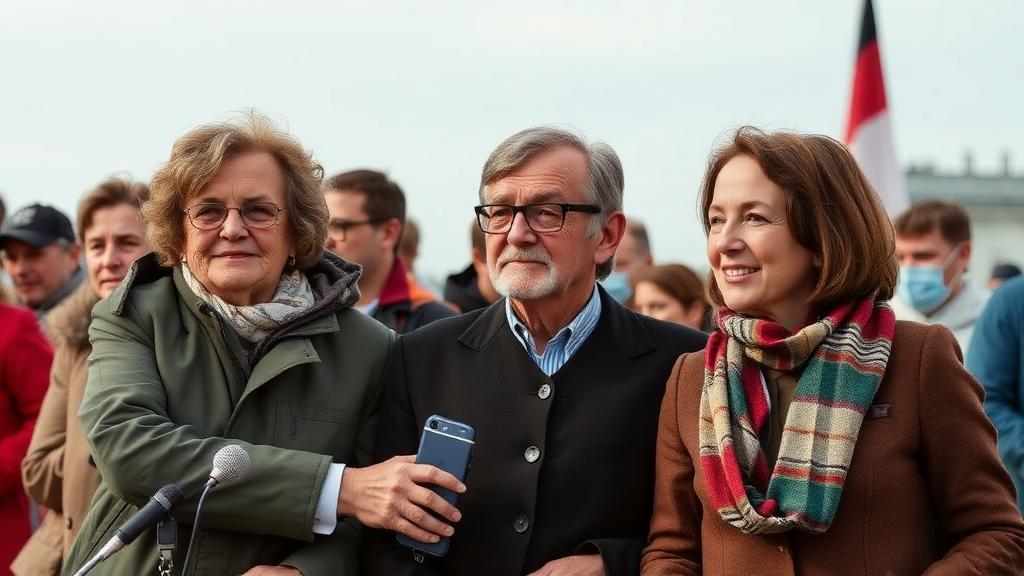
When the COVID-19 pandemic swept across the world in early 2020, few phrases circulated as widely in public debate as intergenerational solidarity. Politicians, commentators, and citizens alike invoked the idea that young and old owed each other care and consideration: the young should sacrifice contact, education, and economic opportunity to protect the old, while the old were urged to think of the futures their grandchildren would inherit. But a new study from researchers at Carl von Ossietzky Universität Oldenburg suggests that beneath this apparently unifying rhetoric lay a more troubling structure, one in which ageist stereotypes and gendered assumptions became entangled in ways that could shape how societies respond to the next health crisis.
The study, published in the International Journal for Equity in Health, was conducted by Eva Katharina Boser, Lena Dörmann, and Niklas Ellerich-Groppe from the Division of Ethics in Medicine at the University of Oldenburg. Their research, funded by the Volkswagen Foundation as part of the FuturISE consortium on the future of intergenerational solidarity beyond the pandemic, takes a deliberately intersectional approach. Rather than treating age and gender as separate axes of analysis, the team examined how these categories interact and reinforce one another in public discourse, drawing on a tradition of intersectional feminist philosophy that has long argued that social inequities cannot be understood by looking at single categories in isolation.
Methodologically, the researchers built their analysis on a substantial corpus of media material. They collected articles from two major German weekly newspapers, Die Zeit and Welt am Sonntag, published between March 2020 and June 2022, a period spanning the first wave of the pandemic through its later phases. The final sample comprised 351 articles, which the team subjected to qualitative content analysis. From this material they identified two paradigmatic cases for in-depth intersectional analysis, focusing primarily on the categorical intersection of age and gender as it appeared in the newspaper coverage.
The choice of media as the object of study is significant. Newspapers such as Die Zeit and Welt am Sonntag do not merely report on public debates; they help constitute them. When a weekly publication frames the pandemic as a conflict or a contract between generations, it supplies the vocabulary through which millions of readers understand their own obligations and vulnerabilities. The Oldenburg team argues that the public renegotiation of intergenerational solidarity during the pandemic was precisely such a process of meaning-making, one in which a moral resource, the shared expectation that generations support one another, was contested, redefined, and redeployed.
What the analysis revealed is striking. The researchers observed not only a resurgence of ageism and age-related stereotypes in the media representations of intergenerational solidarity, but also a persistent entanglement of those stereotypes with gender norms. Older people were not portrayed simply as a homogeneous vulnerable group; the ways in which their vulnerability, their contributions, and their moral standing were depicted carried distinctly gendered markings. Similarly, the expectations placed on younger generations were filtered through assumptions about who owes care, who performs care, and who benefits from it.
According to the study, prevailing notions of intergenerational solidarity in the media continued to rely on gendered and age-based assumptions that shaped four dimensions of the debate: who counts as the moral actor in appeals to solidarity, what the basis of solidarity is, what contributions each generation is expected to make, and what normative goals solidarity is supposed to serve. In other words, the very architecture of the solidarity discourse was structured by stereotypes. The figure of the grandmother in need of protection, the daughter expected to provide unpaid care, the young adult asked to forgo opportunities for the sake of elders, these are not neutral archetypes, and the researchers show how they carried normative weight in the German debate.
The concept of a moral resource is central to the team’s argument. Intergenerational solidarity, they suggest, functioned during the pandemic as a reservoir of moral legitimacy that actors could draw upon to justify policies and demands. Lockdowns, contact restrictions, and vaccination priorities were all debated in the language of generational duty. Yet the study demonstrates that this resource was far from neutral in its effects. Because appeals to solidarity so often reiterated gendered ageism, the stereotypes of frail, dependent elders and self-sacrificing female caregivers, the moral currency itself risked perpetuating structural inequities even as it was being spent in the service of collective protection.
The researchers place these findings against the backdrop of intersectional feminist philosophy on structural social inequities and injustices. From this theoretical vantage point, the problem is not merely that individual articles contained biased portrayals, but that the discourse as a whole reproduced heteronormative generational divides. The study’s conclusions point to the significance of a gendered and heteronormative generational divide in appeals for intergenerational solidarity, one that embedded pertinent gender and age stereotypes into the public negotiation of pandemic ethics. This matters because stereotypes are not simply inaccurate descriptions; they distribute moral standing, expectations, and burdens unevenly across the population.
Why does this matter for future health crises? The authors argue that intergenerational solidarity remains a crucial moral resource in times of crisis, and that abandoning it is neither realistic nor desirable. Instead, they propose that approaches from intersectional feminist philosophy can help reconceptualize intergenerational solidarity as a diversity-sensitive moral resource. Such a reconceptualization would require public debates, and the media practices that shape them, to attend to the plurality of lived experiences across age, gender, and other social categories, rather than defaulting to familiar stereotypes. The German case, the study suggests, offers lessons for other countries facing similar dynamics, since the interplay of ageism and gender norms in crisis discourse is unlikely to respect national borders.
The findings also speak to a broader gap in the research literature. While a growing body of work has documented the pandemic’s impact on inequalities related to gender and other social categories, the interplay between appeals for intergenerational solidarity and these other inequalities in public debates had received limited attention before this study. By making that interplay visible through a systematic analysis of more than three hundred newspaper articles, the Oldenburg team has opened a line of inquiry with direct relevance to health equity, bioethics, and media studies. As the researchers and their colleagues in the FuturISE consortium continue to explore the future of intergenerational solidarity beyond the pandemic, their central message stands out: solidarity is indispensable, but only if it is rebuilt on foundations that do not quietly reproduce the very inequities a crisis exposes.
Subject of Research: Gendered and ageist dimensions of intergenerational solidarity in German media coverage during the COVID-19 pandemic
Article Title: Gendered forms of intergenerational solidarity in the COVID-19 pandemic: an intersectional perspective on the public renegotiation of a moral resource for future health crises in Germany
Article References: Gendered forms of intergenerational solidarity in the COVID-19 pandemic: an intersectional perspective on the public renegotiation of a moral resource for future health crises in Germany. (n.d.). https://doi.org/10.1186/s12939-026-03014-7
Image Credits: AI Generated
DOI: 10.1186/s12939-026-03014-7
Keywords: intergenerational solidarity, COVID-19 pandemic, gender, ageism, intersectionality, media discourse, Germany, moral resource, health crisis, vulnerability, feminist philosophy, health equity
Cite Scienmag News
Courtney Benton. (October 12, 2026). When Solidarity Grows Old: How German Media Gendered Generations During COVID-19. Scienmag. https://scienmag.com/when-solidarity-grows-old-how-german-media-gendered-generations-during-covid-19/
Courtney Benton. "When Solidarity Grows Old: How German Media Gendered Generations During COVID-19." Scienmag, 12 October 2026, https://scienmag.com/when-solidarity-grows-old-how-german-media-gendered-generations-during-covid-19/. Accessed 12 October 2026.
Courtney Benton. "When Solidarity Grows Old: How German Media Gendered Generations During COVID-19." Scienmag. October 12, 2026. https://scienmag.com/when-solidarity-grows-old-how-german-media-gendered-generations-during-covid-19/


