


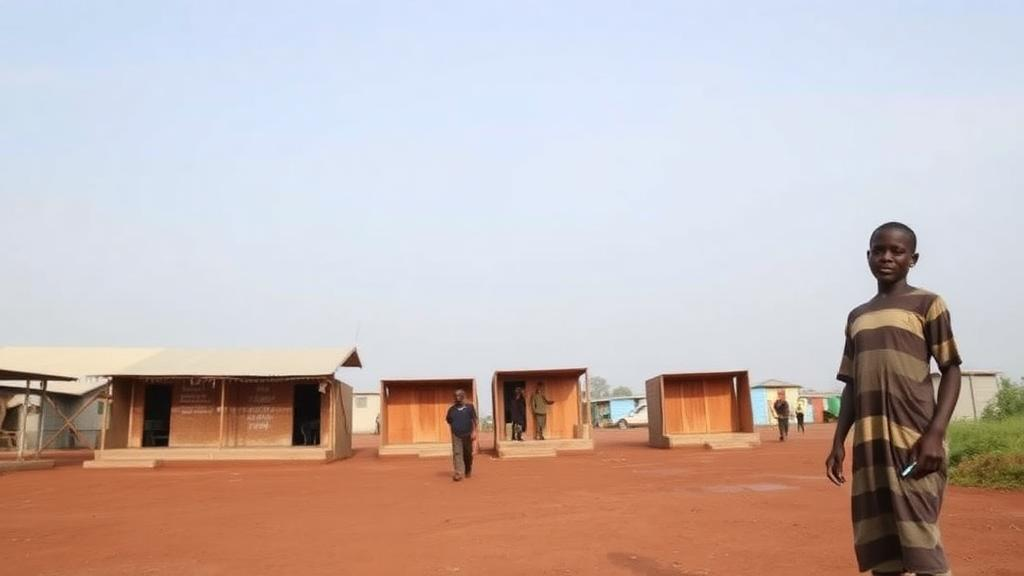
When mpox swept through Sierra Leone in 2025, it produced 5,442 confirmed cases and 60 deaths, numbers that epidemiologists and genomic surveillance teams could count, sequence, and map. But a new qualitative study argues that those figures capture only a fraction of what the epidemic actually was. Drawing on in-depth interviews and focus group discussions with 90 unique participants in Western Area Urban and Port Loko District, researchers from Sierra Leone’s National Public Health Agency and collaborators show how the outbreak was governed, interpreted, endured, and survived as a profoundly social event, one in which technical measures such as isolation and vaccination succeeded or failed depending on the material and cultural conditions surrounding them.
The study, published in Discover Social Science and Health, was led by Eric Nzirakaindi Ikoona and colleagues and approved by the Sierra Leone Ethics and Scientific Review Committee. The team used purposive maximum-variation sampling to recruit a deliberately diverse cross-section of people touched by the epidemic: survivors, caregivers, clinicians, surveillance and contact-tracing staff, community health workers, community leaders, and policy actors. Fifty-two people completed individual in-depth interviews, while 38 different people joined six focus group discussions. Interviews were conducted in Krio, Temne, Mende, and English, allowing participants to speak in the languages in which they actually experienced and discussed the disease. The researchers then combined the Framework Method, a structured approach to qualitative data management, with reflexive thematic analysis, organizing their findings across six interacting dimensions: structural, institutional, cultural, relational, subjective, and systemic.
The structural dimension revealed how poverty and housing conditions effectively redirected the costs of epidemic control onto households. Isolation, the cornerstone of mpox containment, presupposes a separate room, enough food for a quarantined family, and income that can survive weeks without work. For many participants, none of these conditions held. When material circumstances made formal isolation impractical, the burden of preventing transmission shifted to families already stretched to their limits. The study’s authors conclude that control measures that look technically sound on paper can become socially punishing in practice, transforming a public health instruction into a private economic crisis borne by those least able to absorb it.
At the institutional level, the emergency machinery of the response did make cases visible: surveillance teams detected infections, contact tracers followed chains of transmission, and treatment centers admitted the sick. Yet the researchers found that bed scarcity and frontline discretion shaped who actually received facility-based care. When treatment capacity fell short of demand, decisions about admission rested on the judgment of health workers operating under pressure, meaning that access to care was mediated not only by clinical severity but by the contingencies of an overloaded system. This finding underscores a recurring theme in epidemic science: the performance of a response is inseparable from the resources and discretion of the people staffing it.
Perhaps the most striking findings concern meaning. Visible mpox lesions, the study found, acquired moral interpretations that linked the disease to sex, dirt, divine punishment, and HIV, and evoked memories of the devastating 2014-2016 Ebola outbreak in West Africa. A skin rash is never just a symptom in a community that has lived through Ebola; it is a sign that others read, and the readings carried consequences. Participants described how these moral associations fueled stigma, shaping how patients were treated by neighbors, employers, and even intimates. The researchers note that Ebola supplied the dominant bodily analogy through which people understood mpox, while the COVID-19 pandemic shaped accounts of movement restrictions, vaccination, and a broader fatigue with emergency measures.
The relational dimension of the epidemic proved equally consequential. Relationships, the study shows, were the channels through which infection traveled, care was delivered, diagnoses were disclosed or concealed, stigma was enacted, and trusted information flowed. In households where several generations share small spaces, the same bonds that sustain daily life also transmit the virus and then carry the obligations of nursing the sick. Contact tracing, which depends on people naming those they have been near, runs directly into the emotional economics of these relationships. The study suggests that response strategies ignored this relational fabric at their peril, because disclosure decisions and cooperation with tracers were negotiated within families and friendships, not within clinics.
For survivors, the epidemic left marks that outlasted the rash. Participants described pain, shame, loss of income, altered intimacy, and difficult reintegration into communities that had watched their lesions appear and drawn conclusions from them. Some found that returning home after clinical recovery did not end their ordeal; suspicion and gossip followed them. The subjective dimension of the study thus documents an epidemic of experience running parallel to the epidemic of infection, one that clinical case counts cannot register. The authors argue that survivor follow-up must address psychological, social, and economic needs that persist long after a patient tests negative and is discharged.
The systemic analysis identified structural weaknesses that constrained the entire response: a health workforce under sustained pressure, scarcity of vaccines, and prolonged needs among patients after clinical recovery. Vaccine scarcity in particular meant that immunization could not be deployed at the scale the outbreak demanded, forcing reliance on behavior change in conditions that made behavior change difficult. The study’s systemic findings connect back to its structural ones: workforce exhaustion, commodity shortages, and household poverty were not separate problems but a single interlocking set of constraints that determined what the response could achieve.
The central conclusion of the research is deceptively simple: mpox control required diagnosis, isolation, and vaccination, but those technical measures worked through social conditions. A test result changes behavior only if the person tested can afford to act on it. An isolation order succeeds only if a household has the space and resources to comply. A vaccine protects only if it reaches the arm. The authors therefore recommend that future responses integrate livelihood support for isolating families, safe household care protocols where facility isolation is impossible, trusted community communication, active stigma reduction, structured survivor follow-up, and transparent allocation of scarce resources. Each recommendation translates a social finding into an operational one.
For global health, the study arrives at a moment when mpox continues to circulate across multiple continents and clades, and when the field is increasingly recognizing that epidemics are social phenomena as much as biological ones. Sierra Leone’s experience demonstrates that the next outbreak’s outcome will be decided not only in laboratories and treatment centers but in crowded homes, in conversations between neighbors, and in the meanings people attach to a rash on the skin. By documenting those dimensions with methodological rigor, the researchers offer response planners something that case counts alone cannot: a map of the social terrain on which every epidemic is actually fought.
Subject of Research: The social dimensions of the 2025 mpox epidemic in Sierra Leone
Article Title: A qualitative study of the 2025 mpox epidemic in Sierra Leone as a multidimensional social phenomenon
Article References: Ikoona, E. N., Namulemo, L., Sinnah, M. M., Vandi, M. A., & Sahr, F. (2026). A qualitative study of the 2025 mpox epidemic in Sierra Leone as a multidimensional social phenomenon. Discover Social Science and Health. https://doi.org/10.1007/s44155-026-00500-9
Image Credits: AI Generated
DOI: 10.1007/s44155-026-00500-9
Keywords: mpox, Sierra Leone, qualitative research, stigma, social determinants of health, health systems, Ebola memory, isolation, vaccine scarcity, survivor experience, medical sociology, public health response
Cite Scienmag News
Kristina Jarvis. (October 3, 2026). When Mpox Is More Than a Virus: Sierra Leone’s 2025 Outbreak as a Social Crisis. Scienmag. https://scienmag.com/when-mpox-is-more-than-a-virus-sierra-leones-2025-outbreak-as-a-social-crisis/
Kristina Jarvis. "When Mpox Is More Than a Virus: Sierra Leone’s 2025 Outbreak as a Social Crisis." Scienmag, 3 October 2026, https://scienmag.com/when-mpox-is-more-than-a-virus-sierra-leones-2025-outbreak-as-a-social-crisis/. Accessed 4 October 2026.
Kristina Jarvis. "When Mpox Is More Than a Virus: Sierra Leone’s 2025 Outbreak as a Social Crisis." Scienmag. October 3, 2026. https://scienmag.com/when-mpox-is-more-than-a-virus-sierra-leones-2025-outbreak-as-a-social-crisis/


