


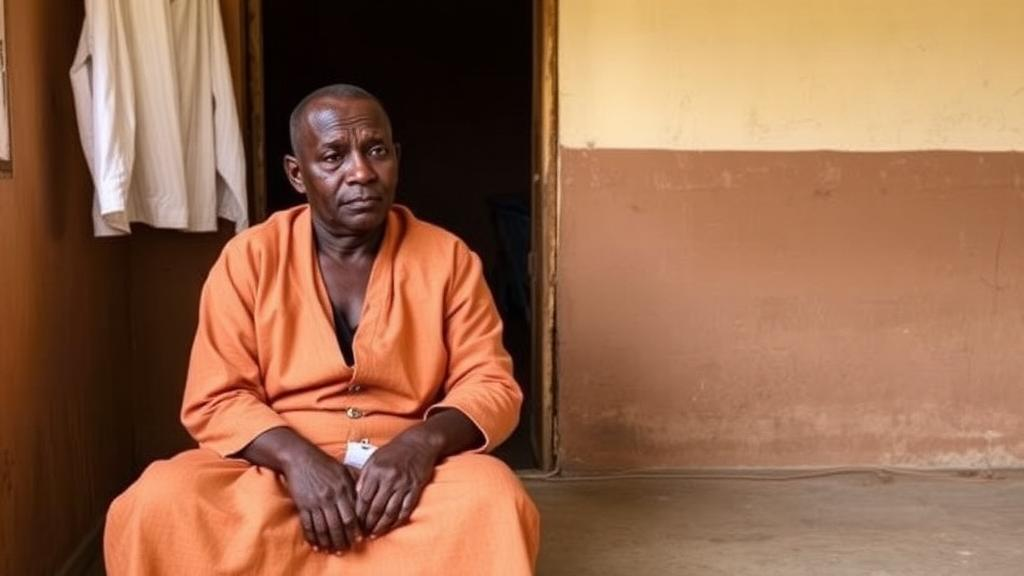
One of the most widely used yardsticks for judging whether a country protects its citizens from the financial ravages of illness may be quietly misleading policymakers across the developing world. A new study of Lesotho, a mountainous kingdom encircled entirely by South Africa, has found that the country appears to excel on the standard measure of financial protection in health care, with only a tiny fraction of households suffering catastrophic health expenditures, yet nearly three in ten households report that at least one member went without needed medical care. The finding, published in the International Journal for Equity in Health, suggests that low spending on health care can sometimes signal not a well-functioning system but one so inaccessible or so anticipated to be unaffordable that people simply never walk through the door.
The research, conducted by Zlatko Nikoloski and Elias Mossialos of the London School of Economics and Political Science together with Aletto Koetlisi of UNICEF Lesotho, delivers the first comprehensive assessment of universal health coverage for the country. Universal health coverage, the cornerstone target of the United Nations Sustainable Development Goals in health, rests on two pillars that must be evaluated together: people must be able to obtain the services they need, and using those services must not push them into financial hardship. Most national and global monitoring frameworks lean heavily on the second pillar, tracking catastrophic health expenditure, typically defined as household health payments exceeding 10 or 25 percent of total household consumption or income. On that metric, Lesotho looks remarkably good.
Using data from the 2023-24 Demographic and Health Survey and the 2017-18 Household Budget Survey, the researchers calculated that just 0.9 percent of Lesotho’s households face catastrophic health spending at the 10 percent threshold, and a vanishingly small 0.2 percent at the more stringent 25 percent threshold. By comparison, many lower-middle-income countries report catastrophic expenditure rates several times higher, and global monitoring reports routinely flag out-of-pocket payments as a leading driver of poverty worldwide. If Lesotho’s numbers were taken at face value, the country would seem to have largely solved the problem of medical impoverishment. The study’s central contribution is to show why that inference would be wrong.
The same surveys revealed that 28.1 percent of households reported at least one member forgoing health care that they believed they needed. That figure, the authors argue, is the missing half of the story. The technical insight is subtle but consequential: catastrophic expenditure can only be incurred by households that actually use health services and pay for them. When anticipated costs, distance, or prior experience of unaffordable bills deter households from seeking care in the first place, no expenditure is recorded, and the headline indicator improves even as the underlying health system fails. In econometric terms, the observed sample of health spenders is not a random sample of the population; it is a selected sample from which the most cost-sensitive households have removed themselves.
To confront this selection problem directly, the team employed a selection model, a statistical framework designed for exactly this kind of censored data. The model jointly estimates the decision to seek care and the level of spending conditional on seeking care, allowing the two processes to be correlated. The results were stark: poorer households in Lesotho are significantly less likely to seek care when they need it. In other words, the households most vulnerable to financial catastrophe are precisely the ones absent from the expenditure data, because they forgo treatment rather than risk the bill. The low catastrophic expenditure rate is, on this reading, partly an artifact of healthcare avoidance rather than evidence of effective financial protection.
The study also constructed a composite universal health coverage index for Lesotho, which scored 74.1, a level broadly comparable to other lower-middle-income countries. That headline figure, however, conceals sharp inequities. Applying concentration index analysis, a technique borrowed from health economics that measures whether service use is distributed evenly across the socioeconomic gradient, the researchers found pro-rich inequity in maternal and child health services. Wealthier households use these services disproportionately, and the analysis traced the drivers to household socioeconomic status and maternal education. Children born to mothers with more schooling and families with more resources are systematically more likely to receive the interventions that keep mothers and infants alive.
These findings arrive at a moment when the global health community is actively debating how to measure progress toward universal health coverage. The World Health Organization and the World Bank track two headline indicators: coverage of essential services and the incidence of catastrophic health spending. Both are useful, but the Lesotho study exposes a structural blind spot. A country can post excellent numbers on both indicators while a large share of its population silently goes without care. Unmet need, captured through survey questions about forgone treatment, is not currently a headline metric in most UHC monitoring frameworks, and the authors argue that it must be. Without it, the indicators reward systems that deter use, penalizing none and protecting no one.
The implications extend well beyond Lesotho’s borders. Many low- and middle-income countries rely heavily on out-of-pocket payments at the point of care, and in settings where formal insurance is thin and household budgets are precarious, the decision to seek care is an economic calculation as much as a medical one. If the price of a clinic visit, transport, or medicines is expected to exceed what a family can bear, the rational response is to stay home. The study’s selection model makes the mechanism visible in the data: the absence of spending among the poor is not evidence of low need or low cost, but of rationing by price at the household level. Monitoring frameworks that ignore this will systematically overstate progress in exactly the countries where progress is hardest to achieve.
For Lesotho itself, the authors outline a policy agenda grounded in their findings. Affordability barriers must be addressed directly, whether through reduced user fees, better protection at the point of care, or targeted support for the poorest households. Maternal education emerges as a powerful lever, with the equity analysis pointing to schooling as a determinant of whether women and children receive essential services. The study also points to expanding community health workers, who can carry basic services into remote mountain communities where facility-based care is hours away, and to increasing investment in primary health care targeted at rural and vulnerable populations. Lesotho’s geography, with dispersed settlements across difficult terrain, makes outreach models particularly consequential for whether nominal entitlements translate into actual access.
The broader lesson is a caution against reading health financing statistics at face value. Numbers that look like success can encode failure, and the direction of the error is not random: it flatters systems that exclude the poor. The authors’ proposal is straightforward in principle, if demanding in practice, that financial protection indicators be complemented everywhere by measures of unmet need, so that a household that never visits a clinic because it cannot afford to is counted as a system failure rather than a statistical blessing. As countries race toward the 2030 deadline for universal health coverage, the Lesotho study offers a reminder that the goal is not merely to make health care cheap on paper, but to make sure people actually receive it, and that the instruments used to measure progress must be sharp enough to tell the difference.
Subject of Research: Financial risk protection and unmet healthcare need in universal health coverage measurement in Lesotho
Article Title: Low catastrophic expenditure, high unmet need in Lesotho: Rethinking financial protection indicators for universal health coverage
Article References: Nikoloski, Z., Koetlisi, A., & Mossialos, E. (2026). Low catastrophic expenditure, high unmet need in Lesotho: Rethinking financial protection indicators for universal health coverage. International Journal for Equity in Health. https://doi.org/10.1186/s12939-026-03026-3
Image Credits: AI Generated
DOI: 10.1186/s12939-026-03026-3
Keywords: universal health coverage, catastrophic health expenditure, Lesotho, unmet need, health equity, concentration index, selection model, out-of-pocket payments, maternal and child health, primary health care, health financing, low- and middle-income countries
Cite Scienmag News
Courtney Benton. (October 3, 2026). When Low Medical Bills Hide a Broken Health System: Lesotho’s Universal Coverage Paradox. Scienmag. https://scienmag.com/when-low-medical-bills-hide-a-broken-health-system-lesothos-universal-coverage-paradox/
Courtney Benton. "When Low Medical Bills Hide a Broken Health System: Lesotho’s Universal Coverage Paradox." Scienmag, 3 October 2026, https://scienmag.com/when-low-medical-bills-hide-a-broken-health-system-lesothos-universal-coverage-paradox/. Accessed 4 October 2026.
Courtney Benton. "When Low Medical Bills Hide a Broken Health System: Lesotho’s Universal Coverage Paradox." Scienmag. October 3, 2026. https://scienmag.com/when-low-medical-bills-hide-a-broken-health-system-lesothos-universal-coverage-paradox/


