

In an era where robotics increasingly intertwines with daily human activities, the challenge has persisted for robots to identify and fetch objects accurately in cluttered, dynamic environments. Researchers at Brown University have now unveiled an innovative system that significantly elevates the capabilities of robotic assistants by enabling them to interpret and integrate both language commands and human gestures. This dual-input approach, grounded in advanced mathematical frameworks and inspired by animal cognition, promises to transform how robots understand and interact with human users in complex settings.
Robots tasked with finding specific items face multifaceted challenges in real-world environments. Unlike controlled settings, everyday spaces are often filled with overlapping objects, visual obstructions, and ambiguous layouts. Current robotic systems are competent at object recognition but struggle when the environment is disordered or when objects are partially hidden. The core advancement presented by the Brown research team lies in leveraging the complementary strengths of human language and gestures to more effectively pinpoint targets amidst this complexity.
At the heart of this breakthrough is the application of partially observable Markov decision processes (POMDPs). POMDPs offer a robust mathematical framework that equips robots to make decisions under uncertainty by probabilistically reasoning about incomplete or ambiguous information. Unlike deterministic models, this approach allows the robot to maintain and update a belief state—a probabilistic representation of the environment—using sensory inputs and contextual cues. Crucially, this enables robots not only to identify probable object locations but also to plan movements that gather additional information to resolve ambiguities.
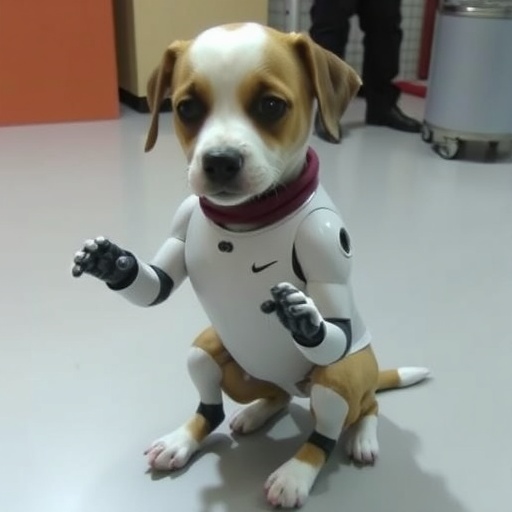
What sets this research apart is the integration of gesture recognition into the POMDP framework. Inspired by an intriguing parallel from cognitive science, the team drew insights from Brown’s Dog Lab, where studies revealed how dogs expertly interpret human pointing gestures to understand object locations. Recognizing that dogs’ intuitive communication models human nonverbal cues with remarkable finesse, the researchers adapted this biological insight for robotic comprehension. By conceptualizing a pointing gesture as a probabilistic ‘cone’ extending from the human’s eye through the elbow to the wrist, the robot can estimate the direction and area that a person likely indicates.
This biologically informed gesture model was combined with state-of-the-art vision language models (VLMs), artificial intelligence systems trained to understand visual scenes alongside natural language descriptions. The synergistic effect of combining gestures and verbal instructions empowers the robot to disambiguate targets far more efficiently. For example, when a user says “fetch the blue mug” while pointing ambiguously, the robot can prioritize observations within the gesture-defined cone and cross-reference its visual and linguistic databases to identify the object matching both cues.
The research team tested their model on a quadruped robotic platform tasked with retrieving various objects scattered throughout a laboratory setting. These experiments demonstrated a remarkable improvement in success rates, with the robot correctly identifying and fetching the target object nearly 90% of the time when both gesture and language cues were used together. This performance outpaced systems relying on solely language or solely gesture inputs by a significant margin, highlighting the power of multimodal integration.
Beyond immediate gains in accuracy, this work lays the groundwork for more natural and intuitive human-robot collaboration. The ability for robots to interpret the full spectrum of common human communication forms—verbal instructions, pointing gestures, eye gaze—brings machines closer to functioning as seamless, responsive assistants in everyday contexts. For environments ranging from domestic kitchens to industrial workshops, robots that can fluently engage with multimodal human cues unlock new levels of autonomy, efficiency, and user satisfaction.
The POMDP-based system is crafted to accommodate real-world unpredictability. In practice, robots often encounter visually similar objects of varying attributes or multiple instances of the same object type. By reasoning probabilistically and updating beliefs as it moves and gains novel observations, the robot avoids becoming stuck by uncertainty. It balances exploration—approaching vantage points to reduce ambiguity—with exploitation—deciding when to commit to retrieving a particular object based on accumulated evidence. This adaptive strategy is critical for effective operation in dynamically changing spaces.
The interdisciplinary essence of this work exemplifies the convergence of cognitive science, computer vision, natural language processing, and robotics. Researchers from Brown’s cognitive sciences and computer science departments collaborated to translate insights about human and canine communication into computational algorithms. This harmonious blend of theory and engineering underscores the potential of cross-domain synthesis to push robotic intelligence beyond its conventional bounds.
Importantly, the research also signals a shift toward embedding social intelligence within robotic systems. Understanding gestures and eye gaze transcends simple command following; it entails grasping the nuances of human intentions and nonverbal cues, some of which can be ambiguous or context-dependent. By modeling these interactions probabilistically, robots develop a form of situational empathy, adjusting their actions not purely on prior knowledge but on evolving interpretations informed by the user’s behaviors.
Looking forward, this multimodal interaction framework opens the door to integrating additional sensory modalities and communication channels. Future robotic assistants might incorporate facial expression recognition, head nods, or even verbal prosody to enrich contextual understanding. Moreover, scaling POMDP models to more complex environments and longer task sequences remains an exciting frontier, with potential applications spanning healthcare, service industries, and collaborative manufacturing.
Supported by the National Science Foundation and the Office of Naval Research, this research was presented at the 2026 ACM/IEEE International Conference on Human-Robot Interaction, a premier venue highlighting advances in how people and robots engage. The work’s practical implications and theoretical sophistication garnered considerable interest, highlighting the critical role of adaptive reasoning and biological inspiration in robotic perception.
As robots become increasingly interwoven with human life, advances like LEGS-POMDP—Language and Gesture-Guided Object Search in Partially Observable Environments—epitomize the path toward machines that not only see and hear but truly understand. By embracing human communication’s innate complexity and uncertainty, robots can achieve new levels of autonomy and collaboration, evolving from tools into intuitive partners.
Subject of Research: Robotics and human-robot interaction focusing on multimodal communication for object search in complex environments.
Article Title: LEGS-POMDP: Language and Gesture-Guided Object Search in Partially Observable Environments
News Publication Date: March 17, 2026
Web References: http://dx.doi.org/10.48550/arXiv.2603.04705
References: The research was supported by the National Science Foundation (2433429) and the Long-Term Autonomy for Ground and Aquatic Robotics program (GR5250131), and by the Office of Naval Research (N0001424-1-2784, N0001424-1-2603).
Image Credits: Tellex Lab / Brown University
Keywords: Robotics, human-robot interaction, gesture recognition, natural language processing, POMDP, probabilistic reasoning, vision language model, multimodal communication, autonomous robots, machine learning, cognitive science, AI assistants


