

Monday, October 26, 2026
Science
No Result
View All Result
  • Login
  • HOME
  • SCIENCE NEWS
  • CONTACT US
  • HOME
  • SCIENCE NEWS
  • CONTACT US
No Result
View All Result
Scienmag
No Result
View All Result
Home Science News Medicine

Wealth Shapes Chronic Disease Risks in Rural South Africa, Survey Finds

October 26, 2026
in Medicine, Policy
Courtney Benton
By Courtney Benton Scienmag Editorial Profile - Science and Technology Policy
Reading Time: 2 mins read
0
Wealth Shapes Chronic Disease Risks in Rural South Africa, Survey Finds

Wealth Shapes Chronic Disease Risks in Rural South Africa, Survey Finds

65
SHARES
587
VIEWS
Share on FacebookShare on Twitter
ADVERTISEMENT

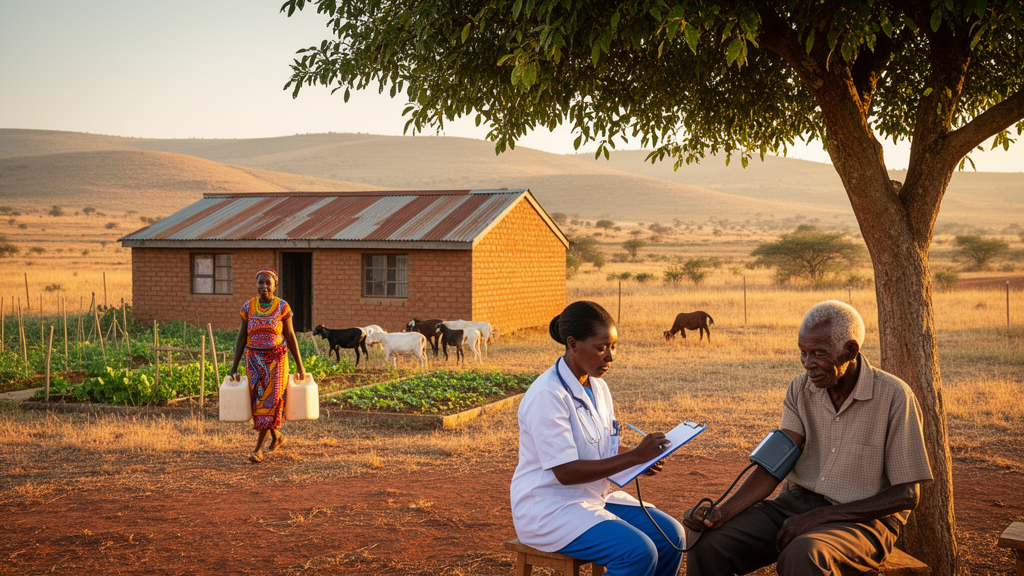
A cross-sectional survey of 398 adults aged 18 years and older attending primary healthcare facilities in the DIMAMO Health and Demographic Surveillance System catchment area of rural South Africa has uncovered a strikingly uneven pattern of chronic non-communicable disease risk factors across the socioeconomic spectrum. Rather than a simple gradient in which disadvantage uniformly drives poor health, the study found that higher socioeconomic status was linked to harmful alcohol use, while it appeared protective against physical inactivity, revealing a complex socioeconomic patterning of risk in this rural population.

The researchers measured socioeconomic status using an asset-based wealth index derived through principal component analysis and sorted participants into quintiles, from poorest to richest. Risk factors were assessed with questionnaires adapted from the World Health Organization’s STEPS and SAGE instruments, covering tobacco use, harmful alcohol use, physical inactivity, low fruit and vegetable intake, high salt intake, and self-reported hypertension and diabetes. Crude and adjusted prevalence ratios were estimated using modified Poisson regression with robust standard errors.

The most pronounced association emerged for harmful alcohol use. After adjustment, participants in the richer quintile had a prevalence 1.58 times that of the poorest quintile (95% CI: 1.03–2.41), and those in the richest quintile had a prevalence 1.78 times as high (95% CI: 1.11–2.85). Physical inactivity, by contrast, was less prevalent among participants in the middle, richer, and richest quintiles than among the poorest, suggesting that greater material resources in this setting coincide with more habitual physical activity.

Not every risk factor tracked wealth so clearly. Self-reported diabetes tended to be more prevalent in the richest quintile, but this association did not reach statistical significance, and socioeconomic status was not significantly associated with hypertension after adjustment. Tobacco use showed a different social pattern altogether: it was less prevalent among female participants and among those with secondary or tertiary education, indicating that sex and educational attainment, rather than household wealth alone, shape smoking behavior in this community.

Beyond the wealth index, age, sex, educational attainment, and employment status were each associated with several of the chronic risk factors measured. The authors note that these findings highlight the complex socioeconomic patterning of non-communicable disease risks and support the design of context-specific interventions, together with longitudinal research to clarify how these associations unfold over time in rural South African populations.

Subject of Research: Socioeconomic inequalities in chronic non-communicable disease risk factors among adults in the DIMAMO surveillance site, rural South Africa

Article Title: Factors associated with socioeconomic inequalities in the prevalence of chronic NCD risk factors in the DIMAMO surveillance site, South Africa

Article References: Ravhuhali, K. G., Ntimana, C. B., & Maimela, E. (2026). Factors associated with socioeconomic inequalities in the prevalence of chronic NCD risk factors in the DIMAMO surveillance site, South Africa. PLOS Global Public Health, 6(10), e0007483. https://doi.org/10.1371/journal.pgph.0007483

Image Credits: AI Generated

DOI: 10.1371/journal.pgph.0007483

Keywords: non-communicable diseases, socioeconomic inequality, DIMAMO HDSS, rural South Africa, harmful alcohol use, physical inactivity, tobacco use, hypertension, diabetes, wealth index, cross-sectional survey, WHO STEPS

Cite Scienmag News

Courtney Benton. (October 26, 2026). Wealth Shapes Chronic Disease Risks in Rural South Africa, Survey Finds. Scienmag. https://scienmag.com/wealth-shapes-chronic-disease-risks-in-rural-south-africa-survey-finds/

Courtney Benton. "Wealth Shapes Chronic Disease Risks in Rural South Africa, Survey Finds." Scienmag, 26 October 2026, https://scienmag.com/wealth-shapes-chronic-disease-risks-in-rural-south-africa-survey-finds/. Accessed 26 October 2026.

Courtney Benton. "Wealth Shapes Chronic Disease Risks in Rural South Africa, Survey Finds." Scienmag. October 26, 2026. https://scienmag.com/wealth-shapes-chronic-disease-risks-in-rural-south-africa-survey-finds/


Tags: alcohol use and socioeconomic statusasset-based wealth index in health studiescross-sectional health surveycross-sectional surveydiabetesDIMAMO HDSSharmful alcohol usehealth inequality in rural Africahypertensionnon-communicable disease risk factorsnon-communicable diseasesphysical inactivityphysical inactivity in rural populationsrisk factor assessment in low-income settingsrural South Africasocioeconomic disparities in chronic disease risksocioeconomic inequalitysocioeconomic patterning of health outcomessocioeconomic status and health behaviorstobacco usewealth and healthwealth indexWHO STEPS
Share26Tweet16
Previous Post

Discharge Instructions in a Patient’s Own Language Matter Most to Spanish and Haitian Creole Speakers Facing Hospital Discharge

Next Post

Voice fillers: injectable biomaterials reshape the science of vocal fold repair

Related Posts

Type I Interferon Signaling Helps Clear Early Lyme Disease Infection in Mice
Biology

Type I Interferon Signaling Helps Clear Early Lyme Disease Infection in Mice

October 26, 2026
Climate change may shift plague risk zones in China’s Northern Tianshan
Medicine

Climate change may shift plague risk zones in China’s Northern Tianshan

October 26, 2026
New Diagnostic Tool Probes Feature-Level Bias in Dutch Health Algorithms
Medicine

New Diagnostic Tool Probes Feature-Level Bias in Dutch Health Algorithms

October 26, 2026
Appropriate antibiotics in the ICU linked to better survival, DIANA analysis shows
Medicine

Appropriate antibiotics in the ICU linked to better survival, DIANA analysis shows

October 26, 2026
Discharge Instructions in a Patient’s Own Language Matter Most to Spanish and Haitian Creole Speakers Facing Hospital Discharge
Medicine

Discharge Instructions in a Patient’s Own Language Matter Most to Spanish and Haitian Creole Speakers Facing Hospital Discharge

October 26, 2026
Family empowerment program linked to better recovery after heart device implantation
Medicine

Family empowerment program linked to better recovery after heart device implantation

October 26, 2026
Next Post
Voice fillers: injectable biomaterials reshape the science of vocal fold repair

Voice fillers: injectable biomaterials reshape the science of vocal fold repair

  • Mothers who receive childcare support from maternal grandparents show more optimized

    Mothers who receive childcare support from maternal grandparents show more parental warmth, finds NTU Singapore study

    27656 shares
    Share 11059 Tweet 6912
  • University of Seville Breaks 120-Year-Old Mystery, Revises a Key Einstein Concept

    1061 shares
    Share 424 Tweet 265
  • Bee body mass, pathogens and local climate influence heat tolerance

    682 shares
    Share 273 Tweet 171
  • Researchers record first-ever images and data of a shark experiencing a boat strike

    546 shares
    Share 218 Tweet 137
  • Groundbreaking Clinical Trial Reveals Lubiprostone Enhances Kidney Function

    531 shares
    Share 212 Tweet 133
Science

Embark on a thrilling journey of discovery with Scienmag.com—your ultimate source for cutting-edge breakthroughs. Immerse yourself in a world where curiosity knows no limits and tomorrow’s possibilities become today’s reality!

RECENT NEWS

  • Type I Interferon Signaling Helps Clear Early Lyme Disease Infection in Mice
  • Climate change may shift plague risk zones in China’s Northern Tianshan
  • Computational model shows how the brain dodges obstacles while reaching for goals
  • New Diagnostic Tool Probes Feature-Level Bias in Dutch Health Algorithms

Categories

  • Agriculture
  • Anthropology
  • Archaeology
  • Athmospheric
  • Biology
  • Biotechnology
  • Blog
  • Bussines
  • Cancer
  • Chemistry
  • Climate
  • Earth Science
  • Editorial Policy
  • Marine
  • Mathematics
  • Medicine
  • Pediatry
  • Policy
  • Psychology & Psychiatry
  • Science Education
  • Science News
  • Social Science
  • Space
  • Technology and Engineering

Subscribe to Blog via Email

Enter your email address to subscribe to this blog and receive notifications of new posts by email.

Join 5,151 other subscribers

© 2025 Scienmag - Science Magazine

Welcome Back!

Login to your account below

Forgotten Password?

Retrieve your password

Please enter your username or email address to reset your password.

Log In
No Result
View All Result
  • HOME
  • SCIENCE NEWS
  • CONTACT US

© 2025 Scienmag - Science Magazine

Discover more from Science

Subscribe now to keep reading and get access to the full archive.

Continue reading