Wednesday, November 4, 2026
Science
No Result
View All Result
  • Login
  • HOME
  • SCIENCE NEWS
  • CONTACT US
  • HOME
  • SCIENCE NEWS
  • CONTACT US
No Result
View All Result
Scienmag
No Result
View All Result
Home Science News Biology

Water Cues from Rival Snails Curb Schistosome Infections in Host Snails

October 29, 2026
in Biology
Kristina Jarvis
By Kristina Jarvis Scienmag Editorial Profile - Infectious Disease Medicine
Reading Time: 2 mins read
0
Water Cues from Rival Snails Curb Schistosome Infections in Host Snails

Water Cues from Rival Snails Curb Schistosome Infections in Host Snails

65
SHARES
587
VIEWS
Share on FacebookShare on Twitter
ADVERTISEMENT

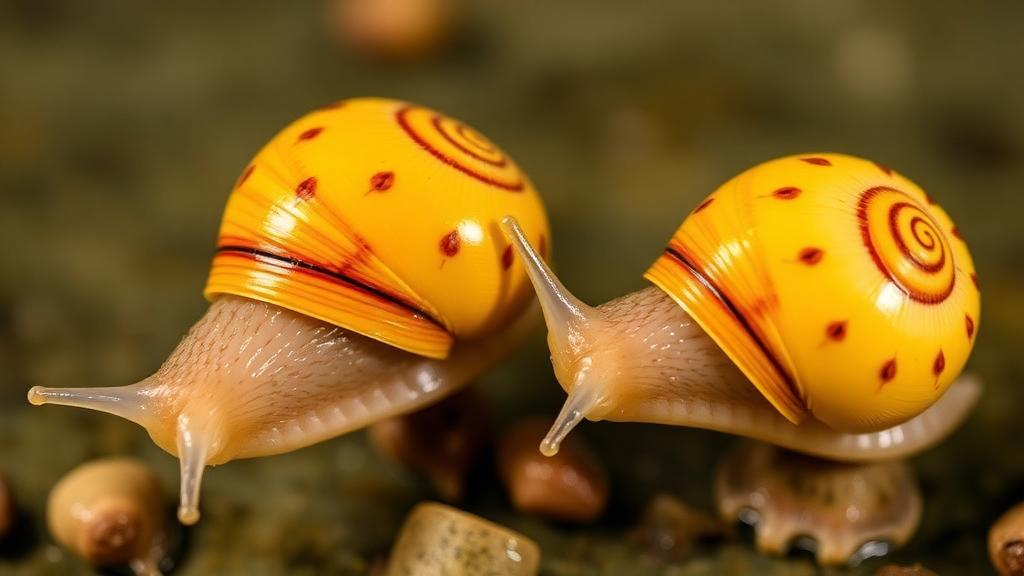
Laboratory snails carrying the parasite Schistosoma mansoni fared differently depending on which other snail species had recently shared their water, according to a study published in Acta Parasitologica. Researchers exposed Biomphalaria alexandrina snails infected with S. mansoni to snail conditioned water (SCW), water in which other snails had been kept, from four species: B. alexandrina itself, Bulinus truncatus, Helisoma duryi, and the land snail Eobania vermiculata. The aim was to test whether chemical cues released by non-target snail species, possibly host-associated kairomones, alter the biological course of the infection in the intermediate host.

The timing of parasite development shifted measurably across treatments. The prepatent period, the interval between infection and the first release of infective cercariae, remained 30 days in groups exposed to SCW from B. alexandrina or B. truncatus and in unexposed controls. In contrast, exposure to SCW from H. duryi and E. vermiculata extended this period, delaying the point at which infected snails became sources of human-infectious larvae.

Cercarial shedding also changed. Shedding lasted 22 days in groups exposed to SCW from B. alexandrina, B. truncatus, and E. vermiculata, and 26 days with H. duryi SCW, compared with 37 days in control groups. Lifespan of infected snails was shorter in the mixed-species treatments, and total cercarial production was significantly lower across these groups. Infection rates were highest in the B. alexandrina and B. truncatus SCW groups, suggesting that cues from closely related or sympatric species affect the parasite differently from cues of more distantly related snails.

The study also reported that SCW significantly affected the survival of S. mansoni larvae, with the effect varying by snail species. The authors conclude that SCW, particularly from H. duryi, shows potential for developing natural antiparasitic agents, with notable variation in larvicidal efficacy among the species tested. Because schistosomiasis control depends heavily on reducing transmission by freshwater snails, chemically mediated interference of this kind could, if confirmed, inform environmentally sustainable control strategies.

Several caveats apply. The findings come from laboratory experiments on snails, not from field trials or human studies, and the abstract does not identify the specific kairomones involved or quantify doses. The larvicidal effects described are observations of parasite and snail biology under controlled exposure, so any practical use of snail-derived chemical cues against schistosomiasis would require further research into the active compounds, their specificity, and their safety and effectiveness in real water bodies.

Subject of Research: Effects of snail conditioned water from non-target snail species on Schistosoma mansoni infection biology in Biomphalaria alexandrina.

Article Title: Influence of Non-target Snail Species on the Biological Characteristics of Schistosoma mansoni Infection in Biomphalaria alexandrina: Implications for Parasite Transmission and a Possible Role for Host-associated Kairomones

Article References: Ibrahim, A. M. (2026). Influence of Non-target Snail Species on the Biological Characteristics of Schistosoma mansoni Infection in Biomphalaria alexandrina: Implications for Parasite Transmission and a Possible Role for Host-associated Kairomones. Acta Parasitologica, 71(6), Article 251. https://doi.org/10.1007/s11686-026-01432-9

Image Credits: AI Generated

DOI: 10.1007/s11686-026-01432-9

Keywords: Schistosoma mansoni, Biomphalaria alexandrina, snail conditioned water, kairomones, cercarial shedding, schistosomiasis, prepatent period, Helisoma duryi, parasite transmission, larvicidal activity, Influence, Non-target

Cite Scienmag News

Kristina Jarvis. (October 29, 2026). Water Cues from Rival Snails Curb Schistosome Infections in Host Snails. Scienmag. https://scienmag.com/water-cues-from-rival-snails-curb-schistosome-infections-in-host-snails/

Kristina Jarvis. "Water Cues from Rival Snails Curb Schistosome Infections in Host Snails." Scienmag, 29 October 2026, https://scienmag.com/water-cues-from-rival-snails-curb-schistosome-infections-in-host-snails/. Accessed 4 November 2026.

Kristina Jarvis. "Water Cues from Rival Snails Curb Schistosome Infections in Host Snails." Scienmag. October 29, 2026. https://scienmag.com/water-cues-from-rival-snails-curb-schistosome-infections-in-host-snails/

Tags: biological control of schistosomiasisBiomphalaria alexandrinacercarial sheddingcercarial shedding durationHelisoma duryihost-parasite interactions in freshwater snailsimpact of non-host snail species on parasite transmissioninfluenceintermediate host snail immune responseinterspecies snail communicationkairomoneskairomones in aquatic ecosystemslarvicidal activitynon-targetparasite development delayparasite transmissionprepatent periodSchistosoma mansoniSchistosome infection in host snailsschistosomiasissnail conditioned watersnail conditioned water effectssnail species chemical cueswaterborne chemical signaling in snails
Share26Tweet16
Previous Post

Cresol Oxidation Rapidly Forms Aerosol Vapors, Study Shows

Next Post

Brain scans cannot reveal how well a person regulates emotions, large study finds

Related Posts

Seagrass Species With Different Dispersal Styles React Alike to Nutrient Gradients
Biology

Seagrass Species With Different Dispersal Styles React Alike to Nutrient Gradients

November 4, 2026
Endophytic Fungus Boosts Cold Tolerance in Basil by Activating Cold-Response Genes
Biology

Endophytic Fungus Boosts Cold Tolerance in Basil by Activating Cold-Response Genes

November 4, 2026
Scientists define herd health management in new framework for farm veterinarians
Biology

Scientists define herd health management in new framework for farm veterinarians

November 4, 2026
Scientists assemble the complete mitochondrial genome of Camellia pitardii
Biology

Scientists assemble the complete mitochondrial genome of Camellia pitardii

November 4, 2026
Class 1 and 2 Integrons Widespread in Multidrug-Resistant Pseudomonas aeruginosa From Iranian Hospitals
Biology

Class 1 and 2 Integrons Widespread in Multidrug-Resistant Pseudomonas aeruginosa From Iranian Hospitals

November 4, 2026
Cryo-EM reveals how a retrotransposon and CRISPR–Cas9 team up to insert genes
Biology

Cryo-EM reveals how a retrotransposon and CRISPR–Cas9 team up to insert genes

November 4, 2026
Next Post
Brain scans cannot reveal how well a person regulates emotions, large study finds

Brain scans cannot reveal how well a person regulates emotions, large study finds

  • Mothers who receive childcare support from maternal grandparents show more optimized

    Mothers who receive childcare support from maternal grandparents show more parental warmth, finds NTU Singapore study

    27656 shares
    Share 11059 Tweet 6912
  • University of Seville Breaks 120-Year-Old Mystery, Revises a Key Einstein Concept

    1061 shares
    Share 424 Tweet 265
  • Bee body mass, pathogens and local climate influence heat tolerance

    682 shares
    Share 273 Tweet 171
  • Researchers record first-ever images and data of a shark experiencing a boat strike

    546 shares
    Share 218 Tweet 137
  • Groundbreaking Clinical Trial Reveals Lubiprostone Enhances Kidney Function

    531 shares
    Share 212 Tweet 133
Science

Embark on a thrilling journey of discovery with Scienmag.com—your ultimate source for cutting-edge breakthroughs. Immerse yourself in a world where curiosity knows no limits and tomorrow’s possibilities become today’s reality!

RECENT NEWS

  • Simulation setting may not shape emergency team nontechnical skills
  • IFN-γ Restores Trauma-Dampened Monocytes but Fails to Prevent Ventilator-Associated Pneumonia
  • Climate Change Reshapes Food Environments Far Beyond the Farm, Study Finds
  • New satellite database maps polarized light from land surfaces across two decades

Categories

  • Agriculture
  • Anthropology
  • Archaeology
  • Athmospheric
  • Biology
  • Biotechnology
  • Blog
  • Bussines
  • Cancer
  • Chemistry
  • Climate
  • Earth Science
  • Editorial Policy
  • Marine
  • Mathematics
  • Medicine
  • Pediatry
  • Policy
  • Psychology & Psychiatry
  • Science Education
  • Science News
  • Social Science
  • Space
  • Technology and Engineering

Subscribe to Blog via Email

Enter your email address to subscribe to this blog and receive notifications of new posts by email.

Join 5,149 other subscribers

© 2025 Scienmag - Science Magazine

Welcome Back!

Login to your account below

Forgotten Password?

Retrieve your password

Please enter your username or email address to reset your password.

Log In
No Result
View All Result
  • HOME
  • SCIENCE NEWS
  • CONTACT US

© 2025 Scienmag - Science Magazine

Discover more from Science

Subscribe now to keep reading and get access to the full archive.

Continue reading