


Every year, the world’s cement kilns devour roughly four billion tons of ordinary Portland cement, and in doing so they release between 0.65 and 0.92 tons of carbon dioxide for every single ton of binder produced. With global cement consumption having surged from about 1.5 billion tons in 2000 to 4.0 billion tons in 2024, the construction industry has become one of the planet’s most stubborn sources of greenhouse gases. Now, a team of researchers at Sultan Qaboos University in Oman has shown that an industrial waste product most people have never heard of could help turn that story around, and that the secret lies in something as simple as how the waste is cooled.
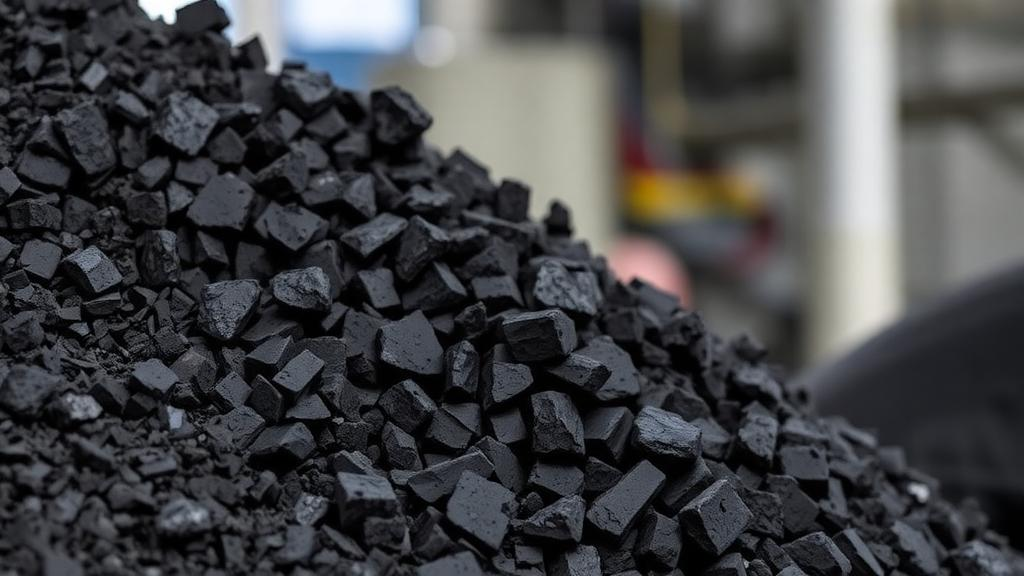
The material in question is ferrochrome slag, a stony by-product of producing ferrochrome, the chromium-iron alloy that underpins the stainless steel industry. Ferrochrome is made in submerged electric arc furnaces at temperatures between 1500 and 1700 degrees Celsius, and for every ton of alloy produced, between 1.1 and 1.6 tons of molten slag float to the surface and are skimmed off. With global ferrochrome production reaching approximately 18.25 million tons in 2024, that translates into an estimated 20 to 29 million tons of slag generated in a single year. South Africa and China, which hold the largest chromite reserves, together account for more than two-thirds of the world’s ferrochrome slag, while Oman ranks among the top ten producing countries.
Historically, most of this slag has been relegated to use as coarse and fine aggregate in concrete, valued mainly for its physical similarity to natural rock. But the new study, published in Environmental Science and Pollution Research, takes a different approach. Led by Alaa Aref Ahmed Wazwaz, with Kazi Md Abu Sohel, Khalifa Al-Jabri and Sherif El-Gamal, the research team investigated whether finely ground ferrochrome slag could serve as a supplementary cementitious material, or SCM, a partial replacement for Portland cement that reacts chemically to improve the properties of mortar and concrete. The critical question they set out to answer was one that previous studies had never addressed: does it matter whether the molten slag is cooled slowly in air or quenched rapidly in water?
To find out, the researchers obtained both air-cooled and water-cooled ferrochrome slag from the Al Tamman Ferro Alloys plant in Sohar, Oman. Both varieties were dried at 105 degrees Celsius for 24 hours and then ground in a horizontal ball mill at 200 revolutions per minute for two hours, a process the authors describe as mechanical activation. The resulting powders were sieved so that only particles finer than 75 micrometers were used. Scanning electron microscopy combined with ImageJ-based image analysis revealed a striking difference between the two powders: the water-cooled slag had a median particle size of 18.69 micrometers, smaller than the 20.92 micrometers of the cement itself, while the air-cooled slag averaged a coarser 30.00 micrometers. The water-cooled powder also achieved a higher Blaine fineness, meaning a larger reactive surface area.
The reason for this difference lies in the glass chemistry of rapid quenching. X-ray diffraction analysis showed that neither slag is fully amorphous, but the water-cooled sample displayed a far higher degree of amorphous, glassy structure than its air-cooled counterpart. When molten slag is plunged into water, its atoms are frozen in place before they can organize into orderly crystals; air cooling gives them time to crystallize. The dominant minerals in the air-cooled slag were lizardite, magnesium spinel and magnesium olivine, while the water-cooled slag contained chromite, magnesium spinel and magnesium olivine. Importantly, the magnesium in both slags exists in stable crystalline form, which means its use in cement is unlikely to cause soundness problems such as delayed expansion. X-ray fluorescence confirmed that the cooling process does not change the chemical composition at all: both slags are dominated by silicon dioxide, aluminum oxide, magnesium oxide and iron oxide, with the combined silicon, aluminum and iron oxides exceeding 60 percent of the slag mass, comfortably within the 50 to 70 percent range that ASTM C618 requires for pozzolanic materials. In chemical terms, ferrochrome slag closely resembles Class F fly ash, the workhorse SCM of the concrete industry.
Armed with this characterization, the team blended each slag type into mortar at replacement levels of 5 to 35 percent of the cement, in 5 percent increments, following ASTM C109 with a binder-to-sand ratio of 1:2.75 and a water-to-binder ratio of 0.485. They then subjected the fresh and hardened mortars to a battery of tests: flow table workability, fresh and hardened density, compressive and flexural strength, porosity, water absorption, ultrasonic pulse velocity, rapid chloride permeability, thermal conductivity and even exposure to temperatures up to 1000 degrees Celsius. The results painted a clear picture. Early-age strength at 3 and 7 days was slightly lower in the slag blends, a predictable consequence of diluting the cement, but by 28 days the pozzolanic reaction had caught up and, in some cases, overtaken the control.
The standout performer was the mortar containing 10 percent water-cooled slag, which achieved a 28-day compressive strength of 38.68 megapascals, a remarkable 16.26 percent higher than the 33.27 megapascals of the pure cement control mix. The 5 percent water-cooled blend reached 38.04 megapascals, an improvement of 14.34 percent, and even the air-cooled slag delivered gains of 11.81 percent at 5 percent replacement. The mechanism is classic pozzolanic chemistry: over time, the reactive silica and alumina in the slag react with the calcium hydroxide released during cement hydration, forming additional calcium silicate hydrate gel, the glue that binds concrete together. Electron microscopy of the 10 percent water-cooled blend confirmed the formation of extra calcium silicate hydrate along with calcium aluminosilicate hydrate gel, a denser interfacial transition zone between paste and aggregate, and, crucially, no visible unreacted slag particles. Beyond 15 percent replacement, however, the benefits faded as excess slag remained inert, acting merely as filler and weakening the matrix.
Durability results reinforced the case for the water-cooled variety. Mortars with up to 15 percent water-cooled slag showed lower porosity and water absorption than the control, and the rapid chloride permeability test classified the 10 percent blend, at 1939 coulombs, as having low chloride permeability, compared with the moderate rating of 2048 coulombs for the control mortar. This matters enormously for reinforced structures, since chloride ingress is the primary trigger for steel corrosion in concrete. Ultrasonic pulse velocity values remained in the good-quality range of 3500 to 3800 meters per second for all water-cooled blends, while air-cooled mortar degraded to poor quality at 35 percent replacement. Thermal conductivity also increased with slag content, a consequence of the iron oxide content and the chromite phase, which could be advantageous in certain applications. Perhaps most strikingly, when mortar cubes were heated from 100 to 1000 degrees Celsius, all mixes gained strength up to 300 degrees, in some cases reaching 1.31 times their unheated strength, before declining as calcium hydroxide decomposed and the calcium silicate hydrate gel broke down beyond 600 degrees. The 10 percent water-cooled blend consistently retained the highest residual strength at every temperature, suggesting genuinely improved fire performance.
The environmental implications are considerable. Replacing even 10 percent of the world’s cement with a waste material that would otherwise be stockpiled would avoid a substantial fraction of the roughly 0.65 to 0.92 tons of carbon dioxide emitted per ton of cement, while simultaneously addressing a waste management challenge measured in tens of millions of tons annually. Concerns about chromium leaching, raised by the presence of chromate minerals in the slag, appear manageable: prior research cited in the study reported total chromium leaching of just 0.071 parts per million, far below the United States Environmental Protection Agency limit of 5 parts per million, and the cement matrix has been shown to effectively stabilize chromium within the binder. The authors acknowledge that their chemical evaluation of the blended and heat-exposed pastes was limited to scanning electron microscopy and energy-dispersive X-ray analysis, and they call for future work incorporating X-ray fluorescence and diffraction on heated specimens, along with testing against aggressive chemical environments. Still, the core message stands: the same slag, from the same ore, behaves entirely differently depending on whether it is cooled in air or in water, and the water-quenched version, with its glassy structure and finer grind, is a genuinely superior cement replacement. In the quest to decarbonize construction, sometimes the answer is hiding in the waste heap, waiting for the right cooling process to unlock it.
Subject of Research: Use of air-cooled and water-cooled ferrochrome slag as a supplementary cementitious material in mortar
Article Title: The effect of the cooling process of ferrochrome slag waste on its performance as a sustainable supplementary cementitious material
Article References: Wazwaz, A. A. A., Sohel, K. M. A., Al-Jabri, K., & El-Gamal, S. (2026). The effect of the cooling process of ferrochrome slag waste on its performance as a sustainable supplementary cementitious material. Environmental Science and Pollution Research, 33(27), 13967-13988. https://doi.org/10.1007/s11356-026-38174-0
Image Credits: AI Generated
DOI: 10.1007/s11356-026-38174-0
Keywords: ferrochrome slag, supplementary cementitious material, cement mortar, pozzolanic reaction, carbon dioxide emissions, sustainable construction, compressive strength, chloride permeability, elevated temperature resistance, industrial waste recycling, X-ray diffraction, circular economy
Cite Scienmag News
Violet Maxwell. (October 12, 2026). Water-Cooled Ferrochrome Slag Boosts Cement Strength and Cuts Emissions. Scienmag. https://scienmag.com/water-cooled-ferrochrome-slag-boosts-cement-strength-and-cuts-emissions/
Violet Maxwell. "Water-Cooled Ferrochrome Slag Boosts Cement Strength and Cuts Emissions." Scienmag, 12 October 2026, https://scienmag.com/water-cooled-ferrochrome-slag-boosts-cement-strength-and-cuts-emissions/. Accessed 12 October 2026.
Violet Maxwell. "Water-Cooled Ferrochrome Slag Boosts Cement Strength and Cuts Emissions." Scienmag. October 12, 2026. https://scienmag.com/water-cooled-ferrochrome-slag-boosts-cement-strength-and-cuts-emissions/


