


Warm needle acupuncture, a technique that fuses two of the oldest tools in East Asian medicine into a single procedure, remains a workhorse of Korean Medicine clinics despite a tangle of practical obstacles that keep it from reaching its full potential. That is the central message of a new nationwide survey of Korean Medicine doctors published in BMC Complementary Medicine and Therapies, one of the most detailed portraits to date of how this centuries-old modality actually fares inside modern clinical practice. The study, led by Min-Gyeong Kim and colleagues at Dongguk University Bundang Medical Center and funded by Korea’s National Institute for Korean Medicine Development, set out to answer a deceptively simple question: if warm needle acupuncture works, why do so many practitioners use it sparingly, and what would it take to change that?
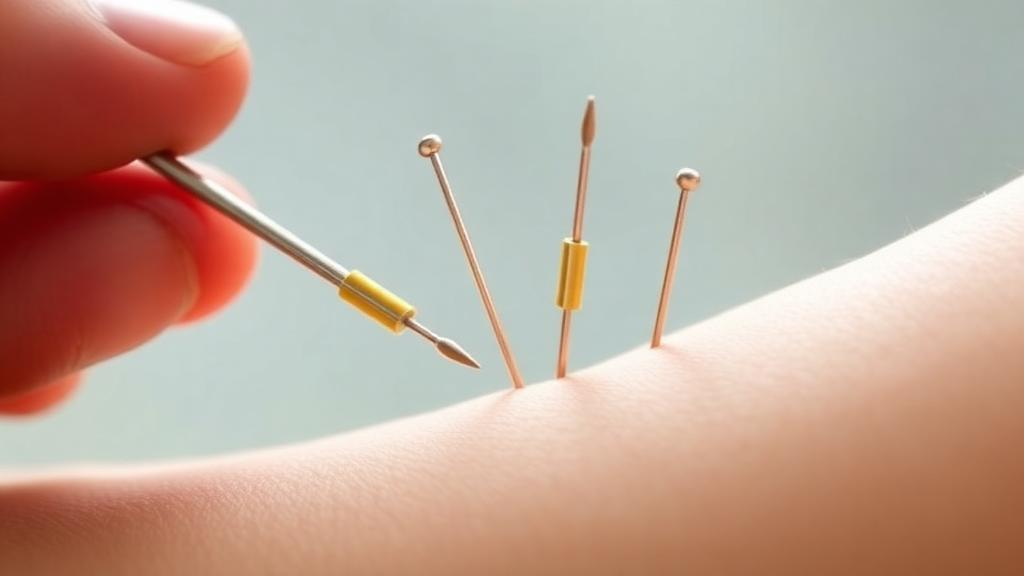
The technique itself is worth understanding, because it is more mechanically demanding than it first appears. Warm needle acupuncture combines acupuncture, the insertion of fine needles into specific points on the body, with moxibustion, the burning of dried mugwort near or on the skin to deliver radiant heat. In the warm needle variant, a small ball or cylinder of moxa is attached directly to the shaft of an inserted needle and ignited. Heat travels down the conductive metal shaft to the tip, delivering warmth deep into the tissue at the insertion point. Practitioners regard this as a way of intensifying the stimulation of acupuncture points, particularly for conditions associated with cold sensitivity, chronic pain, and musculoskeletal stiffness. The procedure, however, demands constant attention: the moxa must be sized and positioned correctly, the burning material must not scald the skin, smoke must be managed, and the needle must be monitored until the heat dissipates. Every one of those steps is an opportunity for error, and every one of them takes time.
To map how the profession actually uses this technique, the researchers conducted a web-based survey between September 27 and November 3, 2025, inviting all 28,319 licensed Korean Medicine doctors in the country to participate. A total of 1,076 completed the questionnaire, a sample large enough to support meaningful subgroup analysis across age brackets, career stages, and practice settings. Respondents were asked whether they used warm needle acupuncture, how often, for which conditions, whether they had encountered adverse events, what prevented more frequent use, and what kinds of devices, training, or reimbursement changes they would like to see. The study was reviewed and granted an exemption by the Institutional Review Board of Dongguk University Oriental Hospital and conducted in line with the Declaration of Helsinki, with electronic informed consent from all participants.
The headline finding is that warm needle acupuncture is far from marginal. Among the 1,076 respondents, 68.7 percent reported using it in clinical practice, a striking adoption rate for a procedure that requires hands-on fire management in an era of standardized, single-use needles. The subgroup analyses added an important nuance: utilization rose steadily with both clinical experience and age. Older, more seasoned practitioners were considerably more likely to reach for the moxa and the matches than their younger colleagues. That pattern cuts two ways. It suggests the technique’s value is learned and confirmed through years of practice, but it also hints at a generational drift, in which newer graduates trained in a more proceduralized, risk-averse clinical environment may be quietly letting the skill atrophy.
Then comes the number that will draw the most attention: among the 739 respondents who had actually used warm needle acupuncture, 87.8 percent reported having encountered at least one adverse event related to the technique in their clinical careers. The survey did not report that these events were severe, and in the context of moxibustion-adjacent procedures the most common harms are typically minor burns, blisters, and skin irritation at the treatment site. But the near-universality of the experience is itself the finding. It means that adverse events are not rare outliers in warm needle acupuncture practice; they are a routine, expected feature of the procedure as currently performed. For a modality seeking broader clinical and international adoption, that statistic is a red flag aimed squarely at the equipment rather than the concept.
When the researchers asked what stood in the way of more frequent use, the answers converged on three barriers: procedural complexity, safety concerns, and reimbursement limitations. In other words, the doctors surveyed were not doubting whether warm needle acupuncture helps their patients. The constraints they identified are logistical and systemic. The procedure is fiddly and time-consuming to perform correctly, the risk of burns is baked into the current manual method, and insurance coverage does not adequately reward the extra time and skill the technique demands. This distinction matters, because it reframes the problem. If clinicians believed the therapy was ineffective, the solution would be more trials and, potentially, abandonment. Because they believe it works but find it cumbersome and risky, the solution is engineering, standardization, and payment reform.
The survey’s data on future demand make that reframing explicit. A majority of respondents, 70.7 percent, said the top priority should be the development of user-friendly and safe warm needle devices, and 74.9 percent said they would be willing to adopt dedicated devices in their clinics if such tools became available. When asked which features mattered most, 64.7 percent pointed to improved ease of application and 46.7 percent to enhanced safety. Read together, these figures describe a profession that has effectively issued a product specification to the medical device industry: build a warm needle system that a busy clinician can apply quickly, that controls or eliminates the burn risk, and that integrates cleanly into a modern clinic’s workflow, and adoption will follow. The willingness-to-adopt figure is particularly notable, because surveys of clinicians often reveal resistance to new technology; here the resistance runs the other way, toward a technology that does not yet exist in the form practitioners want.
The authors conclude that the clinical utilization of warm needle acupuncture appears to be influenced primarily by procedural and systemic constraints rather than by doubts about its perceived clinical effectiveness. Their prescription is twofold: the development of standardized, safer devices, and appropriate insurance support to make the procedure economically viable in routine care. They also emphasize that further clinical research is required to strengthen the evidence base on both efficacy and safety, a necessary step if the modality is to travel beyond Korean Medicine clinics into international integrative medicine settings, where regulators and insurers demand controlled trial data before a therapy can be recommended or reimbursed.
The broader significance of the study lies in its methodology as much as its findings. Surveys that capture an entire licensed profession, with response data spanning nearly 29,000 invited practitioners, are rare in complementary and traditional medicine research, where evidence often rests on small case series or practitioner anecdotes. By quantifying who uses the technique, who gets burned by it, and what would make them use it more, the Korean team has converted a diffuse clinical impression into a set of actionable targets for device engineers, health insurers, and trial designers. Whether those targets are met will determine whether warm needle acupuncture remains a niche skill passed between experienced hands, or matures into a standardized, safely deliverable therapy that can be studied, insured, and exported on the same terms as any modern medical device.
Subject of Research: Clinical use, safety, and barriers to adoption of warm needle acupuncture in Korean Medicine practice
Article Title: A survey on the current clinical use and perceptions of warm needle acupuncture among Korean medicine doctors
Article References: Kim, M.-G., Sung, W.-S., Kim, E.-J., & Kim, E.-J. (2026). A survey on the current clinical use and perceptions of warm needle acupuncture among Korean medicine doctors. BMC Complementary Medicine and Therapies. https://doi.org/10.1186/s12906-026-05592-z
Image Credits: AI Generated
DOI: 10.1186/s12906-026-05592-z
Keywords: warm needle acupuncture, Korean Medicine, moxibustion, acupuncture, adverse events, medical devices, complementary medicine, nationwide survey, reimbursement, clinical practice, traditional medicine, safety
Cite Scienmag News
Ophelia Keating. (October 3, 2026). Warm Needle Acupuncture Is Widely Used but Held Back by Safety and Device Gaps, Survey Finds. Scienmag. https://scienmag.com/warm-needle-acupuncture-is-widely-used-but-held-back-by-safety-and-device-gaps-survey-finds/
Ophelia Keating. "Warm Needle Acupuncture Is Widely Used but Held Back by Safety and Device Gaps, Survey Finds." Scienmag, 3 October 2026, https://scienmag.com/warm-needle-acupuncture-is-widely-used-but-held-back-by-safety-and-device-gaps-survey-finds/. Accessed 4 October 2026.
Ophelia Keating. "Warm Needle Acupuncture Is Widely Used but Held Back by Safety and Device Gaps, Survey Finds." Scienmag. October 3, 2026. https://scienmag.com/warm-needle-acupuncture-is-widely-used-but-held-back-by-safety-and-device-gaps-survey-finds/


