

Sunday, October 25, 2026
Science
No Result
View All Result
  • Login
  • HOME
  • SCIENCE NEWS
  • CONTACT US
  • HOME
  • SCIENCE NEWS
  • CONTACT US
No Result
View All Result
Scienmag
No Result
View All Result
Home Science News Technology and Engineering

Wall Insulation Dominates Heating Savings in Cold-Region Factory Simulations

October 25, 2026
in Technology and Engineering
Denise Maddox
By Denise Maddox Scienmag Editorial Profile - Mechanical Engineering
Reading Time: 3 mins read
0
Wall Insulation Dominates Heating Savings in Cold-Region Factory Simulations

Wall Insulation Dominates Heating Savings in Cold-Region Factory Simulations

65
SHARES
587
VIEWS
Share on FacebookShare on Twitter
ADVERTISEMENT

A modeling study of a large assembly workshop in Shenyang, a city in China’s severe cold region, has ranked the building-design levers that most strongly shape industrial heating and cooling demand. Using controlled simulations with the DeST software, researchers varied envelope insulation, window shading, and ventilation rates and tracked how annual thermal loads responded. Their central result is a clear hierarchy: walls matter far more than roofs, solar control cuts cooling but raises heating, and ventilation changes trade cooling savings against winter heating penalties.

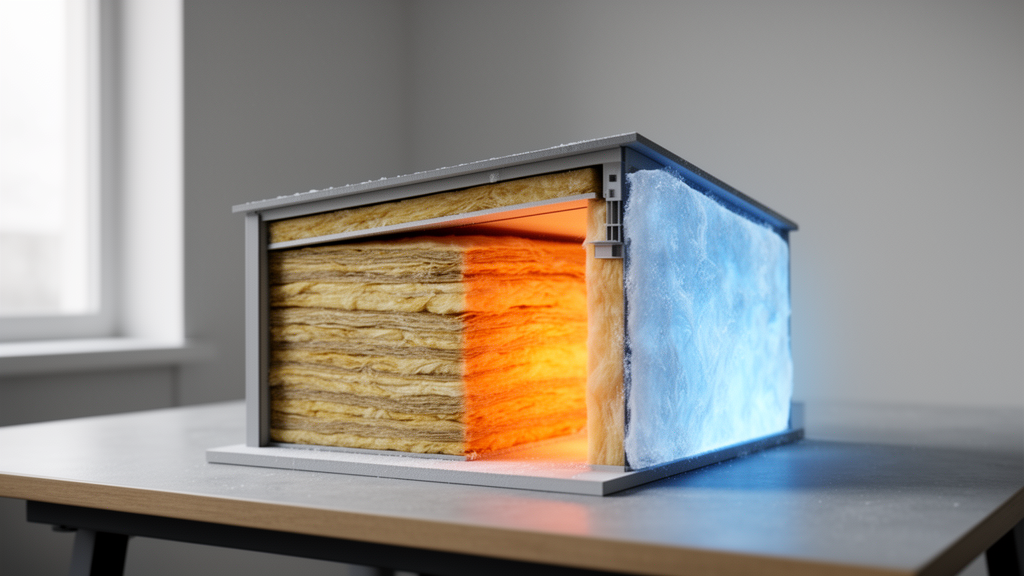
The sharpest contrast appeared in insulation performance. Lowering the wall U value from 1.0 to 0.1 W/(m²K) reduced the modeled annual heating load by 10.6 percent. Applying the same U-value reduction to the roof produced only a 1.85 percent decrease. The authors identify wall insulation as the more influential measure, a finding that reflects the large wall area and heat-exchange exposure typical of tall industrial halls.

Window properties showed a two-sided effect. Reducing shading coefficients lowered cooling load, but it simultaneously increased heating load, because less solar gain entered the space during cold months. The study therefore concludes that thermal and daylight performance should be evaluated together rather than optimized for one season alone.

Ventilation rates produced a similar seasonal trade-off. Increasing outdoor air exchange reduced cooling load while raising winter heating demand, since more cold outdoor air must be warmed during the heating season. Boundary analysis in the study indicated that sensible heat recovery can moderate this penalty by transferring heat from exhaust air to incoming fresh air.

The simulations also identified a transition zone in the cooling response between 3 and 4 air changes per hour. According to the authors, this interval can inform ventilation design when it is combined with indoor air quality requirements and production needs, rather than treated as a standalone optimum.

Important limitations frame these findings. Because operational measurements and reliable production schedules were unavailable, the model was not calibrated against real building performance, and internal heat gains from equipment and processes remained fixed. The authors state that the results therefore represent comparative thermal responses to design parameters, not predictions of operational energy use for a specific running factory.

Within those constraints, the study establishes an ordered set of priorities for industrial buildings in severe cold regions: wall insulation first, followed by solar control, ventilation rate selection, and heat recovery. For designers of large workshops in climates like Shenyang’s, the practical message is that envelope decisions, especially on walls, carry disproportionate weight in the annual heating budget, while measures that help in summer can quietly cost energy in winter unless heat recovery is built in.

Subject of Research: Thermal load responses of a large industrial workshop to envelope insulation, window shading, and ventilation design in a severe cold region

Article Title: Thermal load responses of a large assembly workshop to envelope and ventilation design in a severe cold region

Article References: Chu, Q., Wang, H., Wang, J., Liu, H., Ming, Y., & Zhu, S. (2026). Thermal load responses of a large assembly workshop to envelope and ventilation design in a severe cold region. Scientific Reports. https://doi.org/10.1038/s41598-026-76870-6

Image Credits: AI Generated

DOI: 10.1038/s41598-026-76870-6

Keywords: building simulation, DeST, heating load, cooling load, wall insulation, U value, shading coefficient, ventilation rate, heat recovery, severe cold region, industrial buildings, Shenyang

Cite Scienmag News

Denise Maddox. (October 25, 2026). Wall Insulation Dominates Heating Savings in Cold-Region Factory Simulations. Scienmag. https://scienmag.com/wall-insulation-dominates-heating-savings-in-cold-region-factory-simulations/


Denise Maddox. "Wall Insulation Dominates Heating Savings in Cold-Region Factory Simulations." Scienmag, 25 October 2026, https://scienmag.com/wall-insulation-dominates-heating-savings-in-cold-region-factory-simulations/. Accessed 25 October 2026.

Denise Maddox. "Wall Insulation Dominates Heating Savings in Cold-Region Factory Simulations." Scienmag. October 25, 2026. https://scienmag.com/wall-insulation-dominates-heating-savings-in-cold-region-factory-simulations/

Tags: building envelope designbuilding simulationcold-region factory energy efficiencycooling loadDeSTDeST simulation analysisenergy modeling in cold climatesheat recoveryheating loadIndustrial building insulationindustrial buildingsindustrial hall thermal performanceinsulation U-value effectsseasonal heating and cooling trade-offssevere cold regionshading coefficientShenyangthermal load reduction strategiesU-valueventilation rateventilation rate optimizationwall insulationwall insulation impact on heatingwindow shading and solar gain
Share26Tweet16
Previous Post

Experience eases trait anxiety in nurses caring for organ transplant patients

Next Post

Pelletized straw cuts nitrous oxide emissions in saline-alkali soil

Related Posts

Pelletized straw cuts nitrous oxide emissions in saline-alkali soil
Technology and Engineering

Pelletized straw cuts nitrous oxide emissions in saline-alkali soil

October 25, 2026
Digital NeuroEpiTool lets non-specialists assess neurological signs in population studies
Technology and Engineering

Digital NeuroEpiTool lets non-specialists assess neurological signs in population studies

October 25, 2026
Ensemble Machine Learning Helps Evolutionary Algorithms Track Changing Optimization Targets
Technology and Engineering

Ensemble Machine Learning Helps Evolutionary Algorithms Track Changing Optimization Targets

October 25, 2026
Explainable AI yields a five-parameter formula for nonlinear concrete creep
Technology and Engineering

Explainable AI yields a five-parameter formula for nonlinear concrete creep

October 25, 2026
Reuse quality of open polymer datasets: a reproducible cross-repository audit (2020–2025)
Technology and Engineering

Reuse quality of open polymer datasets: a reproducible cross-repository audit (2020–2025)

October 25, 2026
Trust-aware graph network shows promise and limits in skin lesion classification
Technology and Engineering

Trust-aware graph network shows promise and limits in skin lesion classification

October 25, 2026
Next Post
Pelletized straw cuts nitrous oxide emissions in saline-alkali soil

Pelletized straw cuts nitrous oxide emissions in saline-alkali soil

  • Mothers who receive childcare support from maternal grandparents show more optimized

    Mothers who receive childcare support from maternal grandparents show more parental warmth, finds NTU Singapore study

    27656 shares
    Share 11059 Tweet 6912
  • University of Seville Breaks 120-Year-Old Mystery, Revises a Key Einstein Concept

    1061 shares
    Share 424 Tweet 265
  • Bee body mass, pathogens and local climate influence heat tolerance

    682 shares
    Share 273 Tweet 171
  • Researchers record first-ever images and data of a shark experiencing a boat strike

    546 shares
    Share 218 Tweet 137
  • Groundbreaking Clinical Trial Reveals Lubiprostone Enhances Kidney Function

    531 shares
    Share 212 Tweet 133
Science

Embark on a thrilling journey of discovery with Scienmag.com—your ultimate source for cutting-edge breakthroughs. Immerse yourself in a world where curiosity knows no limits and tomorrow’s possibilities become today’s reality!

RECENT NEWS

  • Pelletized straw cuts nitrous oxide emissions in saline-alkali soil
  • Wall Insulation Dominates Heating Savings in Cold-Region Factory Simulations
  • Experience eases trait anxiety in nurses caring for organ transplant patients
  • Isorhoifolin Shields Rat Livers from Cadmium Toxicity by Taming Inflammation

Categories

  • Agriculture
  • Anthropology
  • Archaeology
  • Athmospheric
  • Biology
  • Biotechnology
  • Blog
  • Bussines
  • Cancer
  • Chemistry
  • Climate
  • Earth Science
  • Editorial Policy
  • Marine
  • Mathematics
  • Medicine
  • Pediatry
  • Policy
  • Psychology & Psychiatry
  • Science Education
  • Science News
  • Social Science
  • Space
  • Technology and Engineering

Subscribe to Blog via Email

Enter your email address to subscribe to this blog and receive notifications of new posts by email.

Join 5,151 other subscribers

© 2025 Scienmag - Science Magazine

Welcome Back!

Login to your account below

Forgotten Password?

Retrieve your password

Please enter your username or email address to reset your password.

Log In
No Result
View All Result
  • HOME
  • SCIENCE NEWS
  • CONTACT US

© 2025 Scienmag - Science Magazine

Discover more from Science

Subscribe now to keep reading and get access to the full archive.

Continue reading