


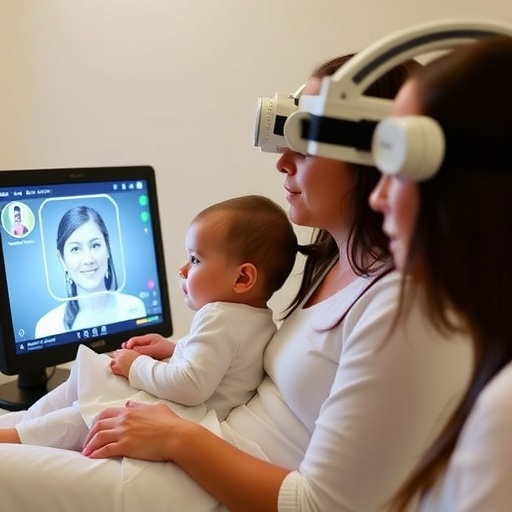
In a groundbreaking study published in Discover Psychology, researchers have revealed the transformative effects of a video-based virtual tour on the anxiety levels of mothers whose children are undergoing angiographic procedures. This innovative approach aims to alleviate the distress and uncertainty often associated with medical interventions, particularly those that are invasive and unfamiliar to both children and their caregivers. With up to 20% of children experiencing significant anxiety prior to undergoing such medical procedures, the implications of this research are profound not only for mothers but also for healthcare providers seeking to optimize patient experiences.
Angiography, while essential for diagnosing and treating various cardiovascular conditions, involves various forms of stress for both the children undergoing the procedure and their parents. For many mothers, the anticipation of their child’s angiography can lead to heightened anxiety levels, fueled by fears of the procedure’s risks, the unfamiliar hospital environment, and concern for their child’s well-being. This anxiety can negatively impact both maternal health and the child’s overall experience and recovery. Researchers sought solutions that could bridge this emotional gap and foster a supportive environment for both mothers and children.
The video-based virtual tour developed for this study serves as an informative and soothing tool that provides mothers with insights into the angiography process. By presenting a step-by-step visual narration of what to expect, these virtual tours demystify the experience, helping to reassure mothers about the safety and procedures involved. The concept is rooted in the psychological principle that familiarity with a stressful situation can significantly reduce anxiety levels; therefore, visual exposure to the environment and procedures may provide comfort to anxious parents and young patients.
During the study, participating mothers were introduced to the virtual tour prior to their child’s angiography. The mere act of seeing the medical staff, the equipment, and the procedure layout gave mothers an opportunity to mentally prepare for what was to come. This pre-emptive exposure is crucial, as it creates a sense of control and understanding—elements that are often lacking when facing the unknown.
Results from the study indicated a stark reduction in anxiety levels among mothers who participated in this virtual tour pre-session. Quantitative measurements of anxiety, taken before and after interacting with the video, exhibited statistically significant decreases. This finding emphasizes the power of visual aids in medical settings, a realm often devoted to more traditional, in-person methods of preparation and information dissemination.
Additionally, the comfort brought about by the virtual tour not only alleviated maternal anxiety but also had a positive effect on the children undergoing angiography. It is well-established that emotional states can be contagious, and a less anxious mother can help foster a more relaxed child. The study highlights this interconnected nature of maternal and child emotions, asserting that interventions aimed at one party can beneficially influence another.
Crucially, the researchers also noted that the effects of the virtual tour extended beyond the session itself. Follow-up surveys indicated that mothers reported feeling more equipped to engage with healthcare providers, contribute to their child’s care, and advocate for their needs in subsequent medical appointments. This shift in perspective is essential for fostering a cooperative relationship between parents and healthcare professionals, ultimately leading to enhanced outcomes for pediatric patients.
This research aligns with broader trends in pediatric medicine, where there is a growing emphasis on incorporating psychological well-being into treatment preparations. Healthcare providers are increasingly recognizing the need to address emotional and psychological barriers to care, especially in young patients. Traditional methods of disclosure, such as brochures or face-to-face meetings, often do not resonate with or adequately soothe anxious families. This innovative application of virtual reality holds promise for transforming these communication strategies.
Furthermore, the implications of these findings extend into future research avenues. There exists ample opportunity to explore additional applications for video-based interventions in various healthcare contexts beyond angiography. For instance, complementary studies could investigate similar virtual tools for other medical procedures known to cause anxiety, such as surgeries or diagnostic imaging. The adaptability of this technique could revolutionize how medical institutions approach preparatory protocols for anxious patients and families.
Given the constant expansion of digital resources, integrating virtual tours into pediatric care models may soon become an essential standard rather than an experimental option. Moreover, as healthcare systems move towards more patient-centric frameworks, the need for empathetic and aware practices becomes paramount. This means that combining technological innovation with psychological insight is no longer merely an option; it is a necessity.
The research led by Mohebali and colleagues sets a precedent for future endeavors in psychological support for pediatric care. The study stands as a vital contribution to understanding how innovative communication tools can be utilized to improve healthcare experiences for both children and their families. It urges medical professionals to consider the emotional dimensions of patient care and pursue additional research to refine and enhance these methodologies.
In conclusion, the study presents substantial evidence that supports the use of virtual tours as a viable form of intervention for anxious parents. It illuminates the significance of preparing for medical procedures and reshaping the way healthcare systems think about patient and family engagement. As we advance into an increasingly technology-enabled future, it is essential to harness the potential of these modern techniques to not only enhance clinical outcomes but also promote emotional health in healthcare settings.
Mohebali, F., Roshan, F.S., Khalilian, M. et al. Effect of a video-based virtual tour on the anxiety of mothers of children undergoing angiography.
Discov Psychol 5, 95 (2025). https://doi.org/10.1007/s44202-025-00432-6
Cite Scienmag News
Glenn Wilkins. (October 1, 2025). Virtual Tours Reduce Anxiety in Mothers During Angiography. Scienmag. https://scienmag.com/virtual-tours-reduce-anxiety-in-mothers-during-angiography/
Glenn Wilkins. "Virtual Tours Reduce Anxiety in Mothers During Angiography." Scienmag, 1 October 2025, https://scienmag.com/virtual-tours-reduce-anxiety-in-mothers-during-angiography/. Accessed 4 September 2026.
Glenn Wilkins. "Virtual Tours Reduce Anxiety in Mothers During Angiography." Scienmag. October 1, 2025. https://scienmag.com/virtual-tours-reduce-anxiety-in-mothers-during-angiography/


