


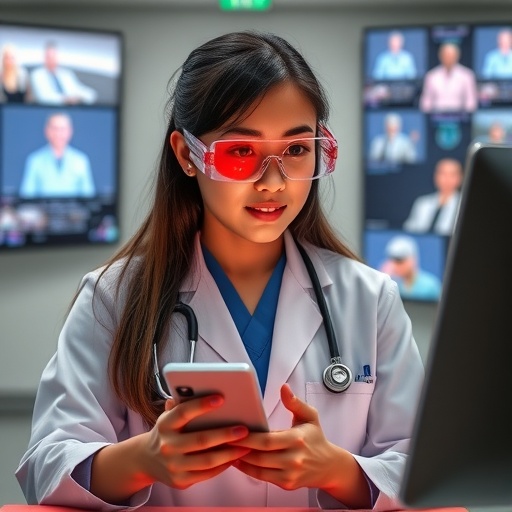
The integration of virtual simulation experiments in medical education is rapidly transforming how healthcare professionals are trained. In an innovative study published in BMC Medical Education, researchers Li, Li, and Wang delve into how technology acceptance, learning outcomes, and motivational impacts intersect within this virtual framework. The researchers’ findings illuminate potential pathways to enhance educational quality in medical training frameworks, raising questions about traditional approaches versus digital advancements.
Virtual simulations have become a focal point in medical training, especially in a world that continues to grapple with the challenges of in-person learning amid global upheavals. By creating sophisticated digital environments that mimic real-life medical situations, educators are arming students with an unprecedented level of preparedness. The study emphasizes that these simulations allow learners to engage with content interactively and provide a safe space to make mistakes without jeopardizing patient safety, a fundamental concern in medical education.
One of the key highlights of the research is the concept of technology acceptance. The findings suggest that medical students are more inclined to embrace virtual simulation tools when they see their direct relevance to clinical practice. The authors unveil a correlation between students’ varying degrees of acceptance and their previous exposure to technology. As younger generations who are digital natives begin to populate medical schools, it seems that their comfort level with technology is a crucial factor in the seamless integration of virtual simulations into educational curricula.
The motivational impact of these virtual simulations cannot be understated. During the study, the researchers assessed how engaging simulations can inspire students and improve their overall attitudes towards learning. They posit that the immersive nature of these experiences fosters intrinsic motivation. Students are not merely passive recipients of information; they become active participants eager to engage with the material presented to them, leading to improved understanding and retention of information.
Notably, the study showcases how learning outcomes improve significantly when virtual simulations are employed in a structured educational approach. Data collected indicates that students who participated in virtual simulations displayed greater competency in clinical skills assessments compared to their peers who relied solely on traditional methods. This calls attention to the need for higher education institutions to consider this evidence when developing their training methodologies, as the implications for student performance could be substantial.
An intriguing aspect of the research also considers how collaborative learning within these virtual environments enhances the educational experience. By facilitating group simulations, students can share knowledge and strategies, leading to a richer understanding of medical concepts. This teamwork aspect not only mirrors real-world healthcare environments where collaboration is critical but also builds communication skills essential for future healthcare practitioners.
However, despite these promising advancements, the study raises critical questions regarding the accessibility of such virtual technologies. With disparities in technological access, there exists a risk that only students from well-funded institutions may benefit from these enhancements in medical education. The researchers advocate for inclusive policies that ensure all medical students, regardless of their institutional resources, can access high-quality virtual training tools.
The findings from this research could serve as a roadmap for policymakers aiming to innovate medical education practices. By emphasizing virtual simulations, policy frameworks can evolve to meet modern educational demands, thereby equipping healthcare professionals with essential skills required in an increasingly digital world. Simulating real-life scenarios equips students not only with technical know-how but also with the confidence to handle actual clinical situations.
In addition, the implications for faculty are profound. Educators must adapt their teaching strategies to incorporate these digital tools effectively. Professional development focused on technology integration in the classroom can help bridge the knowledge gap for faculty members who might be less familiar with these innovations. By investing in training for educators, institutions can ensure the successful implementation of virtual simulations.
For students who have lagged in traditional classroom settings, virtual simulations present an opportunity to thrive. The researchers found that learners who struggled with conventional methods often excelled in immersive environments. This speaks volumes about the potential of these simulations to cater to diverse learning styles, thereby cultivating an education that is inclusive and adaptive to the needs of all students.
Looking forward, the study projects a hopeful outlook for future educational practices in medicine. The research emphasizes continual advancements in technology will facilitate even more sophisticated and realistic simulation environments. As the landscape of medical education evolves, it is paramount not to lose sight of the human elements; empathy, communication, and ethical considerations remain as essential components that must be integrated into any technological expansion.
In conclusion, this research presents compelling evidence supporting the incorporation of virtual simulation experiments in medical education. By understanding technology acceptance, enhancing learning outcomes, and fostering motivation, stakeholders in the medical education sphere can initiate a transformation that addresses both current and future challenges. As the study indicates, the path to creating more competent, prepared, and confident healthcare professionals lies within these digital innovations, making it vital for institutions to embrace the change.
Strengthened by the insights from the research, it’s clear that the sector is on the cusp of a robust shift in pedagogical approaches. Embracing technology doesn’t mean sidelining traditional practices; rather, it enriches and expands the toolkit available to educators and students alike. For those involved in medical training’s future, the integration of virtual simulations is not just a trend, but a significant evolution in the quest to provide thorough, effective education in an ever-changing world.
Li, K., Li, Q., Wang, L. et al. Virtual simulation experiments in medical education: technology acceptance, learning outcomes, and motivational impacts.
BMC Med Educ 25, 1462 (2025). https://doi.org/10.1186/s12909-025-08025-6
Cite Scienmag News
Courtney Benton. (October 27, 2025). Virtual Simulations in Medicine: Acceptance, Outcomes, Motivation. Scienmag. https://scienmag.com/virtual-simulations-in-medicine-acceptance-outcomes-motivation/
Courtney Benton. "Virtual Simulations in Medicine: Acceptance, Outcomes, Motivation." Scienmag, 27 October 2025, https://scienmag.com/virtual-simulations-in-medicine-acceptance-outcomes-motivation/. Accessed 4 September 2026.
Courtney Benton. "Virtual Simulations in Medicine: Acceptance, Outcomes, Motivation." Scienmag. October 27, 2025. https://scienmag.com/virtual-simulations-in-medicine-acceptance-outcomes-motivation/


