


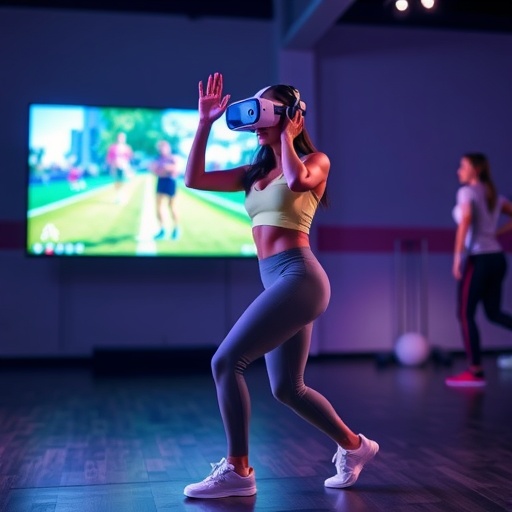
In the escalating global battle against obesity, the integration of cutting-edge technology with conventional health strategies is emerging as a promising frontier. Recent scientific investigations have begun to illuminate how virtual reality (VR) can act as an innovative adjunct to traditional exercise regimens, enhancing their efficacy through immersive, engaging, and interactive environments. A comprehensive systematic review and meta-analysis conducted by Yen, Chiu, and Huang, published in the International Journal of Obesity in 2025, underscores the transformative potential of VR-enhanced exergames in weight management interventions.
Obesity remains a pervasive challenge worldwide, with its multifactorial etiology encompassing genetic, behavioral, and environmental components. Traditional weight control methodologies, predominantly comprising dietary regulation and physical activity, have shown varied success due to issues such as adherence and motivation. Herein lies the appeal of VR-enhanced exergames—exercise-driven video games that leverage VR’s immersive capabilities to create engaging exercise experiences that may surmount motivational barriers hindering consistent physical activity among overweight and obese populations.
The meta-analysis synthesized data from multiple randomized controlled trials (RCTs), positioning VR-exergames as a novel medium that capitalizes on both psychological and physiological mechanisms in weight control. This research highlights how immersive virtual environments can augment the exercise experience by simulating diverse scenarios that maintain user engagement over extended periods, potentially increasing caloric expenditure through sustained physical activity.
From a technical standpoint, VR-exergames utilize sophisticated motion capture and feedback systems to track user movements with precision. These systems allow real-time interaction within three-dimensional simulated worlds, offering an array of physical challenges tailored to individual fitness levels. The interplay between sensory immersion and physical exertion not only fosters a heightened sense of presence but also modulates user behavior by embedding exercise within compelling narratives or competitive frameworks.
The study illustrates that such immersive modalities particularly benefit individuals struggling with exercise adherence. By replacing monotonous workout routines with dynamic, game-like activities, VR-exergames can mitigate common psychological barriers such as boredom and exercise-related anxiety. Consequently, participants are more likely to sustain longer and more frequent exercise sessions, facilitating greater energy expenditure and improved metabolic profiles.
Beyond behavioral outcomes, the meta-analysis delved into physiological metrics affected by VR-enhanced exergaming. Results indicated favorable trends in body mass index (BMI) reduction, waist circumference, and body fat percentage among participants engaged in these interventions for three months or longer. These improvements were statistically significant compared to control groups following traditional exercise protocols without VR augmentation.
Another noteworthy aspect of the research is the potential for personalized exercise prescription inherent in VR platforms. Through adaptive algorithms, VR systems can calibrate exercise intensity and complexity based on user performance and real-time biometrics, optimizing workload to promote effective fat metabolism while minimizing risk of injury. This personalized approach heralds a paradigm shift in exercise therapy, transitioning from generic prescriptions to data-driven, individualized programming.
Furthermore, the immersive nature of VR also exerts psychological benefits beyond motivation. The simulated environments can induce stress relief and distraction from discomfort or fatigue usually associated with physical exertion. Such positive affective responses may contribute to enhanced exercise tolerance and improved overall user experience, thereby reinforcing long-term engagement with physical activity.
The implications extend beyond weight control to encompass broader public health strategies. By integrating VR-exergames into community health programs, gyms, and clinical weight management services, healthcare providers can offer scalable, innovative solutions that blend entertainment with therapeutic goals. The convergence of digital gaming technologies and exercise science represents a lucrative avenue for curbing obesity trends at a population level.
Nevertheless, the authors noted several challenges that must be addressed to fully harness VR’s efficacy in weight control. These include technological accessibility, affordability, and the need for standardized protocols to evaluate long-term safety and effectiveness. Additionally, further research is warranted to explore the differential impacts across diverse demographic groups, including variations in age, sex, and baseline fitness.
Technologically, as VR hardware becomes more sophisticated and affordable, integration with wearable biosensors could enrich data collection, enabling real-time monitoring of heart rate, oxygen consumption, and caloric burn. Such biofeedback loops could further refine exercise intensity modulation and provide users with immediate performance insights, amplifying motivation and adherence.
The reviewed studies collectively emphasize that incorporating VR into exercise paradigms is not merely a gimmick but a substantive enhancement of traditional weight management tools. By bridging the gap between digital entertainment and physical activity, VR-exergames can revolutionize exercise engagement and efficacy, particularly in populations vulnerable to the obesogenic environment.
As VR continues to evolve, interdisciplinary collaboration between game developers, exercise physiologists, and clinical practitioners will be pivotal. Together, they can craft immersive exergames that are both scientifically grounded and user-centric, maximizing therapeutic outcomes while delivering enjoyable exercise experiences.
In conclusion, the systematic review and meta-analysis by Yen and colleagues represent a significant milestone in the intersection of digital innovation and obesity management. By evidencing the superior outcomes achievable through VR-enhanced exergames, this body of work calls for increased adoption and optimization of immersive exercise technologies in clinical and public health settings. The future of weight control may well lie in the virtual realms where motivation, technology, and exercise converge.
Cite Scienmag News
Ophelia Keating. (September 6, 2025). Virtual Reality Exergames Boost Weight Loss: Meta-Analysis. Scienmag. https://scienmag.com/virtual-reality-exergames-boost-weight-loss-meta-analysis/
Ophelia Keating. "Virtual Reality Exergames Boost Weight Loss: Meta-Analysis." Scienmag, 6 September 2025, https://scienmag.com/virtual-reality-exergames-boost-weight-loss-meta-analysis/. Accessed 5 September 2026.
Ophelia Keating. "Virtual Reality Exergames Boost Weight Loss: Meta-Analysis." Scienmag. September 6, 2025. https://scienmag.com/virtual-reality-exergames-boost-weight-loss-meta-analysis/


