

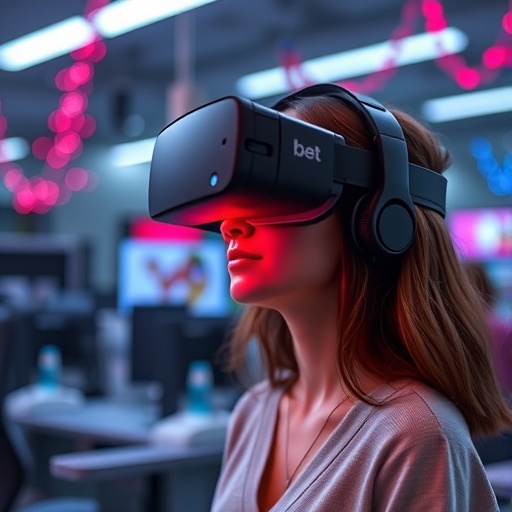
In an era where technology is transforming conventional educational paradigms, immersive virtual reality (VR) is emerging as a groundbreaking tool in medical education, particularly in preclinical biochemistry courses. A recent study led by researchers Dajani, Esteban, and Chaari explored its effectiveness in teaching the intricate structure of hemoglobin, a crucial protein responsible for oxygen transport in the bloodstream. This innovative approach has the potential to revolutionize how complex biological concepts are delivered and understood by students.
Hemoglobin, the protein that carries oxygen in red blood cells, has a complex structure that can be challenging for students to grasp through traditional teaching methods. The three-dimensional arrangement of amino acids, heme groups, and iron ions requires a level of spatial understanding that is often difficult to achieve with textbooks and static images. The study aimed to assess whether immersive VR could bridge this gap by providing an interactive learning experience that allows students to visualize and manipulate the structure of hemoglobin in a virtual space.
The researchers employed a mixed-methods approach to gauge student perceptions before and after the VR experience, combining quantitative data with qualitative insights. This method offered a comprehensive understanding of how students interacted with the technology and how it influenced their learning outcomes. The study involved a diverse cohort of medical students, providing insights that reflect a wide range of experiences and educational backgrounds.
Immersive VR platforms have rapidly evolved, offering increasingly sophisticated environments where users can engage with complex content in an intuitive manner. In this study, students were equipped with advanced VR headsets that facilitated an engaging and interactive exploration of hemoglobin. They could examine the protein’s structure from multiple angles, zoom in on specific elements, and even simulate its function within the bloodstream—an abstraction that is often lost in traditional learning modules.
Preliminary findings indicated that students who participated in the VR sessions reported enhanced understanding and retention of hemoglobin structure compared to their peers who relied on conventional teaching methods. They expressed that being able to see and interact with the structure allowed them to develop a better mental model of how alterations in hemoglobin can lead to medical conditions, such as sickle cell disease or thalassemia.
Another significant point raised by the students was the reduction of cognitive load when navigating the VR environment. Traditional learning often requires students to piece together information from various sources, which can lead to confusion and frustration. In contrast, the immersive VR experience streamlined the process by presenting cohesive and contextualized information that mirrored realistic biological processes.
Moreover, emotional engagement in learning materials is crucial for information retention. The study found that VR not only appealed to students’ rational understanding but also stimulated their emotional curiosity and excitement about learning. Participants described feelings of “being present” within the virtual world, which helped create memorable learning experiences that transcend typical classroom lectures.
Further analysis revealed that the effectiveness of VR as a teaching tool was particularly dependent on its integration into the curriculum. While the technology itself proved to be a captivating learning mechanism, the study suggested that its impact is maximized when students are encouraged to reflect on their VR experiences through discussions and collaborative work. This approach allows students to consolidate their learning and helps educators identify any gaps in understanding that might still exist post-experience.
Despite the overwhelming positive feedback, the study also noted some challenges in implementing VR in medical education. Technical issues, such as equipment availability and compatibility with existing curricula, were highlighted as potential barriers to widespread adoption. Furthermore, educators will need to undergo training to effectively incorporate VR into their teaching practices.
The cost associated with VR technology was another concern raised by both educators and institutions. While prices have been steadily decreasing, there is still a significant financial investment required to outfit classrooms with the necessary hardware and software. To address these issues, collaborative initiatives between educational institutions and tech companies may lead to more accessible solutions that prioritize the long-term benefits of enhanced learning experiences.
The findings from Dajani, Esteban, and Chaari’s research offer compelling evidence for the transformative potential of virtual reality in medical biochemistry education. As students increasingly demand immersive and engaging learning experiences, the education sector must consider how technology can enhance traditional teaching methods. The implications extend beyond the mere acquisition of knowledge; they speak to the need for fostering a generation of medical professionals who are equipped with both a strong understanding of complex biological systems and the ability to leverage technology in their practice.
In conclusion, the explorative study highlights the promise of VR as a pedagogical tool that not only enriches the educational landscape of preclinical medical biochemistry but also encourages a deeper understanding of vital biological concepts such as hemoglobin structure. As this technology continues to develop and become more affordable, it is poised to play an increasingly central role in shaping the future of medical education worldwide.
The study can serve as a cornerstone for further research into the integration of technology in curricula. It opens the door for future investigations into how other complex subjects might benefit from similar immersive experiences, ultimately contributing to enhanced competency and care in the medical profession.
As educators and institutions aim to meet the needs of 21st-century learners, embracing advancements such as VR could lead to a more informed and adaptable workforce. If the findings from this study are any indication, the future of medical education may well lie in the realms of virtual reality.
Subject of Research: Immersive virtual reality for teaching hemoglobin structure
Article Title: Immersive virtual reality for teaching hemoglobin structure in preclinical medical biochemistry education: a mixed-methods study of student self-reported perceptions.
Article References:
Dajani, I., Esteban, M.C. & Chaari, A. Immersive virtual reality for teaching hemoglobin structure in preclinical medical biochemistry education: a mixed-methods study of student self-reported perceptions.
BMC Med Educ (2026). https://doi.org/10.1186/s12909-026-08736-4
Image Credits: AI Generated
DOI: 10.1186/s12909-026-08736-4
Keywords: immersive virtual reality, hemoglobin structure, medical education, preclinical biochemistry, student perceptions, educational technology.


