


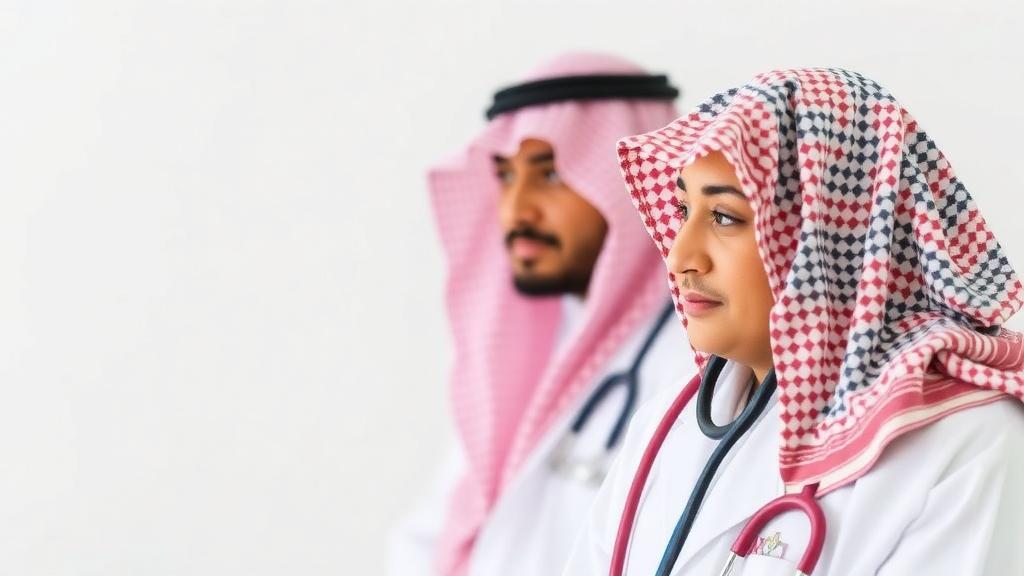
Medical students in the United States and Saudi Arabia are learning how to talk to patients across cultural divides, and a new study suggests the experiment is working. Researchers report that an international, virtual communication course jointly offered to medical students from both countries improved students’ confidence in patient-centered communication while deepening their understanding of how culture shapes clinical encounters. The findings, published in Global Surgical Education, the journal of the Association for Surgical Education, offer a template for teaching multicultural competence at a time when healthcare disparities linked to language, culture, and communication remain stubbornly persistent.
The course is a partnership between the Eastern Association for the Surgery of Trauma and a team of communication experts. Now in its sixth year, the program is delivered entirely online across five weekly modules using Zoom technology. Each session concentrates on a single, distinct communication skill, and every class includes one hour of deliberate skills practice with professional actors, facilitated by a physician. That structure reflects a growing consensus in medical education that communication is not a personality trait students either possess or lack, but a clinical skill that can be explicitly taught, rehearsed, observed, and refined, much like suturing or operative technique.
The scale of the collaboration is notable. Twenty-four students and ten faculty members drawn from seventeen medical schools in Saudi Arabia and the United States participated in the course, supported by nineteen simulated patient actors. The actors, many of them former patients, portray individuals in clinically realistic scenarios, allowing students to conduct medical interviews that feel authentic without any risk to real patients. Physician facilitators then guide debriefing sessions in which learners dissect what worked, what faltered, and how the encounter might have felt from the patient’s perspective. This combination of simulation, immediate feedback, and physician mentorship mirrors the deliberate-practice model that has transformed training in surgery and procedural medicine.
To evaluate the course’s impact, the research team conducted, recorded, and transcribed three focus groups designed to elicit students’ reflections on the class and its influence on their patient-centered communication. Twelve students, including both Saudi and US-based participants, took part in the focus groups. The researchers then applied thematic analysis, a qualitative method in which coded segments of transcript data are iteratively grouped into broader patterns, to identify recurring themes across the discussions. The analysis surfaced three broad domains: communication skills, cultural competency, and professionalism.
Across the focus groups, participants consistently reported increased self-confidence in executing important patient-centered medical interviews. Patient-centered communication, a framework in which the clinician elicits the patient’s own concerns, values, and expectations rather than simply extracting a symptom checklist, has been repeatedly associated in the literature with better adherence, improved health outcomes, and reduced disparities in care. Yet studies of medical training have long documented a curricular disconnect: students learn communication frameworks in the classroom but struggle to apply them during clinical clerkships, where observation and structured feedback are often scarce. The international course appears to narrow that gap, with students specifically appreciating the clinical relevance of what they learned in the virtual classroom and describing opportunities to apply those concepts in practice.
The cross-cultural dimension of the course proved to be one of its most powerful elements. Students reflected on the influence of cultural context in areas such as gender roles and family authority, recognizing that a question or behavior that seems neutral in one cultural setting may carry very different weight in another. In some families, for example, medical decisions may be shaped by senior family members rather than the patient alone, and students learned to navigate these dynamics respectfully rather than dismissing them as obstacles. By pairing learners from two distinct healthcare cultures, the course exposed students to varied cultural expectations and practices firsthand, turning the virtual classroom itself into a living exercise in intercultural exchange.
The program also functioned as an early proving ground for medical professionalism. Participants demonstrated positive attributes of professionalism during class participation, an outcome the authors consider significant because professionalism, like communication, is increasingly treated as a competency to be cultivated and assessed throughout medical education rather than absorbed by osmosis. Prior research has explored peer evaluation and self-evaluation as tools for assessing professionalism in early training, and the course’s emphasis on respectful, sensitive responses to patients from diverse cultures gave students a concrete stage on which to practice those attributes under observation.
The study’s findings arrive against a well-documented backdrop. Reviews of cultural competency in medical education have concluded that such training is essential for minimizing disparities in healthcare access and quality, and a Cochrane systematic review of interventions to improve medical students’ interpersonal communication in consultations underscores both the importance and the difficulty of doing this well. Questions have also been raised about whether patient-centered cultural competency training can be effective in non-Western countries, making a course that genuinely bridges US and Saudi institutions particularly relevant. By operating virtually, the program sidesteps the cost and logistics of international travel, suggesting a scalable model that other specialties and regions could adapt.
The researchers are careful about the limits of their evidence. The evaluation rests on qualitative focus group data from twelve students, which can illuminate how learners experienced the course and what they believe changed, but cannot by itself quantify improvements in clinical performance or patient outcomes. Data from the study are available by request, and the authors note that all contributors, including the many actors who portrayed patients, were essential to the program’s success. Still, the consistency of the themes across both Saudi and US participants lends weight to the conclusion that the course prepared students to respond respectfully and sensitively to patients from diverse cultures.
For a specialty like surgery, where time-pressured encounters and high-stakes decisions amplify the consequences of miscommunication, the implications are striking. If a five-week virtual course built on simulation, physician facilitation, and international peer exchange can measurably boost students’ confidence and cultural awareness, medical schools may have a low-cost, exportable blueprint for embedding multicultural competence into undergraduate training. As the course enters future iterations, the challenge will be to track whether these self-reported gains translate into durable changes in behavior at the bedside, and ultimately into more equitable care for the increasingly diverse populations that modern medicine serves.
Subject of Research: A virtual international communication skills course for US and Saudi medical students and its effects on cultural competency and patient-centered care
Article Title: Multicultural competence education improves care: an international communication course for medical students
Article References: Newcomb, A. B., Mashbari, H., Abbaker, R., Stidham, M., Elhadi, K., Muzaiiadi, S., March, E., Appelbaum, R. D., Wells, K. M., & Mohess, D. (2026). Multicultural competence education improves care: an international communication course for medical students. Global Surgical Education – Journal of the Association for Surgical Education, 5(1), Article 133. https://doi.org/10.1007/s44186-026-00538-y
Image Credits: AI Generated
DOI: 10.1007/s44186-026-00538-y
Keywords: medical education, cultural competency, communication skills, patient-centered care, virtual learning, simulation, Saudi Arabia, United States, surgical education, professionalism, healthcare disparities, qualitative research
Cite Scienmag News
Courtney Benton. (October 4, 2026). Virtual Course Links US and Saudi Medical Students to Build Culturally Competent Care. Scienmag. https://scienmag.com/virtual-course-links-us-and-saudi-medical-students-to-build-culturally-competent-care/
Courtney Benton. "Virtual Course Links US and Saudi Medical Students to Build Culturally Competent Care." Scienmag, 4 October 2026, https://scienmag.com/virtual-course-links-us-and-saudi-medical-students-to-build-culturally-competent-care/. Accessed 4 October 2026.
Courtney Benton. "Virtual Course Links US and Saudi Medical Students to Build Culturally Competent Care." Scienmag. October 4, 2026. https://scienmag.com/virtual-course-links-us-and-saudi-medical-students-to-build-culturally-competent-care/


