


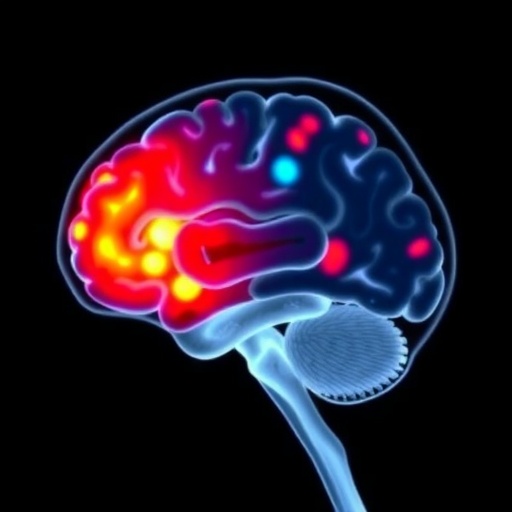
In the dynamic and ever-evolving realm of pediatric neurology, the role of advanced neuroimaging techniques continues to unveil unprecedented insights into drug-associated cerebral changes. A groundbreaking study recently published in Pediatric Research sheds light on the enigmatic brain abnormalities linked to the widely used anticonvulsant vigabatrin in children with epileptic spasms. This landmark investigation, led by Mir, Amer, and AlOtaibi among others, meticulously elucidates the risk factors and neuroimaging patterns characteristic of vigabatrin-associated brain abnormalities on MRI (VABAM), a subject that has perplexed clinicians and researchers alike.
Vigabatrin, a potent irreversible inhibitor of gamma-aminobutyric acid transaminase (GABA-T), plays a pivotal role in managing complex epileptic conditions, particularly infantile spasms and refractory epilepsy. Its therapeutic efficacy, however, has been marred by concerning reports of neurotoxic effects visible on MRI scans, manifesting as transient, yet striking, signal abnormalities in specific brain regions. These findings provoke a critical question: What underpins these alterations, and how can clinicians preemptively identify children at elevated risk for VABAM?
The study systematically explores clinical, demographic, and neuroimaging datasets from a cohort of pediatric patients undergoing vigabatrin therapy for epileptic spasms. By leveraging high-resolution MRI sequences sensitive to diffusion and T2-weighted signals, the researchers delineate the spatial and temporal evolution of brain alterations attributable to vigabatrin exposure. Notably, the pathognomonic MRI changes predominantly localize within deep gray matter structures, including the thalami, basal ganglia, and brainstem nuclei, regions intrinsically linked to GABAergic neurotransmission.
Crucially, this investigation transcends mere description, venturing into the mechanistic realm by postulating the neurochemical and metabolic underpinnings of VABAM. Vigabatrin-induced accumulation of gamma-aminobutyric acid (GABA) is hypothesized to perturb osmotic balance and mitochondrial function, engendering cytotoxic edema that manifests as hyperintensities on diffusion-weighted imaging. Corroborating this hypothesis, longitudinal imaging demonstrates reversibility of these signal abnormalities upon cessation or adjustment of vigabatrin dosage, underscoring a dynamic interplay between drug concentration and neurotoxicity.
Compellingly, the authors identify several salient risk factors that potentiate vulnerability to VABAM. Younger age at initiation of therapy emerges as a significant predictor, implicating developmental neurobiology as a modulator of drug sensitivity. Additionally, cumulative vigabatrin dose and concomitant use of other antiepileptic agents appear to synergistically amplify the probability and severity of MRI changes. These findings advocate for rigorous therapeutic monitoring protocols tailored to individual risk profiles, a paradigm shift towards precision medicine in pediatric epilepsy care.
The clinical implications of detecting VABAM extend beyond radiologic curiosity. While many patients remain neurologically asymptomatic despite radiographic anomalies, some exhibit transient extrapyramidal symptoms and status epilepticus exacerbations, compelling neurologists to reconsider therapeutic strategies. Moreover, these MRI changes, if unmonitored, may confound diagnostic interpretations, masquerading as acute ischemic or inflammatory pathologies, thus underscoring the necessity for heightened awareness and differential diagnostic acumen among radiologists and clinicians.
Intriguingly, the temporal resolution of VABAM remains contentious. The study meticulously charts the trajectory of MRI abnormalities, revealing peak manifestation typically within weeks of therapy initiation, followed by gradual resolution over months. This temporal pattern affords clinicians an evidence-based framework for scheduling follow-up imaging and modulating treatment duration to optimize therapeutic efficacy while minimizing adverse effects.
From a technological vantage point, the study leverages advanced neuroimaging modalities, including diffusion tensor imaging and susceptibility-weighted sequences, to capture microstructural changes invisible on conventional scans. These sophisticated tools illuminate the subtleties of vigabatrin-induced neurotoxicity and offer promising avenues for early detection and potential biomarkers of neural compromise.
Beyond imaging, the study touches upon the broader neuropharmacological context, emphasizing vigabatrin’s unique mechanism of action within the GABAergic system. As an irreversible GABA-T inhibitor, vigabatrin elevates ambient GABA levels, enhancing inhibitory neurotransmission and seizure control. However, this biochemical modulation may inadvertently precipitate regional neurotoxicity, a delicate balance that clinicians must judiciously navigate.
Importantly, this investigation amplifies calls for multidisciplinary collaboration among neurologists, radiologists, pharmacologists, and neurodevelopmental specialists. The intricate interaction between pharmacodynamics, neurodevelopment, and brain imaging demands integrated expertise to refine treatment algorithms for children with epileptic spasms.
Moreover, the study advocates for patient-centered communication strategies. Families must be apprised of potential neuroimaging findings and associated risks without inducing undue alarm, fostering informed consent and adherence to monitoring protocols. Transparency becomes paramount in balancing therapeutic benefits against latent neurotoxic threats.
Looking forward, the findings spark a host of research imperatives. Future studies might interrogate the genetic and molecular determinants that mediate susceptibility to VABAM, potentially revealing predictive biomarkers amenable to personalized medicine frameworks. Additionally, the development of alternative antiepileptic agents with diminished neurotoxicity profiles represents a vital therapeutic frontier.
In sum, the contribution of Mir, Amer, AlOtaibi, and colleagues constitutes a seminal advance in pediatric epileptology, elucidating the complex interplay between vigabatrin pharmacotherapy and brain MRI alterations. Their rigorous analysis offers a comprehensive risk stratification model and enriches our understanding of drug-induced neuroimaging phenomena with profound clinical ramifications.
As the epilepsy community assimilates these insights, clinical protocols must evolve to incorporate vigilant MRI surveillance, individualized dosing, and interdisciplinary vigilance. Such innovations promise to enhance therapeutic outcomes, mitigate adverse sequelae, and ultimately improve the neurological futures of children grappling with epileptic spasms.
This study exemplifies the power of contemporary neuroimaging to not only visualize the unseen but to decode the pathophysiological narratives unfolding beneath therapeutic interventions. In an era where precision health is paramount, elucidating drug-related cerebral changes is indispensable to harmonizing efficacy with safety, particularly in the fragile brain of a developing child.
The intricate mosaic of vigabatrin-associated brain abnormalities, once opaque and confounding, now emerges with clarity, guiding neurologists toward more nuanced, data-driven decisions. As research continues to bridge pharmacology and imaging, the hope for safer, smarter epilepsy management draws ever closer within reach.
Cite Scienmag News
Cassandra Pierce. (June 17, 2025). Vigabatrin-Linked Brain MRI Changes in Epileptic Kids. Scienmag. https://scienmag.com/vigabatrin-linked-brain-mri-changes-in-epileptic-kids/
Cassandra Pierce. "Vigabatrin-Linked Brain MRI Changes in Epileptic Kids." Scienmag, 17 June 2025, https://scienmag.com/vigabatrin-linked-brain-mri-changes-in-epileptic-kids/. Accessed 4 September 2026.
Cassandra Pierce. "Vigabatrin-Linked Brain MRI Changes in Epileptic Kids." Scienmag. June 17, 2025. https://scienmag.com/vigabatrin-linked-brain-mri-changes-in-epileptic-kids/


