


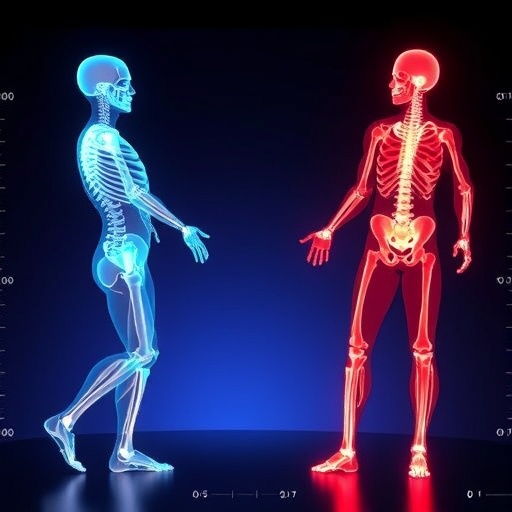
In the relentless rhythm of urban life, the health and wellbeing of workers in physically demanding occupations often remain overshadowed by broader societal concerns. Among these vulnerable populations, cleaners stand out as a group disproportionately affected by work-related musculoskeletal disorders (WMSDs), conditions that significantly impair quality of life and productivity. A groundbreaking study has emerged from a collaborative team led by Cheung et al., aiming to deepen our understanding of the work-style factors contributing to these ailments specifically within Chinese cleaner populations. Their research validates an innovative assessment tool, the Chinese-WSF28, designed to quantitatively capture the complex interplay between behavioral, psychosocial, and ergonomic factors influencing musculoskeletal health. This development marks a crucial step forward in addressing longstanding health inequities present in labor-intensive professions.
Work-related musculoskeletal symptoms encompass a wide spectrum of ailments, ranging from acute injuries to chronic conditions affecting muscles, tendons, and nerves. Globally, these disorders represent one of the leading causes of workplace disability, accounting for substantial healthcare costs and lost economic output. Cleaners frequently perform repetitive motions, exert forceful muscle contractions, and adopt awkward postures—conditions ripe for musculoskeletal strain. However, traditional assessment instruments have often failed to fully contextualize the unique cultural and occupational nuances experienced by Chinese cleaners, rendering existing interventions less effective or irrelevant.
The research by Cheung and colleagues centers on validating the Chinese-WSF28, a culturally adapted version of the Workstyle Short Form questionnaire. This tool encompasses 28 items addressing behavioral patterns such as work pace, breaks, self-imposed work demands, and cognitive-emotional responses to workplace stress. By operationalizing workstyle as a multifaceted construct, the instrument transcends simplistic ergonomics, integrating psychosocial dimensions that critically influence symptom development and persistence.
Methodologically, the team employed rigorous psychometric validation procedures, enrolling a large, diverse cohort of cleaners within multiple urban centers. The study involved comprehensive data collection through structured interviews, self-reported symptom inventories, and objective ergonomic assessments conducted via observational techniques and wearable sensors. This multimodal approach ensured a robust linkage between perceived workstyle factors and quantifiable musculoskeletal outcomes.
One of the study’s pivotal findings reveals that maladaptive workstyles—characterized by excessive work intensity without adequate rest, high job demands coupled with low autonomy, and negative emotional coping—significantly predict the severity and frequency of musculoskeletal symptoms. Notably, these associations persisted even after controlling for commonly recognized ergonomic hazards, underscoring the critical role of psychosocial elements in musculoskeletal health.
Moreover, Cheung et al.’s validation of the Chinese-WSF28 elucidates key cultural facets that affect cleaners’ work behavior and symptom reporting. For example, workplace social norms emphasizing endurance and “silent suffering” often discourage early symptom disclosure or seeking ergonomic accommodations. This cultural lens is vital for tailoring effective intervention programs and reorienting occupational health policies within China and regions with similar socio-cultural milieus.
From a clinical perspective, the study’s implications are profound. Incorporating workstyle assessments into routine occupational health evaluations facilitates early identification of high-risk individuals who might otherwise be overlooked by traditional biomechanical screenings. Targeted behavioral interventions, mental health support, and tailored job redesign can then be employed to mitigate symptom progression, reducing the burden of disability and enhancing worker retention.
The integration of the Chinese-WSF28 within employer-based health programs also aligns with global trends emphasizing holistic worker wellbeing. Unlike ergonomic interventions focusing solely on physical modifications, this tool enables businesses to address underlying psychosocial stressors, fostering a more supportive work climate conducive to health equity.
Importantly, the researchers highlight that addressing health inequities in cleaner populations extends beyond individual-level solutions. Structural determinants—such as precarious employment contracts, insufficient access to healthcare, and limited occupational safety regulations—compound the risk of musculoskeletal morbidity. The validated assessment tool thus serves as a catalyst for advocating systemic change, providing empirical evidence to inform policymakers seeking to improve labor conditions.
The study further contributes to the theoretical understanding of workstyle as a dynamic construct mediated by both internal attributes and external work environment factors. This dual influence demands multidisciplinary collaboration between ergonomists, occupational psychologists, and public health practitioners to design and implement effective prevention strategies.
While the Chinese-WSF28 represents a significant advancement, the authors acknowledge areas for future research. Longitudinal studies are needed to establish causal pathways between workstyle modifications and symptom trajectories. Additionally, the potential for digital adaptations of the questionnaire could enhance accessibility and real-time monitoring, especially in remote or underserved settings.
The timing of this research is particularly pertinent amidst the ongoing global emphasis on occupational health equity. As the COVID-19 pandemic underscored vulnerabilities within essential workforce sectors, including cleaning personnel, tools like the Chinese-WSF28 provide practical means to safeguard worker health in a post-pandemic world where health disparities remain glaring.
Technologically, integrating wearables and sensor technology with the workstyle questionnaire may offer unprecedented granularity in capturing real-time risk exposures. Such data-driven approaches could revolutionize preventive ergonomics, enabling predictive analytics to preempt symptom onset before debilitating injuries occur.
Crucially, the study underscores the necessity of embedding culturally sensitive instruments within occupational health research. Western-centric tools often lack validity when translated into non-Western contexts, a limitation decisively addressed by the authors through their collaborative adaptation process involving linguists, cultural experts, and frontline workers.
Ultimately, Cheung et al.’s work embodies a compelling fusion of empirical rigor and practical relevance, charting a path toward more equitable and effective interventions targeting musculoskeletal health disparities among cleaners. Their validation of the Chinese-WSF28 enriches the evolving toolkit available to occupational health stakeholders, promising improved outcomes for a historically marginalized yet indispensable workforce segment.
As cleaner populations continue to grow globally, propelled by urbanization and economic development, equipping researchers and practitioners with culturally attuned, psychometrically sound instruments is indispensable. Such advancements not only elevate the scientific understanding of musculoskeletal disorders but also champion the human right to safe, dignified working conditions—bridging the divide between research, policy, and the lived realities of workers.
In summary, the validation of the Chinese-WSF28 by Cheung and colleagues represents a milestone in occupational health research. By decoding the complex behavioral and psychosocial signatures of workstyle within Chinese cleaners, the study opens new avenues for targeted prevention, culturally responsive interventions, and policy advocacy. The converging evidence from this work holds promise for alleviating the pervasive burden of work-related musculoskeletal symptoms and advancing health equity within vulnerable worker populations worldwide.
Cheung, K., Ma, K., Cheung, E. et al. Addressing health inequities: validating the Chinese-WSF28 workstyle for work-related musculoskeletal symptoms among cleaners.
Int J Equity Health 24, 213 (2025). https://doi.org/10.1186/s12939-025-02587-z
Cite Scienmag News
Courtney Benton. (July 31, 2025). Validating Chinese-WSF28 for Cleaner Musculoskeletal Health. Scienmag. https://scienmag.com/validating-chinese-wsf28-for-cleaner-musculoskeletal-health/
Courtney Benton. "Validating Chinese-WSF28 for Cleaner Musculoskeletal Health." Scienmag, 31 July 2025, https://scienmag.com/validating-chinese-wsf28-for-cleaner-musculoskeletal-health/. Accessed 3 September 2026.
Courtney Benton. "Validating Chinese-WSF28 for Cleaner Musculoskeletal Health." Scienmag. July 31, 2025. https://scienmag.com/validating-chinese-wsf28-for-cleaner-musculoskeletal-health/


