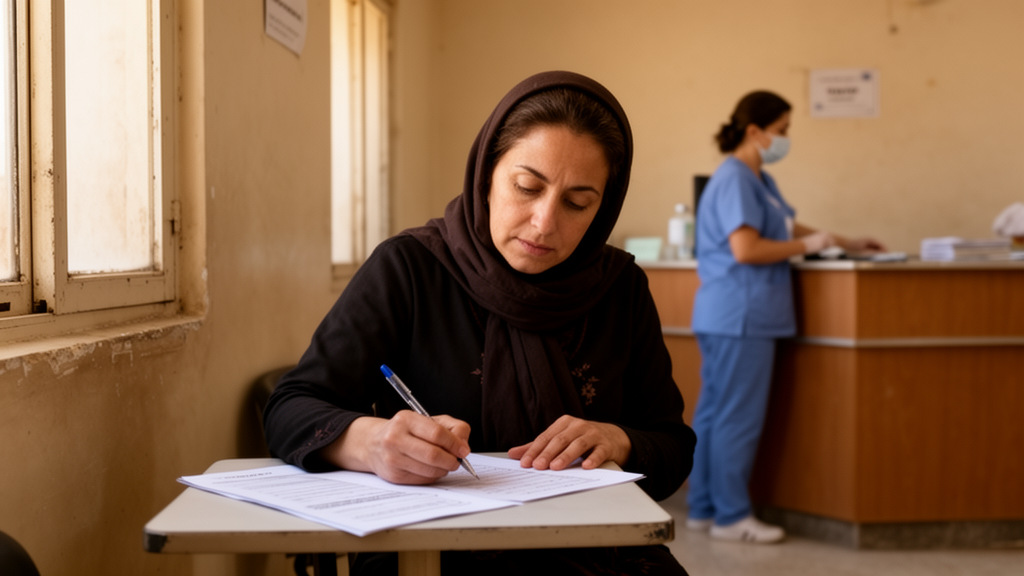
Women in Mosul, Iraq, show substantial gaps in knowledge, attitudes, and practices related to vaginitis, one of the most common gynecologic complaints worldwide and a leading cause of reproductive morbidity, according to a mixed-methods hospital-based study published in BMC Public Health. Only 38.8 percent of the 500 women surveyed demonstrated good knowledge of the condition, 33.4 percent held a favorable attitude, and just 39.4 percent showed good preventive and care-seeking practices. Recurrent episodes, defined in the study as two or three or more infections per year, were reported by the majority of participants, a pattern the researchers interpret as a sign of unsuccessful primary prevention and inadequate healthcare-seeking behavior.
The research team, led by Omaima Abdulrazzaq Zubair, carried out the study over three years, from April 2022 to May 2025, in Mosul city in northern Iraq. The design combined a quantitative cross-sectional survey of 500 women with a qualitative component of semi-structured interviews using purposive sampling. A structured coding system assessed knowledge, attitude, and practice levels, and the data were analyzed in SPSS.
Bivariate chi-square tests were followed by multivariate logistic regression to identify which demographic and socioeconomic variables were independently associated with each score. The most commonly affected age group among participants was 26 to 35 years, and the majority were married housewives with limited higher education. In the multivariate model, women with lower educational attainment had markedly reduced odds of good knowledge compared with university-educated women, with an adjusted odds ratio of 0.060 (95 percent confidence interval 0.028 to 0.130, p < 0.001).
In practical terms, lower-educated women in the sample were roughly sixteen times less likely to show good knowledge of vaginitis than their university-educated counterparts. Attitude and practice scores told a similar story, but with residence and socioeconomic status playing prominent roles alongside education. Rural women had markedly reduced odds of a moderate attitude compared with suburban women (AOR = 0.046, 95 percent CI 0.020 to 0.104, p < 0.001), the strongest association observed for the attitude score.
For practices, the direction reversed: rural women had significantly higher odds of poor practice compared with suburban women (AOR = 3.080, 95 percent CI 1.679 to 5.652, p < 0.001). The authors conclude that the knowledge gap was statistically significantly associated with lower educational background and a poorer residential environment. A central technical finding of the study is the interdependence of the three KAP domains.
Knowledge, attitude, and practice levels were significantly associated with one another, all at p < 0.001. Women with good knowledge were more likely to hold favorable attitudes and to practice good preventive behaviors, while unfavorable attitudes were predominantly associated with poor practices. This pattern supports the study's conclusion that improving knowledge can improve practice and reduce suffering, although as a cross-sectional analysis it demonstrates association rather than a proven causal chain over time.
The qualitative interviews reinforced and humanized the quantitative results. Participants' narratives pointed to little awareness of the condition, the presence of cultural stigma around discussing vaginal symptoms, reliance on home remedies, and minimal partner involvement in health care. The study's authors frame frequent recurrence as an indicator that prevention and care-seeking are failing at the community level, not merely that individual treatment episodes are unsuccessful.
Because the study was hospital-based in a single city, its findings describe the surveyed population in Mosul and cannot be generalized to all Iraqi women without further sampling; the cross-sectional design also limits causal inference. The authors argue that the data underscore the need for targeted education covering the symptoms of vaginitis, methods of transmission, when to seek care, and preventive practices, along with efforts to involve partners in order to decrease recurrence rates and improve health. Within the study population, the statistical signal is consistent: education, residence, and socioeconomic status stratify who knows about the condition, how they feel about it, and what they do about it, and those three layers move together.
Subject of Research: Women's knowledge, attitudes, and practices regarding vaginitis in Mosul, Iraq
Article Title: Assessment of knowledge, attitude, and practices of women regarding vaginitis in Mosul, Iraq: a mixed-methods study
Article References: Zubair, O. A. (2026). Assessment of knowledge, attitude, and practices of women regarding vaginitis in Mosul, Iraq: a mixed-methods study. BMC Public Health. https://doi.org/10.1186/s12889-026-29575-4
Image Credits: AI Generated
DOI: 10.1186/s12889-026-29575-4
Keywords: vaginitis, women's health, Iraq, Mosul, knowledge attitude practice, mixed-methods study, public health, health education, recurrent infection, reproductive health, cross-sectional study, healthcare-seeking behavior
Cite Scienmag News
Ophelia Keating. (October 28, 2026). Vaginitis Knowledge Gaps Widespread Among Women in Mosul Study. Scienmag. https://scienmag.com/vaginitis-knowledge-gaps-widespread-among-women-in-mosul-study/
Ophelia Keating. "Vaginitis Knowledge Gaps Widespread Among Women in Mosul Study." Scienmag, 28 October 2026, https://scienmag.com/vaginitis-knowledge-gaps-widespread-among-women-in-mosul-study/. Accessed 30 October 2026.
Ophelia Keating. "Vaginitis Knowledge Gaps Widespread Among Women in Mosul Study." Scienmag. October 28, 2026. https://scienmag.com/vaginitis-knowledge-gaps-widespread-among-women-in-mosul-study/