


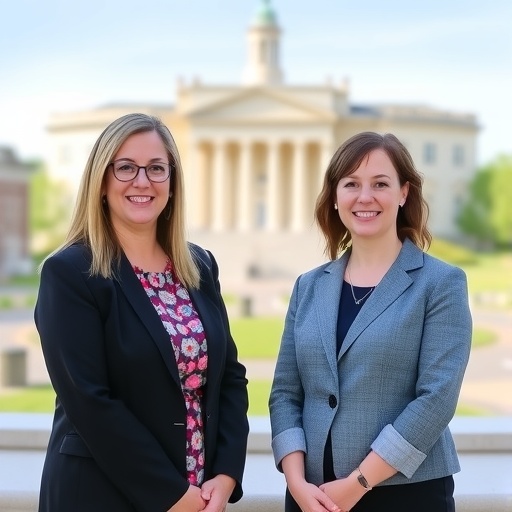
Three University of Virginia computer science professors have been selected among the inaugural 80 members of the Software Engineering Academy, a new international honor society created by the Association for Computing Machinery’s Special Interest Group on Software Engineering. The induction places Matthew Dwyer, Sebastian Elbaum and Mary Lou Soffa among a global group of researchers, educators and practitioners whose work has shaped how software is designed, tested, maintained and trusted. The recognition arrives at a moment when software has become the infrastructure of modern life, controlling everything from medical systems and transportation networks to financial platforms, scientific instruments and artificial intelligence tools.
The Software Engineering Academy was established to honor professionals whose contributions have produced a “profound and enduring impact” through research, industrial practice or education. Unlike awards focused on a single paper, product or technical breakthrough, academy membership recognizes sustained influence over the development of an entire discipline. Software engineering encompasses the methods used to transform ideas into reliable computer programs, including requirements analysis, architecture, programming, verification, testing, deployment and long-term maintenance. As software systems grow larger and more interconnected, these processes have become essential for preventing failures that can carry serious economic, social and even human consequences.
Dwyer, Elbaum and Soffa each hold senior positions in UVA’s Department of Computer Science and have also been elected fellows of both the Institute of Electrical and Electronics Engineers and the Association for Computing Machinery. That dual distinction is reserved for a relatively small group of computing professionals whose accomplishments are considered exceptional by their peers. Their election to the new academy therefore represents more than a university honor: it reflects the international reach of UVA’s software engineering research and its influence on the education of generations of computer scientists.
Software engineering research addresses a fundamental problem in computing: how can people construct systems that remain correct and dependable despite enormous complexity? A modern application may contain millions of lines of code, rely on numerous external services and operate under conditions that its original developers could not predict. Engineers use techniques such as formal verification, static analysis, automated testing and runtime monitoring to identify defects before they cause failures. Static analysis examines program code without executing it, searching for patterns associated with bugs, security vulnerabilities or violations of design rules. Formal methods go further by using mathematical models to prove that a program satisfies specified properties, although the cost and complexity of such proofs can limit their use in large systems.
Testing provides another critical line of defense. Rather than attempting to inspect every possible behavior manually, software engineers create input scenarios designed to expose incorrect results, crashes and unexpected interactions. Automated test generation can explore thousands or millions of cases, while mutation testing evaluates the strength of a test suite by making controlled changes to the code and checking whether the tests detect them. These approaches are particularly important as software is updated continuously. Each modification can introduce new defects or disrupt an existing feature, creating the need for regression testing, in which earlier tests are rerun to determine whether established behavior has been preserved.
Elbaum’s research has received an International Conference on the Foundations of Software Engineering “Test of Time” Award, an honor given to work whose influence remains significant a decade after publication. He has also received a National Science Foundation CAREER Award and serves as an adjunct senior fellow for emerging computing technologies at the Council on Foreign Relations. His recognition reflects the growing importance of research that connects software development with real-world deployment, where systems must function across changing environments, uncertain inputs and complex networks. In fields such as autonomous systems, infrastructure and data-driven applications, testing cannot be limited to predictable laboratory conditions; engineers must also evaluate how software behaves when sensors fail, data distributions shift or components interact in unforeseen ways.
Dwyer’s published work has received “Test of Time” awards five times, a record that signals continuing relevance across multiple generations of software engineering research. He is also the recipient of the IEEE Computer Society Harlan D. Mills Award, which recognizes outstanding contributions to software engineering. Research in this area often seeks ways to make software development more precise and scalable, allowing tools to reason about program behavior while reducing the amount of manual effort required from developers. Techniques such as model checking, program analysis and automated repair can examine possible execution paths, identify violations of safety rules and, in some cases, suggest changes that may correct a defect. These technologies do not eliminate the need for human judgment, but they can help engineers focus their attention on the most consequential problems.
Soffa, who served as chair of UVA’s Department of Computer Science from 2004 to 2012, has been recognized with the ACM-IEEE CS Ken Kennedy Award, the Anita Borg Technical Leadership Award and the ACM SIGSOFT Influential Educator Award. Her academy election highlights the role of education in advancing software engineering, a field in which tools and practices evolve rapidly. Educators must teach students not only how to write code, but also how to reason about performance, reliability, security, maintainability and teamwork. The most effective software development depends on understanding the entire life cycle of a system, from the initial specification to the decisions made years later when the original code must be extended or repaired.
The three inductees also represent the long-term institutional impact of UVA’s computer science program. Their combined careers span research, teaching, academic leadership and professional service, demonstrating how software engineering develops through a continuous exchange between theory and practice. Ideas first explored in academic research can become tools used by development teams, while problems encountered in industry and government can inspire new scientific questions. Professional organizations such as ACM SIGSOFT provide a forum for that exchange by bringing together researchers, educators and computing professionals to examine principles, methods and emerging results across the discipline.
Founded in 1976, ACM SIGSOFT addresses every aspect of software development and maintenance. Its new academy arrives as software engineering faces challenges that were difficult to imagine when the organization was created, including cloud-scale computing, cybersecurity threats, autonomous machines and artificial intelligence systems that can generate or modify code. These developments increase the demand for dependable methods to evaluate software behavior. A system may produce an apparently plausible result while still containing hidden weaknesses, and an AI-assisted development process can accelerate the introduction of both useful features and subtle defects. Reliable engineering practices remain necessary to verify what software does, explain why it behaves that way and establish whether it can be trusted in the environment where it will operate.
By honoring Dwyer, Elbaum and Soffa, the Software Engineering Academy is recognizing decades of work devoted to making computing systems more reliable and to preparing the people who build them. Their election underscores the global impact of UVA computer science and the continuing importance of foundational software engineering research. As digital systems become more deeply embedded in science, medicine, communication and public infrastructure, the discipline’s central questions are becoming increasingly urgent: how to detect failures before deployment, how to prove that critical properties are preserved and how to maintain complex software as the world around it changes. The academy’s inaugural class signals that answering those questions will require both technical innovation and sustained educational leadership.
Web References: Software Engineering Academy inaugural class; Matthew Dwyer; Sebastian Elbaum; Mary Lou Soffa; UVA Department of Computer Science
Keywords
Software engineering, computer science, software testing, formal verification, software reliability, automated analysis, University of Virginia, ACM SIGSOFT, Software Engineering Academy, computer programming
Cite Scienmag News
Denise Maddox. (August 22, 2026). UVA Faculty Join Inaugural ACM SIGSOFT Software Engineering Academy. Scienmag. https://scienmag.com/uva-faculty-join-inaugural-acm-sigsoft-software-engineering-academy/
Denise Maddox. "UVA Faculty Join Inaugural ACM SIGSOFT Software Engineering Academy." Scienmag, 22 August 2026, https://scienmag.com/uva-faculty-join-inaugural-acm-sigsoft-software-engineering-academy/. Accessed 5 September 2026.
Denise Maddox. "UVA Faculty Join Inaugural ACM SIGSOFT Software Engineering Academy." Scienmag. August 22, 2026. https://scienmag.com/uva-faculty-join-inaugural-acm-sigsoft-software-engineering-academy/


