

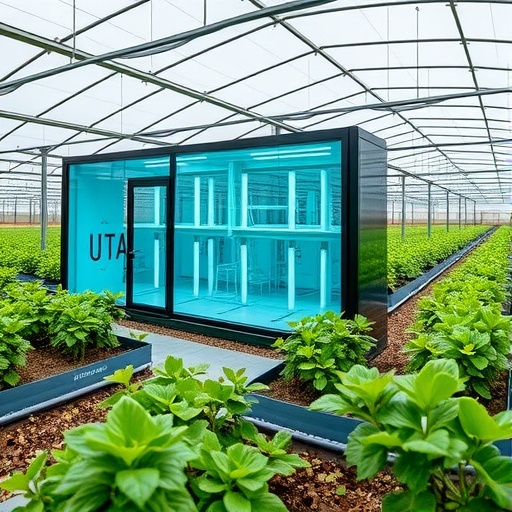
The recent establishment of The University of Texas at Arlington’s Smart Agriculture Research Center (SARC) represents a transformative advancement in the integration of artificial intelligence (AI) and data science into the agricultural sector. Faced with escalating challenges such as highly pathogenic avian influenza (HPAI) outbreaks that have devastated poultry populations and inflamed global egg markets, the urgency to develop predictive technologies that fortify food systems has never been more critical. SARC is poised to be a pioneering hub that addresses these vulnerabilities by deploying cutting-edge computational methods to anticipate and mitigate biological threats affecting agriculture.
Historically, agriculture has lagged in adopting AI technologies compared to industries like manufacturing or finance. This inertia arises from the intricate biological complexities and environmental variabilities intrinsic to farming practices. However, UTA’s strategic leverage of its robust technological and data science expertise confronts this disparity, aiming to modernize agricultural research and applications both regionally and globally. Co-directed by professors Jianzhong Su and Gautam Das, the center opened its doors in August 2025 and is designed to become a nucleus of innovation, resource sharing, and interdisciplinary collaboration on campus.
SARC is structured around four foundational pillars: enhancing AI capacity for agricultural research, serving as a research support hub for faculty, obtaining significant federal grants to expand its impact, and acting as a primary interface between UTA and external partners focused on sustainability and environmental stewardship. This multifaceted approach assures that the center not only pioneers new technologies but also fosters a collaborative ecosystem where AI-driven agricultural solutions can flourish.
One of the critical research themes emerging from SARC involves the forecasting of highly pathogenic avian influenza outbreaks. By developing sophisticated machine learning models that automatically gather data from diverse public reports, the center endeavors to generate reliable, short-term predictions of HPAI events. These predictive analytics can empower poultry producers with actionable insights, encouraging proactive biosecurity enhancements, improved sanitation protocols, and adaptive facility management to curb viral propagation effectively.
The integration of machine learning models extends beyond disease prediction. Researchers at SARC are also exploring the nexus between climate variables and crop resilience. By applying algorithmic models that analyze historical weather patterns, soil composition, and plant physiological data, the center aims to quantify how crops respond to environmental stresses. Such data-driven tools are critical for optimizing fertilizer and pesticide usage, thereby reducing negative ecological impacts while maintaining or enhancing yield.
A distinctive aspect of SARC’s mission is its commitment to cultivating the next generation of agricultural scientists proficient in AI. Through a USDA-sponsored summer research program, between 20 and 25 undergraduate and graduate students undergo intensive, hands-on experience tackling real-world agricultural challenges. Working in small teams, students benefit from mentorship that bridges academia and federal research, gaining exposure to state-of-the-art AI tools and data analytics frameworks during an immersive eight to ten-week period.
This immersive educational model not only accelerates student skill acquisition but also facilitates collaborative research dynamics between UTA faculty and USDA Agricultural Research Service (ARS) scientists. Despite the geographical dispersion of USDA researchers across the nation, remote collaborative technologies and periodic site visits create a seamless integration of expertise and resources, fostering a vibrant national research network centered on AI-enabled agriculture.
Beyond student education, SARC’s collaborative research portfolio reflects a substantial external funding commitment, with over $5.5 million directed from USDA collaborations. These investments underscore the national significance attributed to advancing AI applications in agriculture, emphasizing climate resilience, biosecurity, environmental conservation, and the mitigation of emergent biological threats that jeopardize food security.
At its core, the Smart Agriculture Research Center represents a direct and innovative response to the confluence of climate change, emerging pathogens, and the increasing need for sustainable agricultural practices. By harnessing AI-driven predictive modeling and data analytics, SARC is optimizing agricultural productivity while advancing environmental stewardship. This ambitious endeavor not only fortifies regional food systems but aspires to propagate scalable models to enhance resilience on a national and global scale.
The recent grand opening event on February 9 offered a public showcase of SARC’s capabilities and future visions, attracting key stakeholders from UTA and the USDA. Prominent university officials highlighted how the center builds on UTA’s 130-year legacy of innovation, positioning it at the forefront of a bold future in agriculture-centric technological research.
Despite the evident technical sophistication of SARC’s initiatives, the human element remains paramount. Faculty leaders emphasize that interdisciplinary collaboration—where mathematics, computer science, agricultural biotechnology, and environmental science converge—is essential to surmount the complexities embodied in modern food production systems. This integrative approach ensures that AI tools developed are not only theoretically sound but also practically applicable to real agricultural environments.
With growing federal recognition of the necessity for climate-smart agriculture and resilient food systems, the collaboration between academia and government exemplified by SARC manifests a promising blueprint. Its model, centered on predictive analytics, resource sharing, and workforce development, is geared towards transforming agricultural science and empowering producers with actionable intelligence to safeguard global food supplies against perennial and emergent risks.
Subject of Research: Artificial Intelligence Applications in Agriculture and Predictive Modeling of Biological Threats
Article Title: UTA’s Smart Agriculture Research Center: Pioneering AI-Driven Solutions to Secure Global Food Systems
News Publication Date: February 9, 2026
Web References: https://mediasvc.eurekalert.org/Api/v1/Multimedia/38bcbd7c-d4ee-4ac0-9222-086f9c5cb5cf/Rendition/low-res/Content/Public
Image Credits: UT Arlington
Keywords: Agriculture, Agricultural Engineering, Agricultural Biotechnology, Applied Mathematics, Mathematical Analysis, Computer Science


