

Friday, September 4, 2026
Science
No Result
View All Result
  • Login
  • HOME
  • SCIENCE NEWS
  • CONTACT US
  • HOME
  • SCIENCE NEWS
  • CONTACT US
No Result
View All Result
Scienmag
No Result
View All Result
Home Science News Medicine

Uremic Toxins Drive Kidney Fat Synthesis and Fibrosis Through AhR Activation

July 10, 2026
in Medicine
Ophelia Keating
By Ophelia Keating Scienmag Editorial Profile - Health Services Research
Reading Time: 2 mins read
0
Uremic Toxins Drive Kidney Fat Synthesis and Fibrosis Through AhR Activation

Uremic Toxins Drive Kidney Fat Synthesis and Fibrosis Through AhR Activation

65
SHARES
587
VIEWS
Share on FacebookShare on Twitter
ADVERTISEMENT

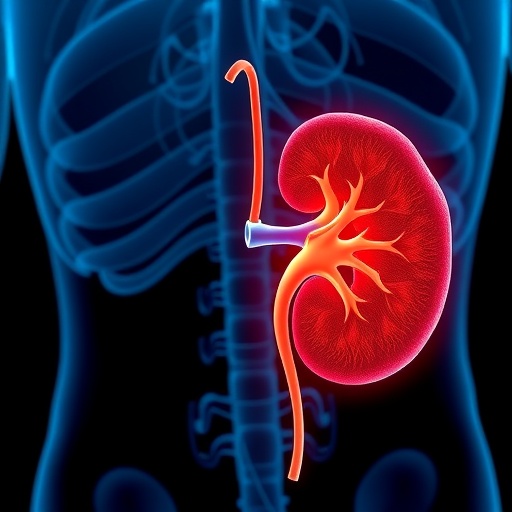
In a groundbreaking study published in Nature Communications, researchers have uncovered a novel pathway by which uremic toxins contribute to kidney damage through the activation of the aryl hydrocarbon receptor (AhR). This revelation sheds new light on the molecular mechanisms driving renal fibrosis, a critical factor in chronic kidney disease (CKD) progression.

Uremic toxins are waste products that accumulate in the bloodstream due to diminished kidney function. While their detrimental effects have long been recognized clinically, the precise intracellular mechanisms by which these toxins exacerbate kidney injury remained elusive until now. The latest study reveals that these toxins stimulate renal fatty acid synthesis, setting off a cascade that leads to fibrotic tissue remodeling in the kidney.

Central to this discovery is the aryl hydrocarbon receptor, a ligand-activated transcription factor known primarily for its role in responding to environmental pollutants. The research team demonstrated that uremic toxins bind to AhR, triggering its activation within renal cells. Once activated, AhR translocates to the nucleus, where it upregulates genes responsible for lipid biosynthesis and fibrogenic pathways.

The upregulation of fatty acid synthesis within renal cells is particularly significant. Excessive lipid accumulation has been implicated in cellular dysfunction and inflammation, both of which accelerate fibrotic remodeling. This study connects uremic toxin-induced AhR activation to the abnormal lipid metabolism observed in CKD, highlighting a previously underappreciated link between metabolism and fibrogenesis.

To validate their findings, the scientists employed a combination of in vitro cell cultures and in vivo animal models of kidney disease. By selectively inhibiting AhR, they were able to reduce lipid accumulation and fibrosis markers in renal tissue, underscoring AhR’s potential as a therapeutic target. These interventions slowed disease progression, suggesting new avenues for treatment beyond traditional dialysis and transplantation.

This discovery also raises intriguing questions about the interplay between environmental factors, toxins, and kidney health. Considering AhR’s established role in mediating responses to xenobiotics, the findings imply that patients with CKD might be particularly vulnerable to environmental toxins that exacerbate AhR activation and thereby amplify kidney damage.

By elucidating how uremic toxins activate AhR to promote fatty acid synthesis and fibrosis, this research opens a new frontier in understanding CKD pathology. It underscores the multifaceted role of metabolic dysregulation in disease progression and provides a compelling case for the development of AhR inhibitors as a novel pharmaceutical approach.

As CKD affects millions globally with limited treatment options, the potential to modulate AhR signaling offers hope for improved therapeutic strategies. Future studies will likely focus on identifying specific uremic toxins responsible for AhR activation and designing targeted molecules to block this pathological cascade.

This seminal work bridges the gap between toxicology, metabolism, and renal pathology, marking a significant advance in the quest to combat chronic kidney diseases.


Subject of Research: Role of uremic toxins and aryl hydrocarbon receptor activation in renal fatty acid synthesis and fibrosis.

Article Title: Uremic toxins promote renal fatty acid synthesis and fibrosis via activating aryl hydrocarbon receptor.

Article References: Xie, H., Zhang, Y., Lu, L., Guo, H., Sun, X., Ning, M., Xie, X., Li, L., Niu, Y., Li, J., Wang, X., Wu, L., Zhou, L., Zhang, W., Zhang, Y., Xu, C., Lu, L., & Yu, C. (2026). Uremic toxins promote renal fatty acid synthesis and fibrosis via activating aryl hydrocarbon receptor. Nature Communications, 17(1), Article 8600. https://doi.org/10.1038/s41467-026-75114-5

Image Credits: AI Generated

DOI: 10.1038/s41467-026-75114-5

Keywords: aryl hydrocarbon receptor activation, chronic kidney disease progression, environmental pollutants and kidney health, fibrotic tissue remodeling in kidneys, intracellular pathways in CKD, kidney fibrosis, lipid biosynthesis in renal cells, renal fat accumulation, renal fatty acid synthesis, transcription factors in kidney damage, uremic toxins, uremic toxins molecular mechanisms

Cite Scienmag News

Ophelia Keating. (July 10, 2026). Uremic Toxins Drive Kidney Fat Synthesis and Fibrosis Through AhR Activation. Scienmag. https://scienmag.com/uremic-toxins-drive-kidney-fat-synthesis-and-fibrosis-through-ahr-activation/


Ophelia Keating. "Uremic Toxins Drive Kidney Fat Synthesis and Fibrosis Through AhR Activation." Scienmag, 10 July 2026, https://scienmag.com/uremic-toxins-drive-kidney-fat-synthesis-and-fibrosis-through-ahr-activation/. Accessed 4 September 2026.

Ophelia Keating. "Uremic Toxins Drive Kidney Fat Synthesis and Fibrosis Through AhR Activation." Scienmag. July 10, 2026. https://scienmag.com/uremic-toxins-drive-kidney-fat-synthesis-and-fibrosis-through-ahr-activation/

Tags: aryl hydrocarbon receptor activationchronic kidney disease progressionenvironmental pollutants and kidney healthfibrotic tissue remodeling in kidneysintracellular pathways in CKDkidney fibrosislipid biosynthesis in renal cellsrenal fat accumulationrenal fatty acid synthesistranscription factors in kidney damageuremic toxinsuremic toxins molecular mechanisms
Share26Tweet16
Previous Post

Durable CNT@Ag-MXene Sensor Resists Corrosion Under High Strain

Next Post

Social Prescribing Supports Youth Waiting for Mental Health Services

Related Posts

Unattended automated blood pressure readings prove accurate in rural Africa
Medicine

Unattended automated blood pressure readings prove accurate in rural Africa

September 4, 2026
Mpox prevention practices and factors among adults in Southern Sarawak, Malaysia
Medicine

Mpox prevention practices and factors among adults in Southern Sarawak, Malaysia

September 4, 2026
Rare aggressive fungal infection strikes healthy patient after trauma
Medicine

Rare aggressive fungal infection strikes healthy patient after trauma

September 4, 2026
Denmark launches national injury cohort with detailed design features
Medicine

Denmark launches national injury cohort with detailed design features

September 4, 2026
Building trust: advancing clinical autonomy in ESICM training
Medicine

Building trust: advancing clinical autonomy in ESICM training

September 4, 2026
Symptomatic, Incidental DWI Lesions Show Distinct Risk Factors in Cerebral Amyloid Angiopathy
Medicine

Symptomatic, Incidental DWI Lesions Show Distinct Risk Factors in Cerebral Amyloid Angiopathy

September 4, 2026
Next Post
Social Prescribing Supports Youth Waiting for Mental Health Services

Social Prescribing Supports Youth Waiting for Mental Health Services

  • Mothers who receive childcare support from maternal grandparents show more optimized

    Mothers who receive childcare support from maternal grandparents show more parental warmth, finds NTU Singapore study

    27656 shares
    Share 11059 Tweet 6912
  • University of Seville Breaks 120-Year-Old Mystery, Revises a Key Einstein Concept

    1061 shares
    Share 424 Tweet 265
  • Bee body mass, pathogens and local climate influence heat tolerance

    682 shares
    Share 273 Tweet 171
  • Researchers record first-ever images and data of a shark experiencing a boat strike

    546 shares
    Share 218 Tweet 137
  • Groundbreaking Clinical Trial Reveals Lubiprostone Enhances Kidney Function

    531 shares
    Share 212 Tweet 133
Science

Embark on a thrilling journey of discovery with Scienmag.com—your ultimate source for cutting-edge breakthroughs. Immerse yourself in a world where curiosity knows no limits and tomorrow’s possibilities become today’s reality!

RECENT NEWS

  • Anti-swelling biphasic conductive hydrogels enable 3D-printed implantable bioelectronics
  • Engineering a kinase-controlled allosteric switch for improved performance
  • Shape-memory polymer nanocoatings redistribute stress in brittle battery cathodes
  • Exciton interactions enable spin control for bright spin LEDs

Categories

  • Agriculture
  • Anthropology
  • Archaeology
  • Athmospheric
  • Biology
  • Biotechnology
  • Blog
  • Bussines
  • Cancer
  • Chemistry
  • Climate
  • Earth Science
  • Editorial Policy
  • Marine
  • Mathematics
  • Medicine
  • Pediatry
  • Policy
  • Psychology & Psychiatry
  • Science Education
  • Social Science
  • Space
  • Technology and Engineering

Subscribe to Blog via Email

Enter your email address to subscribe to this blog and receive notifications of new posts by email.

Join 5,151 other subscribers

© 2025 Scienmag - Science Magazine

Welcome Back!

Login to your account below

Forgotten Password?

Retrieve your password

Please enter your username or email address to reset your password.

Log In
No Result
View All Result
  • HOME
  • SCIENCE NEWS
  • CONTACT US

© 2025 Scienmag - Science Magazine

Discover more from Science

Subscribe now to keep reading and get access to the full archive.

Continue reading