


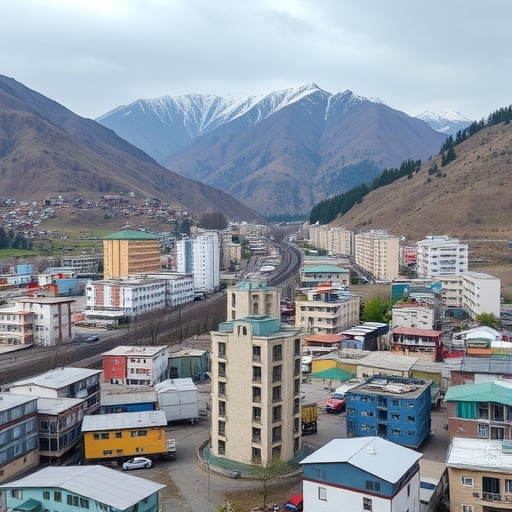
In a groundbreaking study published in “Discover Cities,” researchers Shah, Rana, and Bhatti offer an insightful analysis of the intricate relationship between urbanization, climate change, and environmental sustainability, focusing specifically on Gilgit city, Pakistan. The implications of their findings are far-reaching, shedding light on how rapidly changing urban landscapes intersect with escalating climate challenges. Employing a comprehensive driver-pressure-state-impact-response (DPSIR) framework, this study delineates the multifaceted nature of these environmental interactions and is poised to advance the discourse on sustainable urban practices.
Urbanization in Gilgit city, a picturesque locale nestled in the Himalayas, is a double-edged sword. On one hand, it offers economic opportunities and enhanced infrastructure; on the other, it poses significant threats to ecological integrity. The phenomenon of urban sprawl is captured poignantly in the study, indicating sharp rises in population density, increased demand for services, and resultant stress on local ecosystems. The DPSIR framework serves as an effective analytical lens, unraveling the various layers of urban effects on environmental health.
Notably, the researchers elucidate how climate change exacerbates existing vulnerabilities in urban areas. Gilgit city’s unique geographical setting makes it particularly susceptible to the impacts of rising temperatures and erratic weather patterns. The study provides compelling evidence that urbanization has intensified the pressures on vital natural resources, including water and forested areas, which are already under strain from climatic alterations. This dynamic interplay between urban expansion and climate phenomena highlights a vicious cycle that threatens sustainable development efforts.
One of the study’s crucial findings is the direct correlation between urbanization rates and increasing environmental degradation. The rapid pace of development in Gilgit city has led to rampant deforestation, soil erosion, and the depletion of water sources. These adverse outcomes underscore the urgent need for policymakers to adopt an integrative approach that harmonizes urban growth with environmental preservation. The DPSIR framework aids in visualizing these connections, presenting a structured way to assess and respond to the changing conditions on the ground.
The research articulates that community involvement is pivotal for achieving sustainable urbanization. Effective governance mechanisms must be established to empower local communities, ensuring their voices are integral to decision-making processes. The study advocates for educational initiatives that foster awareness among residents about the importance of sustainable practices. This aligns with broader global trends emphasizing local agency in environmental stewardship.
Another salient aspect of the study is the emphasis on adopting adaptive strategies that can mitigate climate change impacts. The recommendations include investing in green infrastructure, such as parks and sustainable drainage systems, which can help absorb excess rainfall and reduce urban heat. Furthermore, the integration of renewable energy sources is championed as a critical move toward decreasing carbon footprints. These strategies collectively hold the potential to enhance not only the resilience of Gilgit city against climate extremes but also improve the quality of life for its inhabitants.
The role of technology in supporting these sustainable initiatives cannot be overstated. The researchers highlight the necessity of leveraging innovations such as Geographic Information Systems (GIS) and remote sensing for monitoring urban development and its environmental consequences. By employing cutting-edge technologies, Gilgit city could better understand land-use patterns and resource management practices, paving the way for more informed urban planning that prioritizes sustainability.
Climate data is another integral aspect highlighted in the research. The authors emphasize the value of incorporating empirical data into urban planning initiatives to forecast environmental changes more accurately. As climate patterns evolve, regular updates to local climate projections will empower Gilgit’s urban planners with the tools necessary to effectively navigate the uncertainties that accompany climate change.
One compelling argument made within the study concerns the economic ramifications of ignoring environmental sustainability in urban policy. The authors assert that the long-term costs associated with environmental degradation far outweigh the short-term gains of unfettered urban growth. By investing in sustainable practices, stakeholders not only protect natural resources but also enhance overall economic resilience, ensuring that Gilgit city can thrive both environmentally and economically for future generations.
In conclusion, Shah, Rana, and Bhatti’s research presents a clarion call for a paradigm shift in how Gilgit city approaches urbanization and environmental stewardship. The DPSIR framework emerges as a vital tool in deconstructing complex environmental challenges while offering pathways to sustainable solutions. As global challenges such as climate change and urbanization become increasingly intertwined, the findings from this study will undoubtedly inspire further scholarship and practical action within the region and beyond.
Ultimately, the insights gleaned from this research extend beyond the immediate context of Gilgit city, serving as a valuable reference point for cities worldwide grappling with similar issues. The pressing need for sustainable urban solutions has never been more critical, and this study provides a thoughtful roadmap for navigating the complexities of urbanization in an era defined by climate change.
Cite Scienmag News
Sloane Callahan. (November 14, 2025). Urbanization and Climate Change in Gilgit City Impact Sustainability. Scienmag. https://scienmag.com/urbanization-and-climate-change-in-gilgit-city-impact-sustainability/
Sloane Callahan. "Urbanization and Climate Change in Gilgit City Impact Sustainability." Scienmag, 14 November 2025, https://scienmag.com/urbanization-and-climate-change-in-gilgit-city-impact-sustainability/. Accessed 8 September 2026.
Sloane Callahan. "Urbanization and Climate Change in Gilgit City Impact Sustainability." Scienmag. November 14, 2025. https://scienmag.com/urbanization-and-climate-change-in-gilgit-city-impact-sustainability/


