


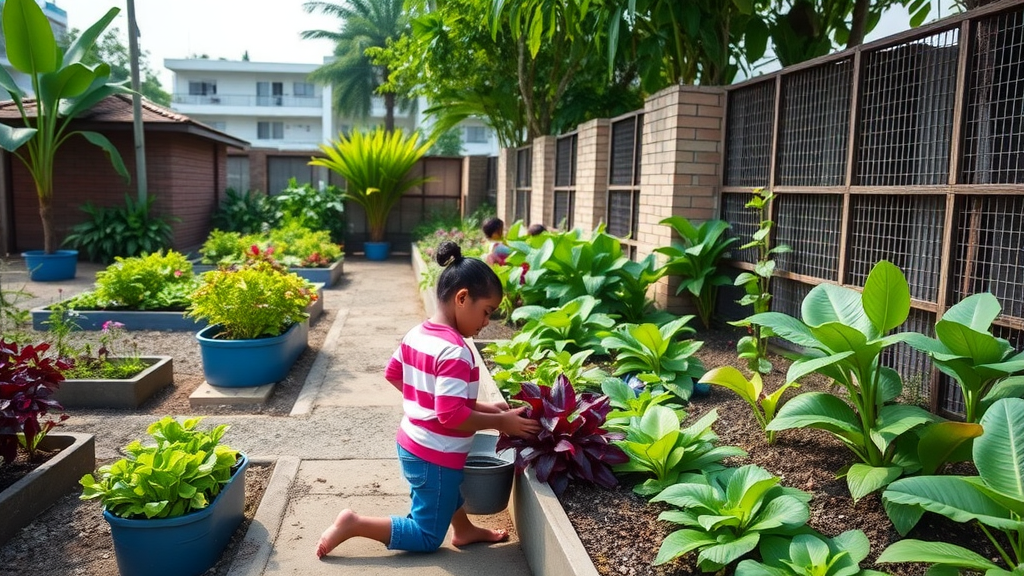
In the small island nation of Palau, where more than half of adults live with obesity and non-communicable diseases have become the leading cause of death, researchers have turned their attention to an unexpectedly humble intervention: the backyard and community garden. A new study published in npj Urban Sustainability examines how urban gardening is woven into daily life across Palau’s settlements and asks whether the practice is associated with healthier diets and better health outcomes. The findings arrive at a critical moment for Pacific Island nations, which face some of the highest rates of obesity and diabetes in the world, driven in large part by a decades-long dietary transition away from traditional foods and toward imported, processed products.
Palau, an archipelago of roughly 500 islands in the western Pacific with a population of around 18,000 people, exemplifies the nutrition transition that has swept through the region. Traditional diets built around fish, taro, breadfruit, cassava, and tropical fruits have been progressively displaced by rice, canned meats, instant noodles, sugary beverages, and other shelf-stable imports. These shifts, accelerated by trade liberalization, food import dependence, and changing lifestyles, have transformed the metabolic health of island communities. Today, non-communicable diseases such as type 2 diabetes, hypertension, and cardiovascular disease account for the overwhelming majority of deaths in Palau, placing enormous strain on a small health system and prompting national strategies that explicitly call for revitalizing local food production.
The research team set out to fill a persistent evidence gap. While urban gardening has been studied extensively in North America, Europe, and East Asia, relatively little is known about its role in small island developing states, where the drivers of food insecurity and chronic disease differ markedly from those in large continental cities. In Palau, gardening is not simply a leisure activity or an urban planning experiment; it is entangled with cultural identity, subsistence traditions, land tenure systems, and family food provisioning. Understanding how gardens function in this context required a mixed-methods approach that combined quantitative health and dietary data with qualitative accounts of why people grow food and how harvests move through households and communities.
Methodologically, the study drew on survey data collected from residents across Palau’s urban and peri-urban areas, capturing whether households maintained gardens, what crops they cultivated, how frequently they consumed garden produce, and how this related to broader dietary patterns. Anthropometric measures, including body mass index, allowed the researchers to link gardening behavior with health indicators. Supplementary interviews and community engagement provided texture to the numbers, revealing the social and cultural mechanisms through which gardening shapes food choices. This combination is important because the relationship between gardening and health is rarely a simple matter of calories or nutrients; it operates through food environments, caregiving practices, knowledge transmission, and the cultural value assigned to traditional foods.
The results paint a nuanced picture. Households engaged in gardening tended to report greater consumption of fresh fruits and vegetables, particularly traditional crops such as taro, breadfruit, bananas, and leafy greens that are central to Palauan food heritage. Gardeners also described stronger connections to customary food practices, including the preparation of dishes that have become less common as imported staples dominate the market. These dietary associations matter because replacing refined, energy-dense imported foods with fiber-rich traditional produce is precisely the kind of dietary change that public health authorities in the Pacific recommend for reducing obesity and diabetes risk. In a country where a single can of processed meat can cost more than a meal of locally grown fish and taro, gardens also offer an economic buffer against volatile import prices and supply disruptions.
Yet the study is careful not to overclaim. The observed associations between gardening and diet do not establish that gardening causes better health outcomes, and the relationship with body mass index was more complicated than a simple protective effect. Households that garden may differ systematically from those that do not, in terms of income, land access, age structure, and health consciousness, and these confounding factors are difficult to fully disentangle in a cross-sectional design. Some gardeners reported barriers that limited the health impact of their harvests, including damage from pests and extreme weather, labor constraints, and the persistent pull of convenient imported foods, particularly among younger family members. The researchers emphasize that gardening is best understood as one component of a broader food system transformation rather than a standalone cure for the obesity crisis.
The cultural dimensions of the findings are among their most striking aspects. In Palauan society, taro patches are traditionally tended by women and carry deep customary significance, tied to clan obligations, funerary feasts, and the transfer of knowledge between generations. Breadfruit and banana cultivation likewise connect families to seasonal rhythms and communal sharing practices. The study suggests that gardens function as sites of cultural reproduction as much as food production, and that this cultural role may itself be protective. When traditional foods carry prestige and are eaten regularly, the dietary foundations of metabolic health are reinforced by identity and belonging rather than by clinical advice alone. Public health interventions that ignore this cultural infrastructure, the authors imply, risk being far less effective than those that build on it.
The implications extend well beyond Palau. Across the Pacific and in many other small island developing states, governments are searching for practical strategies to reduce dependence on food imports, which can exceed 80 percent of caloric intake in some nations, while simultaneously confronting epidemic levels of non-communicable disease. Urban and peri-urban gardening sits at the intersection of these agendas, offering co-benefits for nutrition, food sovereignty, climate resilience, and cultural continuity. The Palau findings suggest that supporting gardens, through land access guarantees, water infrastructure, pest management assistance, and school-based programs, could be a relatively low-cost policy lever with measurable dietary returns. They also caution that gardens must be paired with broader measures, including import tariffs on unhealthy foods, restrictions on sugary beverage marketing, and investment in local food value chains, if they are to shift population-level health trajectories.
Climate change adds urgency to this agenda. Rising sea levels, saltwater intrusion into taro patches, coral reef degradation affecting fisheries, and increasingly intense storms all threaten the traditional food systems that gardens sustain. Palau has already experienced events that damaged staple crops and underscored the fragility of island food supplies. In this light, the study’s emphasis on documenting and strengthening gardening practices carries a resilience dimension: every productive garden is a hedge against both the next supply chain disruption and the slow erosion of dietary heritage. The researchers argue that climate adaptation planning and nutrition policy should be developed together, with gardens as a shared focal point.
For the international research community, the study demonstrates the value of examining urban sustainability questions through the lens of small island states, which are often absent from the urban agriculture literature despite facing some of the world’s most acute food and health challenges. The Palau case shows that urban gardening in this setting is neither a novelty nor a luxury but a living practice with measurable associations to diet and deep roots in social life. As the global burden of obesity continues to climb and cities everywhere grapple with how to feed residents healthily and sustainably, the experience of this small Pacific nation offers a reminder that some of the most promising solutions may be growing, quite literally, in people’s own backyards, waiting to be recognized, supported, and scaled with the care that culture and community demand.
Subject of Research: Urban gardening and its associations with diet and health in Palau amid an obesity crisis
Article Title: Urban gardening and its associations with diet and health in Palau facing an obesity crisis
Article References: Iida, A., Tsuchiya-Theorin, C., Nwe, Y. Y., Yamazaki, T., Arsenio, N., Kitalong, C., Yokohari, M., & Furusawa, T. (2026). Urban gardening and its associations with diet and health in Palau facing an obesity crisis. npj Urban Sustainability. https://doi.org/10.1038/s42949-026-00472-4
Image Credits: AI Generated
DOI: 10.1038/s42949-026-00472-4
Keywords: urban gardening, Palau, obesity, non-communicable diseases, diet, food security, Pacific Islands, nutrition transition, traditional foods, food sovereignty, public health, urban sustainability
Cite Scienmag News
Daisy Hatcher. (September 12, 2026). Urban Gardens Emerge as a Surprising Weapon in Palau’s Obesity Crisis. Scienmag. https://scienmag.com/urban-gardens-emerge-as-a-surprising-weapon-in-palaus-obesity-crisis/
Daisy Hatcher. "Urban Gardens Emerge as a Surprising Weapon in Palau’s Obesity Crisis." Scienmag, 12 September 2026, https://scienmag.com/urban-gardens-emerge-as-a-surprising-weapon-in-palaus-obesity-crisis/. Accessed 4 October 2026.
Daisy Hatcher. "Urban Gardens Emerge as a Surprising Weapon in Palau’s Obesity Crisis." Scienmag. September 12, 2026. https://scienmag.com/urban-gardens-emerge-as-a-surprising-weapon-in-palaus-obesity-crisis/


