

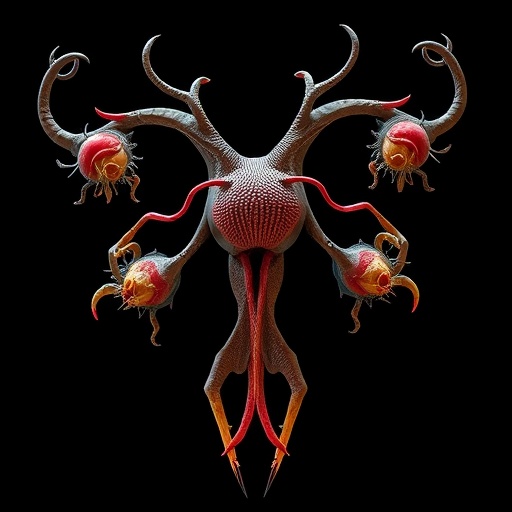
In a groundbreaking study published in Frontiers in Zoology, researchers have unveiled intricate details about the male reproductive system of the deep-sea acorn worm Quatuoralisia malakhovi, highlighting the unique adaptations and biological characteristics that define this enigmatic species. This research is particularly significant as it not only expands our understanding of the Enteropneusta class but also sheds light on the evolutionary biology of marine invertebrates.
Quatuoralisia malakhovi, a member of the Torquaratoridae family, resides in the depths of the Bering Sea, a region known for its biodiversity and ecological complexity. The study conducted by Lukinykh, Ezhova, Yushin, and their collaborators aims to elucidate the evolutionary significance of this species by examining its reproductive morphology, a crucial aspect for understanding the life cycle and reproductive strategies within its habitat.
The male reproductive system of Quatuoralisia malakhovi is characterized by its remarkable complexity. The researchers meticulously dissected and analyzed the reproductive structures, documenting features that are not apparent in other acorn worm species. Such detailed examinations are essential for identifying how these adaptations support reproduction in extreme environments like the deep sea, where conditions are often harsh and unpredictable.
One standout finding is the unique arrangement of the reproductive organs, which appears specially adapted for maximizing reproductive success under decreased light conditions. In the depths of the ocean, where many organisms rely heavily on chemical cues for reproduction, these adaptations may provide a significant advantage for Quatuoralisia malakhovi, contributing to the species’ survival and proliferation.
Furthermore, the study highlights the role of the acorn worm’s reproductive strategy in the broader context of marine ecology. The reproductive success of this species may influence the population dynamics of other organisms within its ecosystem. The interconnectedness of marine life necessitates a closer look at how even slight changes in reproductive patterns can reverberate across the marine food web.
The research also touches upon the evolutionary implications of such reproductive adaptations. By comparing the anatomical features of Quatuoralisia malakhovi with its relatives, scientists can trace phylogenetic relationships and better understand the evolutionary pathways that marine invertebrates have taken over millions of years. This work not only enriches our knowledge of the species but also positions it within a larger framework of evolutionary biology.
As the study progresses, the researchers continue to gather valuable insights regarding the hormonal and genetic factors that influence reproduction in Quatuoralisia malakhovi. Understanding these biological mechanisms is vital for comprehending how this acorn worm has evolved to thrive in its unique environment.
This new research also serves as a crucial reminder of the importance of deep-sea exploration. Many marine species remain understudied, and the discoveries made in this study emphasize that there is still so much we do not know about deep-sea ecosystems and their inhabitants. Each finding contributes to a growing database aimed at conserving marine biodiversity.
Environmental changes pose a significant threat to marine ecosystems, and understanding the reproductive biology of deep-sea organisms like Quatuoralisia malakhovi may hold key insights into how species may adapt or face extinction in changing conditions. The balance of these ecosystems is hanging by a thread, and the information gleaned from such research could be pivotal in conservation efforts.
In addition to scientific contributions, this study also resonates on a public platform. The fascination with unique marine life tends to capture public interest, and the team hopes that their findings will inspire a renewed appreciation for ocean conservation. Engaging with the public about the wonders of marine biodiversity can elevate the conversation around environmental policies and the need for sustainable practices.
The researchers concluded that ongoing studies focused on marine invertebrate reproduction, such as those involving Quatuoralisia malakhovi, are vital not just for science but also for policy-making. It is critical to ensure that future ocean governance is informed by science, particularly as human activities increasingly impact the deep-sea environment.
As this fascinating study highlights, the intricacies of marine life are not only essential for academic inquiry but also carry profound implications for the future of our oceans. The interplay of evolutionary biology and environmental adaptation demonstrated by Quatuoralisia malakhovi provides an exceptional case study that may influence future research paths.
In summary, the revelations regarding the male reproductive system of Quatuoralisia malakhovi are just the tip of the iceberg of ongoing marine research. As scientists continue to peel back the layers of complexity surrounding these deep-sea organisms, we stand to gain invaluable knowledge about life beneath the waves. This understanding is crucial as we seek solutions that will nurture and protect the delicate balance of marine ecosystems for generations to come.
Understanding the male reproductive system of Quatuoralisia malakhovi opens new avenues for evolutionary biology, reproductive physiology, and conservation efforts. The deep-sea acorn worm, as demonstrated by this study, not only exemplifies nature’s resilience but also serves as a beacon for the protective measures needed to ensure the longevity of our oceans. As we venture further into the age of exploration, the secrets of these aquatic marvels are gradually unfolding, reminding us of the wonders yet to be discovered.
Subject of Research: Male reproductive system of the deep-sea acorn worm Quatuoralisia malakhovi.
Article Title: Male reproductive system of the deep-sea acorn worm Quatuoralisia malakhovi (Hemichordata, Enteropneusta, Torquaratoridae) from the Bering Sea.
Article References:
Lukinykh, A.I., Ezhova, O.V., Yushin, V.V. et al. Male reproductive system of the deep-sea acorn worm Quatuoralisia malakhovi (Hemichordata, Enteropneusta, Torquaratoridae) from the Bering Sea.
Front Zool 21, 26 (2024). https://doi.org/10.1186/s12983-024-00548-w
Image Credits: AI Generated
DOI: https://doi.org/10.1186/s12983-024-00548-w
Keywords: Male reproductive system, Quatuoralisia malakhovi, deep-sea acorn worm, Hemichordata, Enteropneusta, Torquaratoridae, Bering Sea, evolutionary biology, marine conservation.


