

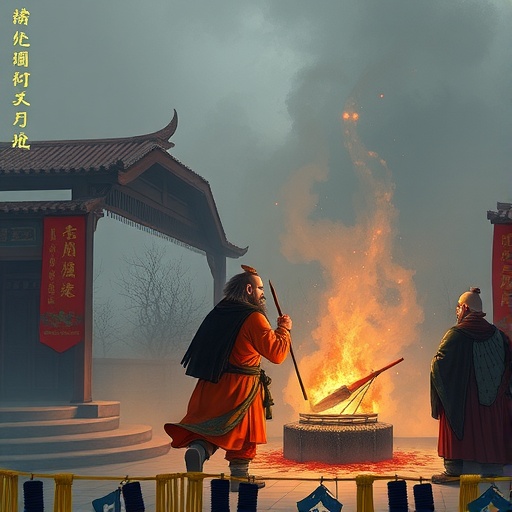
In recent years, the archaeological research surrounding ancient civilizations has generated a renewed interest in understanding their social, political, and religious practices. Among these, the Qin Dynasty (秦), known for its military conquests and centralized rule, has captured the attention of historians and archaeologists alike. A pivotal study by A. Chen explores the state sacrificial system practiced in the Yongcheng region, shedding light on the intricate relationship between religion, politics, and societal structure during this transformative period of Chinese history. This detailed examination not only reveals how the sacrificial rites were interwoven into the fabric of Chinese statecraft but also raises questions about their implications for broader historical narratives regarding governance and society.
The significance of sacrifice in ancient cultures, particularly within the Qin Dynasty, cannot be overstated. The sacrificial system was more than a religious observance; it served as a powerful political tool. The rituals were designed to reinforce the divine mandate of the ruler, presenting the Emperor as the intermediary between the heavens and the people. Through these rites, the Qin could solidify their control, ensuring loyalty among the populace while simultaneously averting potential dissent. The controversial unification of various states under the Qin banner necessitated a cohesive narrative that the sacrificial system was pivotal in crafting—a harmony between earthly authority and celestial endorsement.
In analyzing the architectural remains and artifacts associated with sacrificial rites in Yongcheng, Chen’s study provides a compelling narrative about the rituals’ integration into daily life. The remains of elaborate altars, ceremonial vessels, and inscriptions uncovered at numerous sites indicate the meticulous planning and execution behind these sacrificial performances. Each artifact tells a story, revealing the complexity of sacrificial offerings tailored to appease specific deities or ancestral spirits. Such offerings were not merely acts of devotion but were deeply embedded within the state’s ideological framework, establishing a link between spiritual beliefs and government policies.
Furthermore, the study explores the socio-economic aspects of the sacrificial system. It delves into how resources were mobilized for these grand ceremonies, which often required significant labor and materials. The magnitude of the sacrifices and the extravagance of the rituals speak to the wealth of the state and the ability of the ruling class to command vast resources. Chen posits that these sacrifices played a dual role: they were a means of legitimizing the state’s authority and a way to engage the community in a shared cultural identity rooted in tradition and continuity. This communal aspect fostered a sense of belonging and loyalty that the Qin Dynasty desperately needed to maintain its control over a diverse population.
Chen’s analysis also highlights the role of the priestly class within the sacrificial system. These religious officials acted as custodians of ancient rituals and knowledge, wielding considerable influence in society. By controlling the performance of sacrifices, priests were not merely spiritual leaders but also political actors integral to the dynasty’s stability. Their ability to interpret the will of the gods and enact rituals positioned them alongside the emperor in a hierarchy that blurred the lines between the sacred and secular. This coexistence of religious and political authority was paramount in shaping the policies and decisions of the Qin, establishing a foundation for subsequent dynasties to follow.
The investigation into the sacrificial system is not solely a reflection of the past; it has broader implications for understanding the development of Chinese civilization. The intertwining of politics, religion, and society has left an indelible mark on the cultural landscape of China. By examining the intricacies of the Qin sacrificial rites, Chen’s study contributes to a larger conversation about how early governance models have influenced modern Chinese culture and political philosophy. The lessons learned from the Qin era resonate in contemporary discussions surrounding statecraft, governance, and the role of ideology in politics.
The study further delves into the aftermath of the sacrificial system following the decline of the Qin Dynasty. As the political landscape shifted and new dynasties rose to power, many of the sacrificial practices evolved or were abandoned altogether. Chen notes that while the Qin sacrificial rites laid foundational elements for future ceremonies, the rise of Buddhism and other religious systems transformed the spiritual landscape of China. The syncretism of beliefs led to a complex tapestry of rituals that reflected shifting societal values and power dynamics, highlighting how cultural practices can adapt in the face of political change.
Ultimately, the research conducted by A. Chen uncovers the multifaceted nature of the Qin sacrificial system, revealing it to be a reflection of both the cultural and political ethos of its time. The meticulous record-keeping and archaeological evidence illuminate the ways in which sacrifices were employed as a tool of power, shaping the course of Chinese history. By understanding these ancient practices, modern scholars gain valuable insights into the continuity and change that characterize the evolution of Chinese society.
As archaeological studies grow increasingly sophisticated with advances in technology, the potential to unlock further insights from sites like Yongcheng continues to expand. The implications of Chen’s findings hold promise not only for historians and archaeologists but also for anyone interested in the dynamics of power, religion, and society. The ongoing exploration of these themes ensures that our understanding of the past will continue to evolve, providing a richer context for interpreting historical narratives.
In engaging with the findings presented in Chen’s research, we are reminded of the complexities of human behavior and the lengths to which societies will go to establish legitimacy and cohesion. The Qin Dynasty, a symbol of strength and innovation, offers a fascinating case study of how ancient civilizations navigated their realities, blending the sacred and the secular to forge a lasting legacy.
As we reflect on these ancient practices, it becomes clear that the lessons from the Qin era are relevant today, prompting us to consider how governance and public faith intersect in our contemporary world. The sacrificial system of the Qin not only reveals a chapter in China’s past but also challenges us to confront ongoing questions about identity, power, and belief in a rapidly changing world. The legacy of the Qin and its intricate sacrificial system continues to resonate, inviting further exploration and dialogue about the fabric of human civilization.
With the world becoming increasingly interconnected and complex, the narratives derived from ancient practices such as those of the Qin provide crucial insights that transcend time and place. As researchers like A. Chen illuminate these connections, we are gifted with the opportunity to better understand not only where we come from but also how we navigate the world today.
Thus, Chen’s study on the sacrificial system in the Yongcheng region serves as a significant contribution to the field of archaeology, offering a lens through which we can scrutinize the past while informing the present and future. It is a reminder that history is not just a collection of isolated events, but a continuum that shapes our understanding of what it means to be human.
In uncovering the layers of meaning embedded within these ancient practices, we are drawn into a conversation that spans millennia. This exploration affirms the importance of perseverance in archaeological endeavors, as every discovery holds the potential to enhance our comprehension of cultural evolution and identity.
As we await further revelations from the ongoing work in Yongcheng and similar sites around the world, it is evident that studies such as Chen’s will continue to inspire and provoke discussion among scholars, policymakers, and the interested public alike.
Subject of Research: State sacrificial system of the Qin Dynasty in the Yongcheng region
Article Title: Archaeological study of the state sacrificial system of Qin’s 秦in the Yongcheng 雍城 Region
Article References: Chen, A. Archaeological study of the state sacrificial system of Qin’s 秦in the Yongcheng 雍城 Region. asian archaeology 9, 39–51 (2025). https://doi.org/10.1007/s41826-025-00102-5
Image Credits: AI Generated
DOI: 10.1007/s41826-025-00102-5
Keywords: Qin Dynasty, sacrificial system, archaeology, statecraft, religious practices, Yongcheng region, political power, cultural identity


