


The process of metamorphosis in insects stands as one of biology’s most captivating phenomena, wherein creatures undergo profound physical and functional transformations throughout their life cycles. In particular, species exhibiting complete metamorphosis experience a sequence of distinct developmental stages—egg, larva, pupa, and adult—highlighting an extraordinary biological journey. Despite identical genetic blueprints across these stages, the resultant forms differ remarkably due to complex gene regulatory mechanisms orchestrating development. Untangling the genetic controls underlying these stage-specific transformations has long intrigued scientists, opening new horizons in evolutionary developmental biology and gene regulation research.
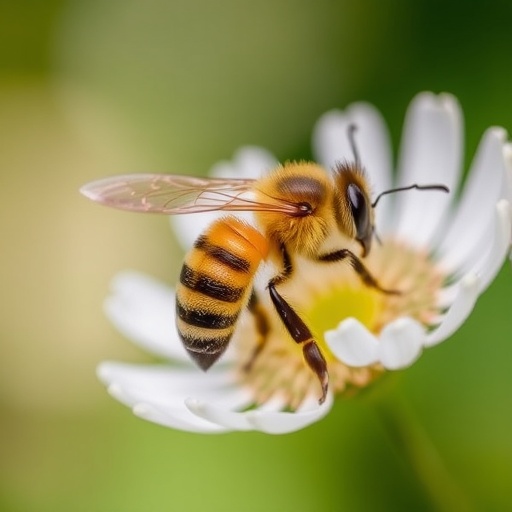
A groundbreaking study spearheaded by researchers at Hiroshima University has pioneered the use of cutting-edge cap analysis of gene expression (CAGE) technology to investigate enhancers—crucial DNA regulatory regions—in honeybee (Apis mellifera) worker metamorphosis. Enhancers function as molecular switches or dimmers, regulating the timing and intensity of gene expression, thus dictating developmental trajectories. Prior to this research, computational predictions identified numerous potential enhancers, but empirical evidence detailing which enhancers are actively employed during metamorphosis was lacking. This study bridges that gap through experimental validation, shedding light on the dynamic enhancer landscape in developing honeybee workers.
CAGE technology was employed to capture and sequence the 5’-end transcription start sites (TSSs) of mRNA molecules, precisely indicating where transcription initiates across the honeybee genome during metamorphosis. Mapping these TSSs allowed identification of active transcription factor binding sites (TFBS), pinpointing enhancer regions authentically engaged in gene regulation rather than relying solely on sequence conservation predictions. In total, 17,349 TSSs and 842 candidate enhancers were cataloged and classified, using their expression patterns throughout metamorphic progression. This represents one of the first comprehensive experimental maps of enhancer activity tied to insect metamorphosis at this genome-wide scale.
Through integrative analysis, researchers identified five distinct clusters of enhancers classified by shared transcription factor activity profiles. Notably, transcription factors such as cycle, vismay, tramtrack (ttk), ovo, paired, GATAe, and daughterless emerged as central players modulating enhancer clusters that govern gene expression patterns at specific metamorphic stages. The study precisely delineated 15 transcription factor–enhancer–target gene regulatory relationships central to metamorphic control, emphasizing genes historically known to regulate insect metamorphosis, such as Broad complex (Br-c) and E93. These findings substantiate the orchestrated interplay between enhancers and transcription factors driving developmental transitions.
Of particular interest is the discovery of tramtrack (ttk) binding sites within five enhancer regions linked to four target genes, including Br-c. Remarkably, these ttk binding motifs demonstrate perfect conservation across Apis species but differ from other bee genera, including bumblebees, at a single nucleotide level. This subtle yet significant nucleotide variation implies that honeybees evolved unique transcriptional regulatory mechanisms, potentially underpinning their distinct social caste differentiation mechanisms. Such molecular adaptations may be fundamental to the evolution of the highly sophisticated eusociality defining honeybee colonies.
The power of CAGE technology to experimentally detect enhancer RNA (eRNA) transcripts represents a major methodological breakthrough, offering direct evidence of enhancer activity rather than inference by DNA sequence conservation alone. This advance allows researchers to capture dynamic gene regulatory events unfolding during development, providing greater resolution in understanding how genetically identical cells diverge phenotypically during metamorphosis. The insights gleaned lay a pivotal foundation for dissecting complex transcriptional regulatory networks governing not only honeybee development but potentially other holometabolous insects.
From an evolutionary perspective, this research offers a window into how gene regulation has been fine-tuned in eusocial insects, where identical genomes give rise to multiple caste phenotypes with distinct morphologies and behaviors. The targeted identification of enhancers and their binding transcription factors lends mechanistic clarity to longstanding questions concerning the genetic architecture facilitating phenotypic plasticity in social insects. These molecular insights could ultimately elucidate how social hierarchies and division of labor evolved at the genomic regulation level within Apis mellifera.
Looking forward, the researchers acknowledge that corroborative assays, such as CRISPR-mediated enhancer perturbation or chromatin accessibility profiling, are necessary to validate and expand upon the CAGE-derived results. Such confirmatory studies promise to solidify a comprehensive map of larval-to-adult developmental gene regulatory networks in the honeybee. Deciphering these networks holds great potential not only for fundamental biology but also offers applied benefits in conservation biology and agriculture, where pollinator health is paramount.
Honeybees occupy a critical ecological niche as pollinators supporting global agriculture and biodiversity. Understanding the genetic mechanisms underpinning worker development may inform strategies to mitigate environmental stressors that threaten colony viability worldwide. Enhancer elements orchestrating gene expression programs during worker maturation could serve as biomarkers or targets for interventions aimed at enhancing pollinator resilience. Therefore, this research has broad implications beyond developmental biology, encompassing ecological stability and food security.
The research was generously supported by Japan’s Center of Innovation for Bio-Digital Transformation (BioDX) and the RIKEN-Hiroshima University Joint Research Program, emphasizing the importance of cross-disciplinary, collaborative efforts to address complex biological questions involving genomics, insect biology, and molecular regulation. The interdisciplinary approach exemplified in this study provides a powerful model for future genomic inquiries into socially complex insects and other metamorphosing organisms.
In conclusion, the pioneering application of CAGE technology to elucidate enhancer activity during honeybee worker metamorphosis fundamentally advances the understanding of transcriptional regulation in insect development. By experimentally validating enhancers and outlining their regulatory transcription factors, this research unveils how gene regulatory networks sculpt transformative biological transitions. The conservation and divergence of enhancer binding sites across bee species further illuminate the molecular underpinnings of eusocial evolution. These new insights pave the way for innovative research into gene regulation, developmental plasticity, and pollinator health, underscoring the profound interplay between genetics, development, and ecology in one of the world’s most essential insect species.
News Publication Date: 19-May-2026
Web References:
https://www.mdpi.com/2075-4450/17/5/516
http://dx.doi.org/10.3390/insects17050516
References:
Toga et al. (2026) Insects
Cite Scienmag News
Juliet Wilcox. (June 24, 2026). Unraveling the Genetic Buzz: Insights into Worker Honeybee Metamorphosis. Scienmag. https://scienmag.com/unraveling-the-genetic-buzz-insights-into-worker-honeybee-metamorphosis/
Juliet Wilcox. "Unraveling the Genetic Buzz: Insights into Worker Honeybee Metamorphosis." Scienmag, 24 June 2026, https://scienmag.com/unraveling-the-genetic-buzz-insights-into-worker-honeybee-metamorphosis/. Accessed 5 September 2026.
Juliet Wilcox. "Unraveling the Genetic Buzz: Insights into Worker Honeybee Metamorphosis." Scienmag. June 24, 2026. https://scienmag.com/unraveling-the-genetic-buzz-insights-into-worker-honeybee-metamorphosis/


