

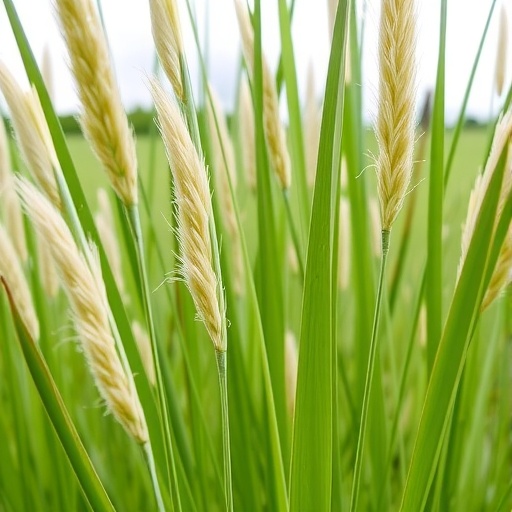
In a groundbreaking study spearheaded by a team of researchers led by X. Geng, the intricate world of chloroplast genome evolution within the Poaceae family has been thoroughly dissected. This fascinating exploration seeks to unravel the complexities of codon usage patterns, selection pressures, and phylogenomic relationships that define this important group of plants. As the backbone of global agriculture, deciphering the genetic nuances of grasses not only enriches our understanding of plant genomes but also holds significant implications for food security and climate adaptation.
Chloroplasts are renowned for their role in photosynthesis, an essential process that converts sunlight into energy. However, the evolution of chloroplast genomes, particularly in the context of the extensive Poaceae family, has not been as extensively studied as one might assume. The study meticulously examines the structural and functional dynamics of chloroplast genomes across a variety of grass species, revealing how these genomes have adapted and evolved in response to environmental pressures over millions of years.
The comprehensive analysis conducted by Geng and colleagues highlights the importance of codon usage patterns in the evolutionary trajectory of chloroplast genomes. Codons, the building blocks of genetic code, play a pivotal role in the synthesis of proteins that, in turn, determine the phenotypic traits of an organism. By comparing the codon usage across various species within the Poaceae family, the researchers were able to identify unique patterns that suggest different evolutionary histories influenced by natural selection, genetic drift, and ecological specialization.
Selection pressures serve as a critical driving force behind the evolution of chloroplast genomes. The study reveals how environmental factors such as temperature, light availability, and soil composition have shaped the genetic makeup of grasses. For instance, certain codons are preferred in specific climatic regions, hinting at a remarkable adaptability of the chloroplast to optimize photosynthetic efficiency under varying conditions. Understanding these selection pressures not only aids in piecing together the evolutionary puzzle of grasses but also provides insights into how these plants might respond to ongoing climate change.
The phylogenomic relationships outlined in this research present another layer of complexity. Utilizing cutting-edge sequencing technologies, Geng and colleagues have constructed a comprehensive phylogenetic tree that illustrates the evolutionary linkages among grasses. This tree serves as a visual roadmap, showcasing the divergence of various grass species and their respective chloroplast genomes. The implications of these relationships extend beyond academic curiosity; they can also inform conservation strategies and agricultural practices aimed at preserving genetic diversity essential for resilience against pests, diseases, and changing environmental conditions.
One of the standout features of the study is the innovative methodology employed by the researchers. By integrating genomic data analysis with advanced computational techniques, the team was able to delve deep into the genetic fabric of chloroplasts across Poaceae species. This multi-faceted approach not only strengthens the validity of their findings but also sets a new standard for future research in plant genomics, illustrating the power of interdisciplinary collaboration in addressing complex biological questions.
Furthermore, the findings from this study have significant ramifications for agricultural biotechnology. As food security becomes an increasingly pressing issue globally, understanding the genetic and evolutionary mechanisms underlying crop resilience can lead to the development of enhanced varieties that are better equipped to withstand environmental stresses. The insights gleaned from this research can be instrumental in engineering crops that achieve higher yields with reduced inputs, ultimately contributing to sustainable farming practices.
As the world grapples with the challenges of climate change, the agronomic potential harbored within the chloroplast genomes of the Poaceae family cannot be overstated. This research underscores the urgency for continued exploration into plant genomics, aiming to harness the evolutionary wisdom embedded within grass species. By illuminating the adaptive strategies of these vital plants, scientists can pave the way for innovative solutions to ensure food security amidst an uncertain future.
In sum, Geng et al.’s comprehensive analysis of chloroplast genome evolution in Poaceae not only enriches our foundational understanding of plant biology but also holds the key to advancing agricultural resilience and sustainability. As the scientific community digs deeper into the evolutionary intricacies of the natural world, studies like this epitomize the intersection of biodiversity research and practical application, encapsulating the promise of genomics in shaping a sustainable agricultural future.
The implications of this research extend beyond just the analysis of codon usage or phylogenetic relationships; it raises critical questions about the future viability of crop species in an ever-changing environment. As natural habitats shift and climate zones evolve, the genetic flexibility offered by understanding these evolutionary dynamics becomes increasingly pivotal. This work reaffirms the idea that preserving biodiversity is not merely an ecological pursuit but also an agricultural necessity for future generations.
Language and communication are essential tools through which scientific knowledge is disseminated, and this study is a prime example of how clear and impactful research can capture the attention of both academic circles and the public. By breaking down complex topics into digestible insights, Geng and the research team have not only advanced scientific understanding but have also inspired a broader conversation about the importance of plant genomics in an age of environmental change.
In closing, the meticulous work presented in this research illuminates the paths that have led to the current diversity seen within the grass family. It highlights the interconnectedness of genetic, ecological, and evolutionary factors that shape the living world. Ultimately, by fostering a greater understanding of these dynamics, we equip ourselves with the knowledge necessary to navigate and safeguard the future of global food systems and natural ecosystems alike.
Subject of Research: Chloroplast genome evolution in Poaceae
Article Title: Comprehensive analysis of chloroplast genome evolution in Poaceae: codon usage patterns, selection pressures, and phylogenomic relationships
Article References:
Geng, X., Xue, Y., Wang, H. et al. Comprehensive analysis of chloroplast genome evolution in Poaceae: codon usage patterns, selection pressures, and phylogenomic relationships.
BMC Genomics (2026). https://doi.org/10.1186/s12864-025-12498-6
Image Credits: AI Generated
DOI:
Keywords: Chloroplast genome, Poaceae, codon usage, selection pressures, phylogenomics, genetic evolution, food security, climate adaptation, biodiversity.


