


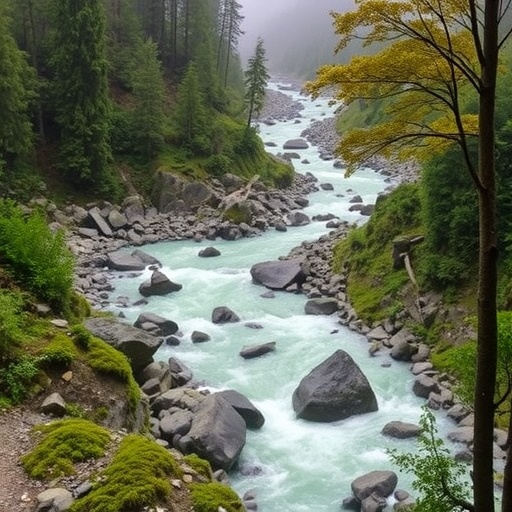
In the rugged terrains of the Darjeeling Himalayas, the Lish-Gish-Chel River basin stands as a unique intersection where natural beauty meets geological challenges. The region is not only renowned for its breathtaking landscapes but also for its vulnerability to landslides, a phenomenon increasingly affecting communities and ecosystems alike. Recent research by Mandal and Das brings to light the intricate geo-environmental drivers that contribute to landslide susceptibility in this sensitive area. Their study meticulously analyzes various elements at play, providing critical insights that could pave the way for effective management strategies and hazard mitigation.
The study focuses on understanding the complex interplay between geological and environmental factors that lead to landslides within the basin. The Lish-Gish-Chel River basin is characterized by steep slopes, fragile geological formations, and a climate that brings heavy rainfall. Mandal and Das emphasize that the inherent instability of the terrain, combined with increasing human activities such as agriculture and urbanization, intensifies the risks associated with landslides. As such, the research underscores the urgent need for comprehensive evaluations of these drivers, which can help inform land-use planning and disaster preparedness efforts in the region.
One of the key aspects of the research is the identification of specific geo-environmental parameters influencing landslide susceptibility. The authors assess factors such as soil composition, slope morphology, and hydrological conditions, integrating them into a cohesive framework that explains how these elements interact to trigger landslides. By utilizing advanced geological mapping and statistical analyses, they provide a clear representation of the risk zones, delineating areas that are particularly susceptible to landslide events. This geospatial analysis is crucial for local authorities responsible for initiating safety measures and ensuring the resilience of communities living in the mountainous regions.
Rainfall is a critical driver of landslide occurrences, and Mandal and Das delve into the rainfall patterns specific to the Darjeeling Himalayas. Their findings reveal that prolonged and intense precipitation events exacerbate soil saturation, leading to increased pore water pressure within the soil and rock formations. This saturation, along with the geological makeup of the region, plays a significant role in reducing the frictional resistance that holds the soil in place. The relationship between rainfall intensity and landslide frequency highlights the importance of monitoring climatic changes and predicting extreme weather patterns as part of land-use management.
Moreover, the investigation sheds light on the human-induced factors contributing to landslide susceptibility in the basin. Unsustainable land practices, such as deforestation and unchecked construction activities along slopes, are crucial elements that compromise the natural stability of the environment. The authors argue that while these practices facilitate economic development, they also pose serious threats to geomorphological integrity and increase the likelihood of disastrous landslide events. By drawing attention to the consequences of these activities, the research calls for a balanced approach that fosters both development and environmental conservation.
The interdisciplinary nature of this research underscores the importance of collaboration among geologists, environmental scientists, and policymakers. The findings serve as a foundation for developing adaptive strategies aimed at mitigating landslide risks, emphasizing the role of community engagement in disaster preparedness. Educating local populations about the risks associated with landslide-prone areas and encouraging sustainable land use are paramount in enhancing resilience against geological hazards.
Furthermore, Mandal and Das advocate for the implementation of early warning systems, utilizing technology and data analytics to improve hazard forecasting and response protocols. Integrating modern tools such as GIS (Geographic Information Systems) and remote sensing can facilitate timely alerts to affected communities, potentially saving lives and reducing economic losses.
The research also highlights the need for ongoing monitoring and risk assessment as climate change continues to influence environmental conditions. Changing weather patterns and increased frequency of extreme events demand that proactive measures be taken to adapt to evolving risks. Ongoing collaboration among scientists, local governments, and non-governmental organizations will be vital to ensure that effective land-use policies are engineered with a strong scientific backing.
In conclusion, the work presented by Mandal and Das is a significant contribution to the understanding of landslide susceptibility in the Lish-Gish-Chel River basin. By elucidating the geo-environmental drivers and promoting a holistic view of hazard management, this research not only provides critical data for immediate action but also sets a precedent for future studies in landslide-prone regions across the globe. The intricate relationship between human activity and geological factors serves as a reminder of our responsibility towards preserving both lives and natural landscapes in the face of inevitable environmental challenges.
The research emphasizes the need to adjust our approach to development and risk management in sensitive ecosystems such as the Himalayas. As landslides remain a pertinent threat not just locally but globally, findings like those of Mandal and Das encourage a paradigm shift in how communities engage with their environment. Recognizing the balance between economic growth and ecological health is paramount in ensuring the safety and sustainability of future generations.
While the beauty of the Darjeeling Himalayas captivates those who visit, it is imperative to acknowledge the lurking dangers that come with such majestic landscapes. As further studies and insights emerge from ongoing research, the hope is that increased awareness and proactive measures will mitigate the risks posed by landslides and protect both the environment and the communities that thrive within it.
Cite Scienmag News
Violet Maxwell. (November 29, 2025). Unraveling Landslide Risks in Darjeeling’s River Basin. Scienmag. https://scienmag.com/unraveling-landslide-risks-in-darjeelings-river-basin/
Violet Maxwell. "Unraveling Landslide Risks in Darjeeling’s River Basin." Scienmag, 29 November 2025, https://scienmag.com/unraveling-landslide-risks-in-darjeelings-river-basin/. Accessed 3 September 2026.
Violet Maxwell. "Unraveling Landslide Risks in Darjeeling’s River Basin." Scienmag. November 29, 2025. https://scienmag.com/unraveling-landslide-risks-in-darjeelings-river-basin/


