


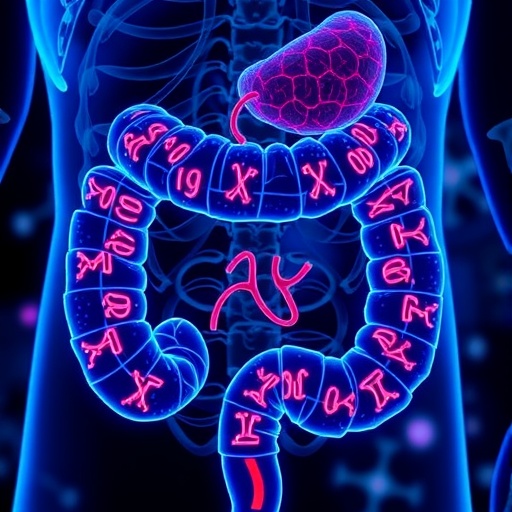
Colorectal cancer (CRC) remains a formidable clinical challenge due to its propensity to metastasize, a process responsible for the vast majority of cancer-related deaths worldwide. Central to the metastatic journey of CRC cells is a biological phenomenon known as epithelial-mesenchymal transition (EMT), a cellular reprogramming event that endows cancer cells with enhanced invasive and migratory capabilities. Recent cutting-edge research has meticulously dissected the intricate role of EMT in orchestrating each phase of colorectal cancer progression, unraveling molecular underpinnings that could pave the way for novel therapeutic interventions.
In the complex and multi-staged process of metastasis, termed the invasion-metastasis cascade, the initiation hinges on the ability of primary tumor cells to dissociate from their original environment. EMT serves as the molecular switch that transforms immobile epithelial cells, characterized by tight intercellular adhesions and polarity, into mesenchymal-like cells capable of movement and invasion. This transition entails a dramatic remodeling of cellular architecture—downregulation of E-cadherin and other adhesion molecules alongside cytoskeletal rearrangement—thereby diminishing cell-cell adhesion and enabling detachment from the primary tumor mass.
Following detachment, these hybrid mesenchymal cancer cells possess the enhanced enzymatic machinery necessary to degrade the basement membrane and the extracellular matrix (ECM), clearing a path for local invasion. One pivotal axis involves the upregulation of matrix metalloproteinases (MMPs), notably MMP-7 and MMP-9, through signaling pathways such as ERK1/2 activated by molecules like Gab2. This proteolytic onslaught facilitates tumor cell infiltration beyond the epithelial boundaries into surrounding stromal tissues, a critical prelude to metastatic seeding.
As the invasion progresses, EMT also mediates the crucial transendothelial migration known as intravasation. The permeability of local vasculature is augmented through mechanisms involving the transfer of specific microRNAs—miR-27b-3p via exosomes—to endothelial cells, weakening intercellular junctions. Concurrently, hypoxic conditions within the tumor microenvironment elevate stabilization of hypoxia-inducible factor 1-alpha (HIF-1α), which in turn promotes expression of EMT transcription factors like TWIST, driving cancer cell motility essential for vessel penetration.
The tumor microenvironment itself plays a pivotal role in sustaining and amplifying EMT signals. Crosstalk between CRC cells and stromal constituents, including immune cells and fibroblasts, establishes a milieu rich in cytokines and chemokines. This dynamic ecosystem continuously feeds EMT-promoting stimuli, creating a positive-feedback loop that intensifies invasive characteristics. Additionally, environmental stressors such as low oxygen tension, inflammatory mediators, and nutrient scarcity induce metabolic rewiring in tumor cells. A notable metabolic adaptation involves a shift towards glycolysis, often referred to as the Warburg effect, which furnishes the bioenergetic and biosynthetic requirements to support aggressive proliferation and migration.
Intravasation deposits cancer cells into the bloodstream as circulating tumor cells (CTCs), where survival becomes an acute challenge due to physical shear forces, immune attacks, and detachment-triggered apoptosis known as anoikis. Herein, EMT endows CTCs with essential survival advantages by altering adhesion dynamics and modulating anti-apoptotic pathways. These transformed cells express a repertoire of adhesion molecules that facilitate their arrest onto and eventual exit from distant vascular beds in a process termed extravasation, seeding future metastatic colonies.
Interestingly, the establishment of metastases often involves a remarkable phenotypic reversal known as mesenchymal-epithelial transition (MET). While EMT aids the initial dissemination by fostering mobility, MET helps cancer cells re-adopt epithelial properties conducive to proliferation and organized growth within new tissue niches. This phenotypic plasticity is critical for metastatic colonization and underscores the dynamic nature of cellular identity during cancer progression.
Beyond its classical roles, EMT is intricately linked with the emergence of cancer stem cell (CSC)-like traits in CRC. EMT imparts stemness characteristics such as self-renewal capacity and multipotency, contributing to therapeutic resistance and tumor recurrence. This multifaceted functionality underscores EMT’s influence beyond migration, embedding itself deeply into tumor biology and progression dynamics.
The metabolic reprogramming observed in EMT-driven CRC cells is not merely a survival adaptation but an integral facilitator of metastatic competence. Enhanced glycolysis, often upregulated in hypoxic and inflammatory microenvironments, provides intermediates for anabolic processes vital for growth and invasiveness. This coordinated metabolic and phenotypic shift exemplifies the cancer cell’s adaptability to hostile environments, allowing metastatic cells to thrive where normal cells would perish.
Furthermore, microbial factors such as Fusobacterium nucleatum exacerbate EMT-mediated progression by fostering pro-angiogenic environments and inducing immune-modulatory structures like neutrophil extracellular traps. These extrinsic influences integrate with intrinsic molecular changes to potentiate invasive and migratory behavior in CRC cells.
Given the profound involvement of EMT in CRC metastasis, targeting the EMT program presents an attractive therapeutic avenue. Current strategies are exploring inhibitors of EMT-inducing pathways, modulation of the tumor microenvironment, and metabolic vulnerabilities unique to EMT-transformed cells. However, therapeutic intervention must consider the plasticity and reversibility characteristic of EMT to avoid undesired effects on normal tissue homeostasis.
In sum, EMT stands as a master regulator in the metastatic cascade of colorectal cancer, orchestrating morphological, molecular, and metabolic transformations that culminate in dissemination and colonization of distant organs. Understanding this complex transition at a mechanistic level reveals myriad molecular targets and illuminates potential pathways to intercept CRC metastasis, advancing the prospects for improving patient outcomes in this deadly malignancy.
Cite Scienmag News
Nathaniel Bowman. (August 2, 2025). Unraveling EMT’s Role in Colorectal Cancer Spread. Scienmag. https://scienmag.com/unraveling-emts-role-in-colorectal-cancer-spread/
Nathaniel Bowman. "Unraveling EMT’s Role in Colorectal Cancer Spread." Scienmag, 2 August 2025, https://scienmag.com/unraveling-emts-role-in-colorectal-cancer-spread/. Accessed 4 September 2026.
Nathaniel Bowman. "Unraveling EMT’s Role in Colorectal Cancer Spread." Scienmag. August 2, 2025. https://scienmag.com/unraveling-emts-role-in-colorectal-cancer-spread/


