

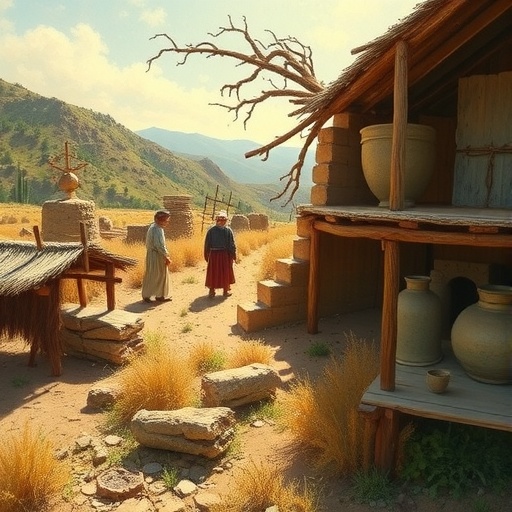
In a groundbreaking study that seeks to unravel the complexities of ancient metallurgy, researchers led by Armigliato, F.W. Rademakers, and A. Zerboni have delved into the nuances of bronze production at the Terramara Santa Rosa di Poviglio site in Northern Italy. This archeological site, rich in history from the Bronze Age, has now emerged as a focal point for understanding secondary production waste and its implications in ancient metalworking techniques. The paper, titled “Decoding bronze production at Terramara Santa Rosa di Poviglio site (Bronze Age, N Italy): insights from secondary production waste,” sheds light on the intricate processes that were in play during this formative period in human history.
Through rigorous analysis and advanced methodologies, the study brings to the forefront significant findings regarding the byproducts of bronze production, which had long remained obscured in scholarly discussions. The implications of these findings extend beyond mere historical curiosity; they are foundational to our understanding of socio-economic structures, trade networks, and technological advancements of Bronze Age societies. The researchers employed a multifaceted approach, utilizing both archaeological and chemical analyses to pinpoint the sources and impact of secondary production waste.
The Terramara Santa Rosa di Poviglio site is a unique location that provides a broader context for understanding regional metal production techniques. By leveraging archaeological excavations and material analyses, the study reveals how these ancient civilizations not only reused their metal resources but also developed sophisticated methods for recycling secondary production waste. The excavations at this site have uncovered remnants that offer insights into the environmental conditions and industrial practices of the era, allowing scholars to construct a more detailed narrative of Bronze Age life.
One of the critical aspects explored in the study is the technological innovation associated with the alloying process of bronze, which typically involves copper and tin. However, the research delves deeper into the less understood aspects of secondary production waste, which includes the remnants created during the casting processes. By identifying and examining these waste products, the researchers have been able to reconstruct how artisans adapted their methods to enhance efficiency and product quality. This innovative approach not only showcases their craftsmanship but also underscores the vital role of waste management in ancient metal production.
Moreover, the study emphasizes the economic implications tied to bronze production at the site. The strategic recycling of secondary production waste implies a level of resource management that could point to more advanced societal structures than previously assumed. This raises significant questions regarding trade and the distribution of raw materials during the Bronze Age. Evidence from comparative studies with other archaeological sites indicates that the Terramara community likely engaged in trade networks that extended beyond their immediate vicinity, exchanging not only goods but also metallurgical knowledge.
The researchers assert that understanding the nuances of waste in ancient metallurgy can radically shift our perception of how these early societies functioned economically and socially. By synthesizing chemical analyses with archaeological data, they have established robust links between production practices and economic behaviors, highlighting that resource management was an ongoing process, crucial for survival and prosperity in the Bronze Age. The significance of these findings cannot be understated; they offer a fresh lens through which we can view the complexities of ancient communities, fundamentally altering our understanding of their societal development.
Furthermore, the research team draws attention to the environmental impact of ancient metallurgical practices. Incorporating historical ecology into their analysis, the researchers assess how the extraction and use of resources may have influenced the ecosystem surrounding the Terramara site. Not only does this aspect of their research underscore the interconnectedness of human activity and environmental stewardship, but it also raises contemporary issues regarding sustainability and resource management in our current age.
In conclusion, “Decoding bronze production at Terramara Santa Rosa di Poviglio site” constitutes a significant advancement in the field of archaeology, particularly concerning our understanding of ancient metalworking practices. The innovative methodologies employed by Armigliato and colleagues pave the way for future explorations of secondary production waste and its implications for socio-economic structures in ancient civilizations. As more scholars turn their attention to these research avenues, the field of archaeology stands on the brink of transformative discoveries that could reshape historical narratives.
This work not only enhances our understanding of a specific site but also enriches the broader discourse on the interplay between technology, society, and environment throughout human history. The findings from this research ultimately enhance our comprehension of the Bronze Age and set a precedent for future interdisciplinary studies in the realm of archaeological science.
Subject of Research:
Bronze production techniques and secondary production waste at Terramara Santa Rosa di Poviglio site during the Bronze Age.
Article Title:
Decoding bronze production at Terramara Santa Rosa di Poviglio site (Bronze Age, N Italy): insights from secondary production waste.
Article References:
Armigliato, A., Rademakers, F.W., Zerboni, A. et al. Decoding bronze production at Terramara Santa Rosa di Poviglio site (Bronze Age, N Italy): insights from secondary production waste. Archaeol Anthropol Sci 17, 248 (2025). https://doi.org/10.1007/s12520-025-02357-6
Image Credits: AI Generated
DOI:
https://doi.org/10.1007/s12520-025-02357-6
Keywords:
Bronze Age, Terramara Santa Rosa di Poviglio, metallurgy, secondary production waste, archaeological science, ancient technology, socio-economic structures.


