


In a recent study led by the University of Liège researchers delved into the intersection of the fields of entrepreneurship and neuroscience, looking specifically at the cognitive flexibility of habitual entrepreneurs – those who repeatedly launch new businesses – compared to less experienced entrepreneurs and managers.

Credit: @JBVI/University of Liège
In a recent study led by the University of Liège researchers delved into the intersection of the fields of entrepreneurship and neuroscience, looking specifically at the cognitive flexibility of habitual entrepreneurs – those who repeatedly launch new businesses – compared to less experienced entrepreneurs and managers.
Cognitive flexibility – the ability to adapt and shift from one concept or strategy to another – is crucial to entrepreneurial success. Understanding the neural basis of this characteristic can provide valuable information for improving entrepreneurial training and education. Recently published research suggests links between entrepreneurial behavior and brain structure, opening up new perspectives in the emerging field of neuro-entrepreneurship.
“Our study used a two-stage methodology,” explains Frédéric Ooms, Assistant Professor and first author of the study. First, we collected self-reported measures of cognitive flexibility from 727 participants, including entrepreneurs and managers. Next, we performed structural magnetic resonance imaging (MRI) on a subset of these participants to explore differences in gray matter volume in the brain. This multidisciplinary approach enabled us to correlate self-reported cognitive flexibility with actual brain structure.”
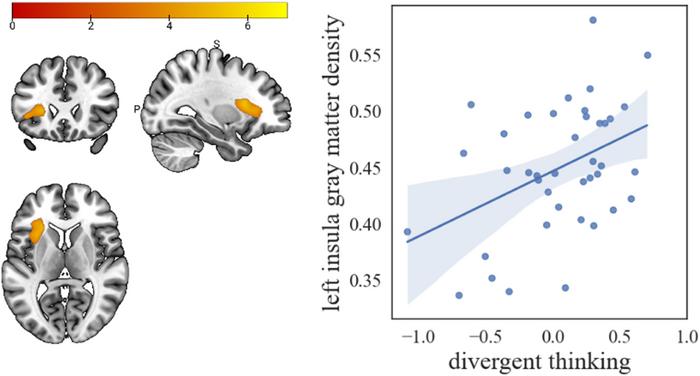
And what emerges first from the analyses is greater cognitive flexibility and brain differences between entrepreneurs and managers. Habitual entrepreneurs show an increase in gray matter volume in the left insula compared to managers. This brain region is associated with enhanced cognitive agility and divergent thinking, essential traits in entrepreneurship. The study also links gray matter density in the left insula to cognitive flexibility, particularly divergent thinking. “This finding suggests that the brains of habitual entrepreneurs are specially adapted to foster the cognitive flexibility needed to identify and exploit new opportunities,” explains Steven Laureys, neurologist at ULiège and Laval University.
This research has practical implications for educators and organizations. By recognizing the importance of cognitive flexibility, educational programs can be designed to cultivate this characteristic in aspiring entrepreneurs. Organizations can also benefit by fostering cognitive flexibility among managers, which could lead to more innovative and adaptive business strategies.
“This study is essential for entrepreneurship and neuroscience researchers, educators designing entrepreneurial training programs and business leaders wishing to foster innovation within their organizations,” resumes Bernard Surlemont, Professor of Entrepreneurship. By understanding the neural basis of cognitive flexibility, stakeholders can better support entrepreneurial success and adaptability.”
The discovery of distinct neural characteristics in habitual entrepreneurs not only advances our understanding of entrepreneurial cognition, but also opens up new avenues of research into how these brain structures develop and change in response to entrepreneurial activities. Longitudinal studies are underway to explore whether these differences result from innate predispositions or the brain’s plastic response to entrepreneurial experiences.
This pioneering research highlights the importance of combining neuroscience with traditional entrepreneurship studies to gain a comprehensive understanding of what makes successful entrepreneurs distinct at the neurological level. “As we continue to explore the role of the brain in entrepreneurship, this study represents an important advance in the field of neuro-entrepreneurship, concludes Frédéric Ooms.
If you are interested in contributing to these pioneering studies at the frontier of entrepreneurship and neuroscience, follow this link
Journal
Journal of Business Venturing Insights
Article Title
Entrepreneurial Neuroanatomy: Exploring Gray Matter Volume in Habitual Entrepreneurs
Article Publication Date
18-Jun-2024
Cite Scienmag News
Cassandra Pierce. (June 23, 2024). Unlocking the entrepreneurial brain: new perspectives on cognitive flexibility. Scienmag. https://scienmag.com/unlocking-the-entrepreneurial-brain-new-perspectives-on-cognitive-flexibility/
Cassandra Pierce. "Unlocking the entrepreneurial brain: new perspectives on cognitive flexibility." Scienmag, 23 June 2024, https://scienmag.com/unlocking-the-entrepreneurial-brain-new-perspectives-on-cognitive-flexibility/. Accessed 4 September 2026.
Cassandra Pierce. "Unlocking the entrepreneurial brain: new perspectives on cognitive flexibility." Scienmag. June 23, 2024. https://scienmag.com/unlocking-the-entrepreneurial-brain-new-perspectives-on-cognitive-flexibility/

