

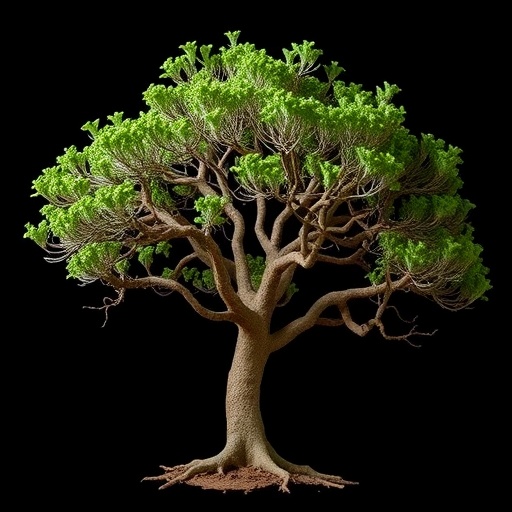
In the vibrant tapestry of tropical Africa, the Canarium schweinfurthii, commonly known as the African butter tree, has emerged as a cornerstone of both ecological balance and community sustenance. This species, indigenous to various regions in Africa, has been revered not only for its unique culinary applications but also for its myriad environmental benefits. Recent research has delved deeper into the genetic makeup of this notable tree, uncovering a wealth of information that could guide conservation efforts and enhance our understanding of its role in the ecosystem.
The study conducted by Adji et al. marked a significant advancement in the field of plant genetics, focusing on microsatellite marker development and population genetic analysis. Microsatellites, which are repetitive sequences of DNA, serve as crucial tools in genetic biodiversity studies due to their high levels of polymorphism and ability to reveal genetic relationships among populations. By employing these markers, researchers can assess genetic variability within and among Canarium schweinfurthii populations, enabling more informed conservation strategies.
Understanding the genetic diversity of Canarium schweinfurthii is paramount, especially in the face of environmental changes and human impacts on its habitat. The research team meticulously collected samples from various geographical locations to provide a comprehensive overview of the genetic diversity present within this species. The findings revealed significant variations among populations, highlighting areas that may require targeted conservation efforts.
In many societies across tropical Africa, Canarium schweinfurthii is more than just a tree; it is an essential food resource. The tree produces nuts that are not only edible but also highly nutritious, contributing to dietary diversity in communities that depend on it. By investigating the genetic diversity of these trees, the researchers aim to identify genetically superior populations that may yield nuts with enhanced qualities, thus directly benefiting local populations seeking sustainable food sources.
Additionally, the ecological role of Canarium schweinfurthii extends far beyond its nutritional value. The tree plays a vital part in maintaining soil health, stabilizing landscapes, and providing habitat for various species. The microsatellite markers developed in this study could aid in monitoring populations and their health over time, ensuring that conservation efforts are both effective and adaptive in a changing environment.
One of the most fascinating aspects of this research is the potential applications of its findings. The genetic insights gathered can inform breeding programs aimed at enhancing the resilience of Canarium schweinfurthii against diseases and climate stressors. By fostering genetic diversity, these programs can help ensure that the tree remains a viable food source for generations to come. The integration of genetic information into traditional agricultural practices presents an exciting intersection between science and sustainable development.
Furthermore, collaboration between local communities, scientists, and conservationists will be essential to the success of these initiatives. Engaging communities in the conservation process can empower them to become stewards of their natural resources, promoting a sense of ownership and responsibility towards the protection of Canarium schweinfurthii. Educational programs highlighting the importance of preserving genetic diversity could foster a greater appreciation for this tree’s significance both ecologically and culturally.
The implications of this research extend beyond local communities; global biodiversity is deeply interconnected. By conserving Canarium schweinfurthii and enhancing its genetic pool, we contribute to the broader goal of maintaining ecological balance and resisting the erosion of genetic diversity on a global scale. Each species, including this iconic tree, plays a unique role in the intricate web of life, and safeguarding their genetic integrity is essential for sustaining our planet’s health.
In the wake of climate change and habitat destruction, the urgency of such research cannot be overstated. The ability to track and manage genetic diversity will become increasingly crucial as ecosystems continue to be impacted by anthropogenic activities. This research not only lays the groundwork for future studies but also champions the need for immediate action in conservation efforts to protect Canarium schweinfurthii and its genetic legacy.
As we reflect on the broader significance of this work, it becomes clear that the study of Canarium schweinfurthii is not merely about one tree species; it encapsulates vital themes of resilience, adaptation, and sustainability in our increasingly fragile world. The intersection of genetic research and traditional knowledge offers a beacon of hope, guiding us towards more holistic approaches to environmental stewardship.
Finally, this research paves the way for subsequent explorations in plant genetics that could revolutionize our understanding of tropical trees and their roles in global ecosystems. The intricate dance of genetics, ecology, and community resilience is crucial for developing sustainable solutions to the challenges that confront our natural world. As we continue to unravel the complexities of species like Canarium schweinfurthii, we not only protect a tree but also safeguard the future of diverse tropical ecosystems and the people who rely on them.
Subject of Research: Canarium schweinfurthii genetic diversity
Article Title: Microsatellite marker development and population genetic analysis of Canarium schweinfurthii (Burseraceae), an emblematic food tree of tropical Africa.
Article References:
Adji, B., Sène, M.H., Chakocha, A.F. et al. Microsatellite marker development and population genetic analysis of Canarium schweinfurthii (Burseraceae), an emblematic food tree of tropical Africa.
Discov. Plants 3, 6 (2026). https://doi.org/10.1007/s44372-026-00467-6
Image Credits: AI Generated
DOI: https://doi.org/10.1007/s44372-026-00467-6
Keywords: Microsatellite markers, genetic diversity, Canarium schweinfurthii, tropical Africa, conservation, food security.


