


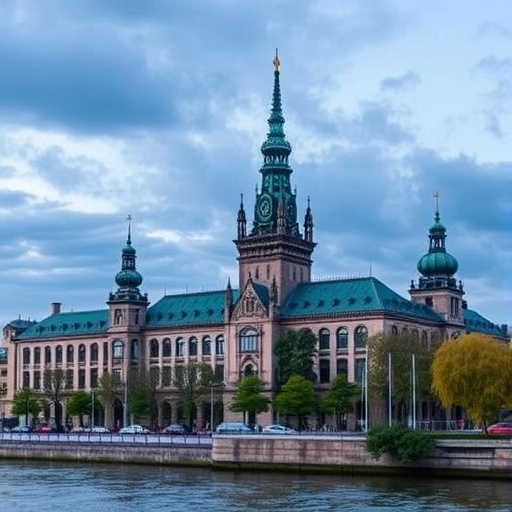
Two newly funded Collaborative Research Centres (CRCs) at the University of Cologne have secured substantial financial support from the German Research Foundation (DFG), marking a significant advancement for research in both medicine and plant genetics. The combined funding for these interdisciplinary CRCs amounts to approximately 27.1 million euros for the upcoming funding period, with roughly 16.9 million euros allocated directly to the University of Cologne. The remainder of the funding will be distributed among the consortium’s collaborative partners, signaling a broad network of institutions working together towards scientific breakthroughs.
The first CRC, designated as CRC 1530, focuses on the pathological mechanisms underlying B cell malignancies, specifically lymphomas, which are a diverse group of cancers originating in the lymph nodes. This initiative harnesses a multidisciplinary team of scientists specializing in lymphoma biology and inflammatory pathways. By leveraging their diverse expertise, the project is positioned to deepen our understanding of lymphoma pathogenesis and to develop targeted therapeutic interventions. The DFG has earmarked 10.3 million euros in project funding for this initiative, spanning a period of three and a half years.
The scientific strategy of CRC 1530 is rooted in dissecting the complex signaling networks that trigger malignant transformation and sustain lymphoma cell survival. Researchers aim to interrupt these cancer-initiating pathways effectively, thereby curbing tumor proliferation. Additionally, novel approaches focus on modulating the lymphoma microenvironment – the intricate cellular surroundings that critically influence tumor growth and resistance to therapy. This dual targeting strategy promises to enhance treatment outcomes for patients with high-risk lymphoma subtypes that presently have limited curative options.
Leading this ambitious effort is Professor Dr. Michael Hallek, the Director of Clinic I of Internal Medicine and head of the Center for Integrated Oncology at the University of Cologne. Professor Hallek underscores the collaborative nature of the CRC, which includes contributions from prominent institutions in Berlin, Frankfurt, Duisburg, and Essen. He expresses optimism about the second funding phase, emphasizing its potential to translate laboratory discoveries into clinical advances that will transform lymphoma care.
Parallel to the medical research, CRC TRR/341 is dedicated to cutting-edge investigations into plant ecological genetics. Awarded approximately 11.9 million euros for a four-year funding cycle, this CRC addresses the urgent global challenge of understanding how plants genetically respond and adapt to environmental changes induced by climate variability and resource limitations. Such insights are indispensable for safeguarding biodiversity and maintaining resilient ecosystems amid escalating anthropogenic pressures.
This consortium explores the genetic determinants that enable plants to adjust their growth, physiological processes, and reproductive strategies in the face of abiotic stresses such as drought, nutrient scarcity, and competition. By integrating data across multiple species and environmental gradients, the research aims to elucidate the genomic foundations of ecological diversification. The use of sophisticated artificial intelligence models allows for unprecedented analysis of complex interactions between plant traits, genetic variation, and environmental factors, boosting predictive capabilities for future plant responses.
The spokesperson for this initiative, Professor Dr. Juliette de Meaux, highlights the CRC’s innovative approach that melds genomics, ecology, and computational biology. She describes the extended funding phase as an exciting opportunity to deepen the integration of cross-species data, enhancing the resolution of genetic adaptation studies at both molecular and ecosystem scales. The consortium’s interdisciplinary nature is further exemplified by the involvement of Heinrich Heine University Düsseldorf as a co-applicant, facilitating knowledge exchange and collaborative synergy.
The University of Cologne’s success in securing such significant research funding illustrates its enduring commitment to excellence in cutting-edge scientific inquiry and its pivotal role within national and international research networks. These CRCs exemplify how interdisciplinary collaboration, combining medical science with advanced genetics and ecological research, can spearhead transformative innovations addressing some of the most pressing health and environmental challenges.
In examining the B cell lymphoma research, the CRC’s work aligns with current trends in precision oncology, where targeted modulation of cancer pathways and tumor microenvironment interactions are revolutionizing treatment paradigms. The consortium’s integrative approach, spanning molecular biology, immunology, and clinical oncology, aims to transition fundamental discoveries into novel therapeutics that improve patient prognosis significantly, particularly for those with aggressive and treatment-resistant lymphomas.
On the ecological front, the CRC TRR/341 addresses a critical knowledge gap in how genetic variation underlies plant adaptability to environmental stressors exacerbated by global climate change. The project’s emphasis on AI-driven models to analyze vast datasets is at the forefront of ecological genomics. It endeavors to produce actionable insights that policymakers and conservationists can use to develop strategies for ecosystem preservation and climate adaptation support.
These two CRCs together exemplify the broad scope of contemporary life sciences research carried out at the University of Cologne, spanning from molecular medicine to environmental sustainability. The synergistic effects of these funding approvals will likely catalyze further scientific advances, strengthen the university’s research infrastructure, and boost international visibility.
In summary, the German Research Foundation’s decisive funding for CRC 1530 and CRC TRR/341 marks a pivotal step forward in tackling complex biomedical challenges posed by lymphomas and ecological puzzles regarding plant adaptation. Backed by multi-institutional collaboration and innovative technological approaches, these research centres are poised to make landmark contributions to health sciences and environmental biology over the next several years.
News Publication Date:
Not specified in the given content.
Web References:
Not specified in the given content.
References:
Not specified in the given content.
Cite Scienmag News
Nathaniel Bowman. (May 15, 2026). University of Cologne Secures Continued Funding for Two Collaborative Research Centres. Scienmag. https://scienmag.com/university-of-cologne-secures-continued-funding-for-two-collaborative-research-centres/
Nathaniel Bowman. "University of Cologne Secures Continued Funding for Two Collaborative Research Centres." Scienmag, 15 May 2026, https://scienmag.com/university-of-cologne-secures-continued-funding-for-two-collaborative-research-centres/. Accessed 6 September 2026.
Nathaniel Bowman. "University of Cologne Secures Continued Funding for Two Collaborative Research Centres." Scienmag. May 15, 2026. https://scienmag.com/university-of-cologne-secures-continued-funding-for-two-collaborative-research-centres/


