

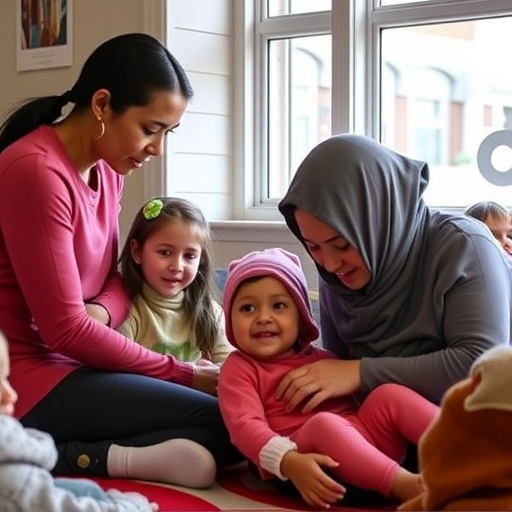
In a world marked by unprecedented levels of migration and global mobility, the challenges faced by newly settled immigrant families are increasingly coming under scientific scrutiny. A groundbreaking feasibility study recently published in BMC Psychology offers a promising intervention tailored for this vulnerable demographic: a brief, universal parenting program designed specifically for immigrant parents who are newly settled in Sweden. This program not only addresses the cultural and social hurdles these families encounter but also integrates evidence-based psychological strategies to promote healthier parenting practices and child development outcomes.
The study, led by Västhagen, M., Özdemir, M., and Kimber, B., among others, represents a significant advancement in community mental health interventions. Rooted in cross-cultural psychology and developmental science, the program was conceptualized with an acute sensitivity toward the unique experiences of immigrant families who navigate unfamiliar educational systems, social norms, and often complex bureaucratic landscapes. The researchers emphasize the program’s universality and brevity as key features—attributes that increase both its feasibility and scalability within public health frameworks.
At its core, the parenting program is designed to be inclusive, flexible, and adaptive, accommodating a range of cultural backgrounds without requiring extensive prior engagement or resources. This universality counters a common pitfall in immigrant support initiatives, which frequently are either too narrowly focused or overly resource-intensive. By focusing on universal parenting principles grounded in empirical psychology—such as positive reinforcement, consistent discipline, and effective communication—the program provides parents with practical tools that transcend cultural differences while promoting children’s emotional and behavioral well-being.
The researchers embarked on a rigorous feasibility study to assess the program’s acceptability, demand, implementation, and practicality among recently settled immigrant parents in Sweden. The methodology included mixed quantitative and qualitative approaches, leveraging standardized psychological assessments alongside in-depth interviews and participant feedback sessions. This comprehensive evaluative framework allowed the team to not only measure immediate program impacts on parenting behavior but also to identify contextual barriers and facilitators related to cultural integration and accessibility.
One of the most compelling aspects of this research is its sensitivity to the intersectionality of immigrant experiences. The program content is carefully balanced to respect cultural traditions while promoting evidence-based parenting practices that have been validated across diverse populations. This nuanced approach is critical because it circumvents the common pitfall of cultural imposition, fostering an environment where immigrant parents feel respected and empowered rather than alienated or judged.
The implementation phase was particularly illuminating. Recruitment occurred through community centers, language schools, and local clinics, demonstrating the program’s integration into existing infrastructure. Sessions were conducted in multiple languages by trained facilitators who shared cultural backgrounds with participants, enhancing rapport and trust. This culturally competent delivery mechanism underscores the importance of linguistic and cultural concordance in mental health interventions, which can significantly improve engagement and outcomes.
Preliminary results suggest promising changes in parenting practices, including increased use of positive discipline techniques and improved parent-child communication. Participants reported feeling more confident in their parenting roles and better equipped to manage stress related to settlement challenges. Importantly, children’s emotional regulation and social behaviors showed early signs of improvement, indicating that these parenting shifts may have immediate developmental benefits.
The study also highlights significant logistical and systemic challenges. For instance, balancing program attendance with work and childcare responsibilities emerged as a common barrier. The researchers advocate for flexible scheduling and integrating digital components to overcome these hurdles, pointing to future iterations of the program that could leverage technology for wider reach and adaptability. Such innovations are especially pertinent given ongoing global shifts toward hybrid and remote service delivery models.
Another notable contribution of this work is its detailed exploration of social determinants of health as they relate to parenting in immigrant families. Stressors such as economic instability, discrimination, and language barriers were closely examined as contextual variables that influence parents’ capacity to engage with and benefit from the program. Addressing these broader determinants is positioned as essential for the sustainable success of any parenting intervention, emphasizing the need for holistic, multi-sectoral support.
The researchers are also transparent about limitations. The study’s relatively small sample size and short follow-up period mean that long-term efficacy and generalizability remain to be established. However, the robust feasibility outcomes provide a vital foundation for subsequent larger-scale randomized controlled trials aimed at validating and refining the program.
The broader implications of this research extend beyond the borders of Sweden. Given rising immigration globally, scalable and culturally sensitive parenting programs like this one have the potential to contribute significantly to public health and social cohesion internationally. Policymakers and practitioners are encouraged to consider integrating such frameworks within their community mental health and social support services to mitigate the intergenerational effects of migration-related adversity.
In sum, this feasibility study marks an important stride forward in the quest for evidence-driven, culturally responsive interventions that support immigrant families in navigating the complexities of resettlement. By fostering positive parenting practices in a brief, accessible manner, the program holds promise not only for improving individual family trajectories but also for reinforcing societal resilience amid demographic transformation.
Researchers remain optimistic that future iterations of this program, bolstered by technology and extended community partnerships, will help bridge gaps in mental health care and social support for immigrant parents globally. The study’s blend of psychological rigor, cultural humility, and practical innovation sets a high standard for subsequent research and program development in this vital field.
As immigrant populations continue to increase worldwide, the urgency of providing accessible, effective parenting support becomes more apparent. This study’s insights contribute valuable knowledge on how to tailor interventions to serve diverse communities effectively while maintaining scientific integrity. If scaled appropriately, such programs could markedly reduce disparities in child development outcomes associated with migration, producing benefits for individuals, families, and societies for generations to come.
The convergence of psychological science, public health, and cultural competence embodied in this work exemplifies the kind of interdisciplinary approach needed to tackle complex social health issues in the 21st century. It invites researchers, clinicians, and policymakers alike to consider innovative, inclusive approaches to health promotion in multicultural societies facing the ongoing challenges of migration and settlement.
Subject of Research: A universal parenting program for recently settled immigrant families in Sweden, focusing on feasibility and culturally sensitive implementation to improve parenting practices and child outcomes.
Article Title: A brief universal parenting program for recently settled immigrants in Sweden: a feasibility study.
Article References:
Västhagen, M., Özdemir, M., Kimber, B. et al. A brief universal parenting program for recently settled immigrants in Sweden: a feasibility study. BMC Psychol (2026). https://doi.org/10.1186/s40359-026-04026-2
Image Credits: AI Generated


