

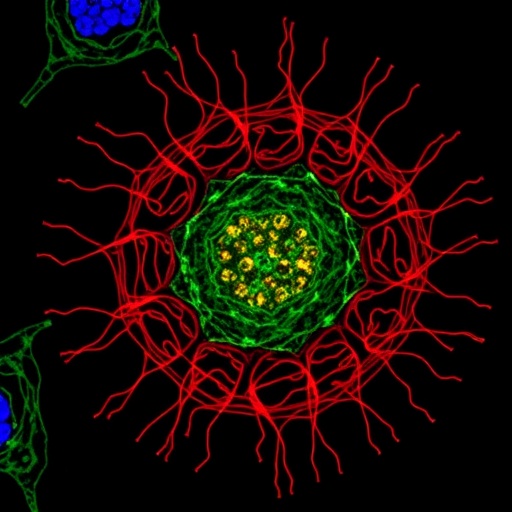
In a groundbreaking study poised to reshape our understanding of inner ear biology, researchers have unveiled remarkable heterogeneity and intricate damage response mechanisms within the adult human utricle, a critical vestibular organ responsible for balance and spatial orientation. This landmark investigation, published in Nature Communications in 2025 by Luca, Ibeh, Yamamoto, and colleagues, leverages cutting-edge molecular and cellular techniques to dissect the complex architecture and regenerative dynamics of the utricle, offering unparalleled insights into sensory cell diversity and injury response in the mature human vestibular system.
The utricle, one of two otolith organs in the vestibular labyrinth, has long been recognized for its role in detecting linear acceleration and head tilt but has remained enigmatic regarding its cellular composition and capacity for self-repair in adults. Traditional views posited a relatively uniform population of hair cells and supporting cells; however, this new research identifies previously unappreciated cellular heterogeneity that underpins functional specialization and resilience. By applying single-cell transcriptomics alongside advanced imaging modalities, the authors were able to delineate distinct cell types and states, revealing a mosaic of gene expression patterns that dictate vulnerability or robustness in response to mechanical or chemical insults.
Central to the study’s findings is the discovery that the adult utricle exhibits marked heterogeneity not only among hair cells but also within the supporting cell populations, which appear to orchestrate adaptive responses following injury. This cellular diversity challenges prior assumptions of homogeneity and suggests that certain subpopulations are primed for reparative activity, expressing gene networks associated with cell cycle re-entry, stress response, and extracellular matrix remodeling. Such intricate interplay between sensory and non-sensory cells highlights a finely tuned system evolved to maintain vestibular integrity throughout life.
The research sheds light on the complex molecular dialogues triggered upon utricular damage, demonstrating that the adult vestibular epithelium employs sophisticated signaling cascades to limit cellular loss and initiate regenerative processes. In response to insults such as ototoxic agents or mechanical trauma, specific progenitor-like supporting cells become activated, modulating pathways related to inflammation, proliferation, and differentiation. These findings not only illuminate the intrinsic repair strategies of the human utricle but also open promising avenues for therapeutic intervention in vestibular disorders that impair balance and spatial perception.
Technologically, the study is a tour de force in leveraging next-generation sequencing and spatial transcriptomics, enabling unprecedented resolution of the utricular cellular landscape. High-throughput single-cell RNA sequencing allowed the researchers to categorize hundreds of thousands of individual cells according to their transcriptomic signatures, capturing dynamic changes over time post-injury. Coupled with confocal microscopy and three-dimensional tissue reconstruction, this multi-modal approach provided a spatially informed understanding of cell-cell interactions and microenvironmental niches crucial for regenerative competence.
Importantly, the data reveal that hair cell subtypes in the adult human utricle are not static entities but exist along a continuum of differentiation and functional states, potentially reflecting ongoing adaptability to sensory demands. Certain hair cells manifest genetic programs linked to mechanotransduction robustness, while others show signs of susceptibility to stress-induced apoptosis. This plasticity underscores a delicate balance between maintenance and degeneration, with implications for age-related vestibular decline and susceptibility to vertigo or imbalance disorders.
The study also delves into the role of specific molecular pathways, such as Notch, Wnt, and Hedgehog signaling, in modulating utricular cell fate decisions during homeostasis and repair. Activation or suppression of these pathways appears crucial in tipping the scales between supporting cell quiescence and regenerative activation. By pinpointing these molecular levers, the research identifies candidate targets for drug development aimed at enhancing vestibular regeneration, potentially transforming the treatment landscape for vestibular dysfunctions that currently lack effective therapies.
Another fascinating aspect lies in the identification of immune-related gene expression within the utricular environment, implicating local inflammatory responses as double-edged swords that can either promote repair or exacerbate damage. The nuanced characterization of resident macrophages and immune-like cells interacting with sensory epithelia suggests an immunomodulatory axis essential for balancing clearance of damaged cells with preservation of tissue architecture. This recognition of immunological contributions to vestibular health opens an interdisciplinary doorway linking neurobiology, immunology, and otology.
Remarkably, the research underscores the limited but extant regenerative capacity of the adult human utricle, contrasting starkly with the robust regenerative abilities observed in non-mammalian vertebrates. While spontaneous repair is incomplete and often insufficient, the activated supporting cells’ gene expression profiles provide a blueprint for harnessing and amplifying these endogenous pathways. Understanding why this regenerative potential diminishes with age or becomes inefficient in pathological states remains a vital question for future exploration.
Clinically, the implications of these findings are profound. Vestibular disorders, including benign paroxysmal positional vertigo, Meniere’s disease, and vestibular neuritis, affect millions globally but are often poorly understood at the cellular and molecular level. By revealing the cellular heterogeneity and injury response mechanisms within the utricle, this study lays the groundwork for developing biologically informed therapies. Potential interventions could range from gene therapy and small molecule drugs to stem cell–based regenerative approaches designed to restore balance function in afflicted patients.
The research also accentuates the importance of human tissue studies, as much of the prior knowledge regarding vestibular biology was derived from animal models whose regenerative capacities and cellular compositions differ. The human-specific insights gained here refine our translational perspective and caution against simplistic extrapolations. This study exemplifies how integrating human biopsies with sophisticated molecular tools can revolutionize fundamental mitotic and sensory biology knowledge, thereby accelerating clinical innovation.
In summary, the elucidation of heterogeneity and damage response in the adult human utricle represents a major advance in sensory neuroscience. By dissecting the nuanced cellular ecosystems and molecular signaling pathways governing vestibular maintenance and repair, the study paves a promising path toward novel regenerative therapies aimed at restoring balance and quality of life for patients suffering from vestibular impairments. The fusion of single-cell technologies with clinical relevance showcased in this work heralds a new era of inner ear research that could ultimately conquer the longstanding challenges of treating inner ear sensory loss.
As science advances, the utricle—once an obscure and overlooked organ—is now at the forefront of breakthrough research, demonstrating that even apparently simple sensory epithelia harbor remarkable complexity and untapped regenerative potential. The trailblazing work by Luca and colleagues harnesses the power of modern molecular biology to reveal this hidden landscape, providing hope that effective strategies to combat vestibular dysfunction in humans might soon become a reality. This transformative study not only enriches our understanding of vestibular physiology but also exemplifies how interdisciplinary approaches can unravel the mysteries of human sensory organs, guiding the next generation of therapeutic innovation.
Subject of Research: Heterogeneity and damage response mechanisms in the adult human utricle, focusing on cellular diversity and regenerative capability of vestibular sensory epithelium.
Article Title: Revealing heterogeneity and damage response in the adult human utricle.
Article References:
Luca, E., Ibeh, N., Yamamoto, R. et al. Revealing heterogeneity and damage response in the adult human utricle. Nat Commun (2025). https://doi.org/10.1038/s41467-025-66358-8
Image Credits: AI Generated


