


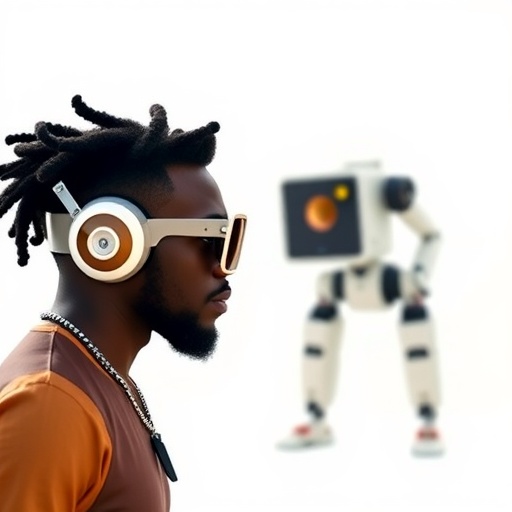
In a landmark collaboration announced at the Digital@UNGA Anchor Event held during the United Nations General Assembly, the International Telecommunication Union (ITU) has partnered with technology giant Google and globally renowned musician, entrepreneur, and philanthropist will.i.am to launch an ambitious initiative aimed at delivering cutting-edge artificial intelligence (AI) and robotics education to young learners across Africa. This groundbreaking programme is designed to bridge the digital divide in underserved communities by providing localized, hands-on training that empowers the next generation of African innovators to participate fully in the rapidly evolving digital economy.
The programme emerges against a complex backdrop where over 2.6 billion people worldwide remain offline, with approximately half being children. Africa, in particular, faces acute connectivity challenges, as 60 percent of its youth lack access to the internet. This digital exclusion severely hampers opportunities to acquire vital AI and robotics skills that are fast becoming essential in the modern knowledge economy. By leveraging synergies with the ITU-UNICEF Giga initiative—which works to connect schools across the continent to reliable internet—the new programme aspires to create an ecosystem where children aged 10 to 18 can immerse themselves in state-of-the-art STEM education tailored to their realities.
Central to this endeavor is ITU’s AI Skills Coalition, a global movement dedicated to democratizing AI literacy through innovative training models and community engagement. Complementing this is the Robotics for Good Youth Challenge, an international competition fostering creativity and problem-solving using robotics technology. Both initiatives are built on the philosophy of equipping youth with practical skills and critical thinking abilities, which are paramount to shaping a resilient workforce capable of tackling intricate societal challenges, from climate change to healthcare.
The initiative prioritizes inclusivity, with a deliberate emphasis on empowering girls and marginalized groups historically underrepresented in STEM fields. This is particularly significant given the persistent gender gaps and socio-economic barriers obstructing equitable access to digital education. By delivering robotics kits and localized AI curricula, the programme offers learners interactive and tangible experiences that demystify complex technological concepts, encouraging confidence and sustained engagement.
A pivotal figure in this campaign is will.i.am, serving as the Goodwill Ambassador for the AI Skills Coalition. Drawing on his multidisciplinary expertise at the nexus of music, technology, and philanthropy, he advocates for urgent interventions to equip Africa’s youth with critical 21st-century skills. His vision aligns with a broader global imperative to cultivate talent pools that drive inclusive innovation, particularly in regions where digital infrastructure development is nascent and unevenly distributed.
Google.org, the philanthropic arm of Google, is pledging $1 million in funding alongside AI expertise to galvanize the rollout of this programme. This investment underscores the growing recognition among tech leaders that corporate commitment to digital inclusion is essential for building sustainable, AI-empowered societies. Google’s involvement aims to complement ongoing efforts to expand internet connectivity, deliver AI tools, and foster capacity-building across the continent.
Technically, the programme integrates robotics kits designed for educational environments, incorporating modular hardware and user-friendly software interfaces that facilitate experiential learning. The AI curricula are customized to reflect local linguistic and cultural contexts, ensuring relevance and accessibility. Furthermore, teacher training components empower educators with the skills to effectively deliver content and nurture problem-solving mindsets, thereby creating multiplier effects within school systems.
The initial phase targets five countries—Ghana, Ivory Coast, Kenya, Nigeria, and South Africa—chosen for their strategic positioning within existing ITU partnerships and their potential as hubs of technological innovation in Africa. Lessons learned here will inform scaling strategies aimed at continent-wide expansion. Activities planned include curriculum adaptation, robotics kit distribution, professional training workshops, and national-level showcases to celebrate youth achievements and stimulate wider community interest.
Beyond immediate learning outcomes, this initiative represents a strategic investment in Africa’s digital sovereignty, enabling countries to cultivate homegrown expertise in AI and robotics rather than relying solely on external technologies and knowledge. By democratizing access to AI education, the programme aspires to contribute to building resilient digital ecosystems where innovation aligns with local priorities and ethical frameworks.
This collaboration between ITU, Google, and will.i.am highlights the power of cross-sector partnerships in addressing multifaceted global challenges. It serves as a model for how multilateral organizations, private sector leaders, and cultural influencers can coalesce their complementary strengths to amplify impact. As AI continues to redefine labor markets, governance, and social interactions, initiatives like this underscore the necessity of inclusive education strategies that leave no youth behind.
In embracing AI and robotics training not merely as technical skill-building but as a vehicle for social transformation, the programme taps into the aspirational energies of Africa’s youth. It envisions a future where digital fluency enables young people not only to consume technology but to shape it creatively and ethically, addressing pressing issues such as environmental sustainability, public health, and urban development. Through these concerted efforts, Africa’s young pioneers will be poised to become architects of a digital era that is equitable, innovative, and reflective of diverse perspectives.
Cite Scienmag News
Denise Maddox. (September 24, 2025). UN Agency Partners with will.i.am and Google to Train Africa’s Next Generation of AI and Robotics Innovators. Scienmag. https://scienmag.com/un-agency-partners-with-will-i-am-and-google-to-train-africas-next-generation-of-ai-and-robotics-innovators/
Denise Maddox. "UN Agency Partners with will.i.am and Google to Train Africa’s Next Generation of AI and Robotics Innovators." Scienmag, 24 September 2025, https://scienmag.com/un-agency-partners-with-will-i-am-and-google-to-train-africas-next-generation-of-ai-and-robotics-innovators/. Accessed 4 September 2026.
Denise Maddox. "UN Agency Partners with will.i.am and Google to Train Africa’s Next Generation of AI and Robotics Innovators." Scienmag. September 24, 2025. https://scienmag.com/un-agency-partners-with-will-i-am-and-google-to-train-africas-next-generation-of-ai-and-robotics-innovators/


