

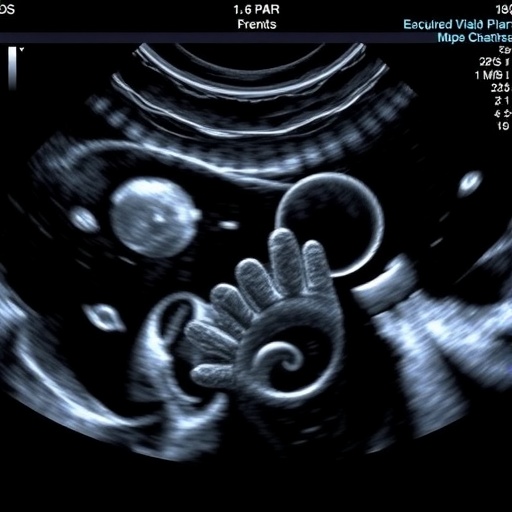
In the intricate and delicate world of neonatal care, the management of extremely preterm infants remains one of the most challenging yet crucial aspects of modern medicine. A recent correction published in Pediatric Research by Aoki, Kamamoto, Ozu, and colleagues has shed new light on a groundbreaking approach using an ultrasound-guided circulatory management protocol designed to significantly impact the prevalence and severity of intraventricular hemorrhage (IVH) in this vulnerable population. This advancement not only promises to redefine clinical protocols but also offers a beacon of hope in reducing one of the leading causes of morbidity and mortality among premature neonates.
The fundamental challenge with extremely preterm infants lies in their underdeveloped organ systems, particularly the brain and cardiovascular system. Intraventricular hemorrhage, a type of bleeding within the brain’s ventricular system, poses a critical threat to these infants, often leading to long-term neurological impairment or fatal outcomes. Traditional monitoring and intervention strategies have shown limited success, primarily due to the difficulty in continuously assessing dynamic changes in cerebral and systemic circulation in these tiny patients. The innovative use of ultrasound guidance in circulatory management represents a quantum leap forward by facilitating real-time, non-invasive monitoring of cerebral perfusion and ventricular dynamics.
Ultrasound, a technology widely employed in various medical disciplines, offers an unparalleled advantage in neonatal intensive care units (NICUs) because of its safety profile and ability to provide immediate, detailed visualization of soft tissues and blood flow. The protocol developed by Aoki and colleagues leverages advanced Doppler ultrasound techniques to continuously monitor the blood flow velocities in cerebral arteries and veins, allowing clinicians to detect early signs of circulatory instability that may precipitate IVH. This capability enables precise and timely adjustments in circulatory management tailored to the infant’s current physiological state, a step beyond conventional static assessments.
The corrected study emphasizes that the protocol does not merely serve as a diagnostic tool but actively guides therapeutic decisions. For example, fluid management, vasopressor usage, and respiratory support settings can be optimized based on ultrasound findings. Such targeted interventions are crucial because excessive fluctuations in blood pressure and volume status are known contributors to the development and progression of IVH. By minimizing these fluctuations and maintaining a more stable cerebral perfusion pressure, infants are better protected from the catastrophic vascular ruptures underlying hemorrhages.
Intriguingly, the research also highlights the differential vulnerability of cerebral vasculature in extremely preterm infants. Their blood vessels, particularly those in the germinal matrix region, lack the structural integrity of more mature vessels, making them susceptible to rupture under stress. Ultrasound imaging enables clinicians to visualize these vulnerable areas in high resolution, potentially identifying infants at greater risk and warranting heightened surveillance or pre-emptive intervention. This represents a personalized medicine approach in neonatal care, tailoring treatment strategies to each infant’s unique cerebral hemodynamics.
One of the significant findings corrected in this publication concerns the protocol’s impact on the incidence rates and severity grades of IVH. Earlier data suggested a reduction in severe IVH cases with the incorporation of ultrasound-guided management, yet the correction elaborates on the nuanced outcomes, including subgroup analyses and the influence of confounding variables. Such rigor in data reanalysis underscores the complexity inherent in clinical trials targeting neonatal populations and reinforces the necessity for ongoing refinement and validation of innovative protocols.
Beyond the immediate clinical implications, this development prompts a reassessment of NICU infrastructure and staff training. Successful implementation of ultrasound-guided circulatory management requires clinicians skilled not only in neonatal intensive care but also in advanced ultrasound techniques and interpretation. Consequently, interdisciplinary collaboration between neonatologists, radiologists, and biomedical engineers is paramount to optimize technology use and ensure patient safety. The corrected paper thus serves as both a call to action and a roadmap for integrating novel imaging modalities into routine care.
Moreover, the broader implications of this approach reach into the sphere of neurodevelopmental outcomes. Since IVH can lead to severe cerebral palsy, cognitive deficits, and sensory impairments, strategies reducing its occurrence or severity hold enormous potential to improve quality of life and reduce long-term healthcare costs. The correction clarifies that while the protocol shows promise, longitudinal studies are needed to confirm that reductions in acute IVH correlate with improved neurodevelopmental trajectories. This highlights the ongoing evolution of neonatal care from survival-centered to outcome-focused paradigms.
Technological innovation has been a cornerstone of progress in NICUs, but the integration of ultrasound-guided circulatory management exemplifies how precision medicine principles can be applied even in the earliest stages of life. The approach represents a shift towards dynamic, individualized monitoring that can predict and prevent adverse events rather than simply react to them. This proactive model may serve as a template for managing other preterm complications such as patent ductus arteriosus or bronchopulmonary dysplasia, expanding its impact beyond IVH.
Considering the high stakes involved, the ethical context of introducing such protocols in vulnerable populations must also be addressed. The correction paper sensitively discusses informed consent processes and risk-benefit analyses inherent to trials involving extremely preterm infants. Balancing the urgency of preventing devastating outcomes with the need for robust evidence generation is a perennial challenge, one that this research navigates with commendable transparency and caution.
The dissemination of these findings into global neonatal practice warrants consideration, particularly in resource-limited settings where access to advanced ultrasound equipment and trained personnel may be constrained. The corrected article suggests that further innovation could make portable, user-friendly devices applicable worldwide, democratizing access to this life-saving technology. Collaborative efforts across countries and institutions could accelerate such dissemination and adaptation, ultimately benefiting a broader infant population.
In conclusion, the corrected study by Aoki et al. profoundly enriches our understanding of how ultrasound-guided circulatory management can mitigate the risk of intraventricular hemorrhage in extremely preterm infants. It marks a pivotal evolution in neonatal care strategies, combining cutting-edge imaging technology with nuanced clinical management to safeguard the fragile brains of our most vulnerable patients. While challenges remain in validation, training, and global application, this work sets a visionary trajectory for improving survival and neurological outcomes among premature neonates worldwide.
As this scientific journey continues, the neonatal community eagerly anticipates further investigations and technological advancements building upon this protocol. The corrected insights reinforce that innovation, rigor, and compassionate care converge in our ongoing quest to rewrite the prognosis for extremely preterm infants, offering them not just a chance to survive but to thrive.
Subject of Research: Ultrasound-guided circulatory management protocol and its impact on intraventricular hemorrhage in extremely preterm infants.
Article Title: Correction: Impact of ultrasound-guided circulatory management protocol on intraventricular hemorrhage in extremely preterm infants.
Article References:
Aoki, H., Kamamoto, T., Ozu, N. et al. Correction: Impact of ultrasound-guided circulatory management protocol on intraventricular hemorrhage in extremely preterm infants. Pediatr Res (2026). https://doi.org/10.1038/s41390-026-04922-8
Image Credits: AI Generated


