


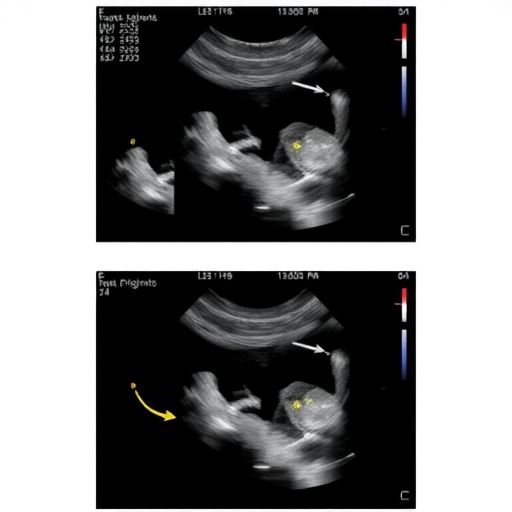
A bedside ultrasound technique is emerging as a potential alternative to repeated X-ray checks for placing nasojejunal feeding tubes in newborns, according to a multicenter real-world study published in Pediatric Research. The investigation found that point-of-care ultrasound, or POCUS, can guide nasojejunal tube placement in neonates while reducing the likelihood of malposition and limiting exposure to ionizing radiation.
Nasojejunal tubes are narrow, flexible catheters advanced through the nose, stomach and pylorus into the jejunum, a section of the small intestine. They are used when direct delivery of nutrition beyond the stomach is needed, including in premature infants, critically ill newborns and babies with severe reflux, impaired gastric emptying or a high risk of aspiration. Because neonatal anatomy is extremely small and delicate, advancing the tube into the intended intestinal position can be technically challenging.
The conventional approach is often “blind” insertion, in which clinicians estimate the tube’s path using measurements from the infant’s nose and body. After placement, radiography is commonly used to determine whether the catheter has reached the jejunum and to exclude dangerous misplacement in the airway or another unintended location. If the tube has stopped in the stomach or curled back on itself, it may need to be repositioned and imaged again, delaying feeding and increasing the infant’s cumulative radiation exposure.
The new study, led by Ouyang X., Ling W. and Shi Z. and conducted across multiple centers, examined the performance of POCUS-guided nasojejunal tube placement in routine neonatal care. Described as a retrospective real-world study, the analysis evaluated clinical experience rather than testing the procedure under a tightly controlled experimental protocol. Its focus was the practical question facing neonatal teams: whether ultrasound can improve first-pass placement and reduce the need for repeated radiographic confirmation.
POCUS uses a small ultrasound probe at the infant’s bedside to generate images from high-frequency sound waves. Unlike X-rays, ultrasound does not use ionizing radiation. During tube placement, clinicians can assess the catheter’s progression through selected anatomical regions, including the neck, chest and upper abdomen, while also examining surrounding structures and the movement of fluids or air associated with the tube. Depending on the protocol and the infant’s anatomy, ultrasound findings can help indicate whether the tube has followed the gastrointestinal route rather than entering the respiratory tract.
The technology does not simply replace anatomical knowledge with an image. Neonatal ultrasound requires specialized training because the tube itself may be difficult to visualize directly, particularly when it is very thin or overlies gas-filled bowel. Operators may therefore rely on indirect signs, dynamic scanning and confirmation at several points along the tube’s expected path. These technical demands make operator experience and standardized imaging protocols important factors in determining how reliably POCUS can be used.
According to the study’s reported conclusions, ultrasound-guided placement was associated with fewer malposition events and lower radiation exposure than the traditional blind insertion strategy followed by radiographic confirmation. Reducing malposition is clinically significant because an incorrectly positioned tube can prevent adequate nutrition, require additional procedures and, in rare cases, create serious respiratory or gastrointestinal risks. Avoiding repeated imaging may also reduce interruptions to care in neonatal intensive care units, where infants are frequently connected to ventilators, monitors and intravenous lines.
The potential benefits extend beyond radiation reduction. Faster confirmation could allow clinicians to begin enteral nutrition sooner, an important consideration for premature and critically ill newborns who depend on carefully timed feeding plans. A successful first placement may also reduce handling, discomfort and stress for infants whose physiological reserves are limited. For medical teams, bedside ultrasound could provide immediate information and reduce reliance on radiology workflow, particularly in settings where imaging resources are limited or transport to an imaging facility is difficult.
The findings do not mean that radiography is no longer necessary in every case. Ultrasound accuracy can be affected by bowel gas, body position, catheter material and the skill of the operator, and a tube’s entire course may not always be visible. Radiographic confirmation may remain appropriate when ultrasound findings are uncertain, when the tube’s final position cannot be confidently established or when institutional safety policies require imaging. The multicenter nature of the study supports the feasibility of POCUS across different clinical environments, but its retrospective design also means that the results should be interpreted as evidence from practice rather than definitive proof of superiority. Further prospective studies will be needed to establish standardized protocols, training requirements and confirmation criteria.
The study nevertheless adds momentum to a broader movement toward radiation-sparing neonatal care. As portable ultrasound devices become smaller and more widely available, POCUS is increasingly being used to assess the lungs, heart, brain, blood vessels and gastrointestinal tract at the bedside. For nasojejunal tube placement, the approach offers a way to combine real-time procedural guidance with rapid clinical decision-making. If hospitals can validate consistent training and quality-control systems, ultrasound-guided insertion could become an important tool for making feeding-tube procedures safer, faster and less invasive for vulnerable newborns.
Cite Scienmag News
Harold Sullivan. (August 5, 2026). Ultrasound-Guided Nasojejunal Tube Placement Reduces Malposition and Radiation in Newborns. Scienmag. https://scienmag.com/ultrasound-guided-nasojejunal-tube-placement-reduces-malposition-and-radiation-in-newborns/
Harold Sullivan. "Ultrasound-Guided Nasojejunal Tube Placement Reduces Malposition and Radiation in Newborns." Scienmag, 5 August 2026, https://scienmag.com/ultrasound-guided-nasojejunal-tube-placement-reduces-malposition-and-radiation-in-newborns/. Accessed 4 September 2026.
Harold Sullivan. "Ultrasound-Guided Nasojejunal Tube Placement Reduces Malposition and Radiation in Newborns." Scienmag. August 5, 2026. https://scienmag.com/ultrasound-guided-nasojejunal-tube-placement-reduces-malposition-and-radiation-in-newborns/


