

Wednesday, July 29, 2026
Science
No Result
View All Result
  • Login
  • HOME
  • SCIENCE NEWS
  • CONTACT US
  • HOME
  • SCIENCE NEWS
  • CONTACT US
No Result
View All Result
Scienmag
No Result
View All Result
Home Science News Medicine

Ultrasensitive Imaging Detects Lung Inflammation in Male Mice With Magnetic Particles

July 28, 2026
in Medicine
Reading Time: 2 mins read
0
Ultrasensitive Imaging Detects Lung Inflammation in Male Mice With Magnetic Particles

Ultrasensitive Imaging Detects Lung Inflammation in Male Mice With Magnetic Particles

65
SHARES
587
VIEWS
Share on FacebookShare on Twitter
ADVERTISEMENT

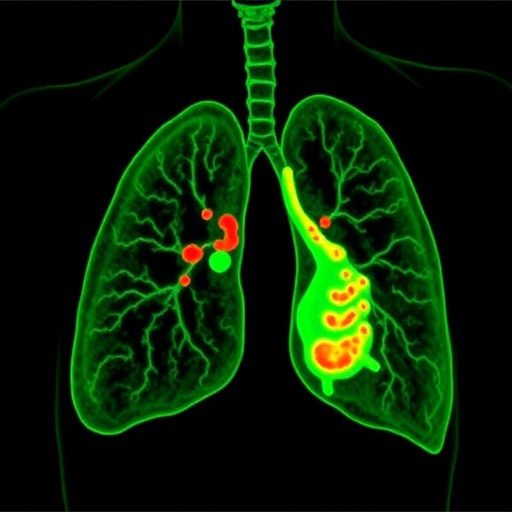
A new study in Nature Communications reports an ultrasensitive way to detect lung inflammation in male mice, using a hybrid imaging strategy that couples immunolabeled magnetic particles with magnetic particle imaging (MPI). The approach is designed to spot inflammatory activity at very low levels, addressing a major challenge for preclinical researchers who need fast, quantitative readouts of disease progression.

The core concept is straightforward but powerful: specially engineered magnetic particles are functionalized with antibodies that recognize inflammatory biomarkers. After administration, the particles accumulate where immune activity is elevated, effectively translating molecular signals from inflamed tissue into a magnetic contrast signal that can be visualized noninvasively.

MPI serves as the readout engine. Unlike conventional imaging modalities that can be limited by background tissue signal, MPI directly detects the magnetic signature of the injected particles. That physical specificity enables high sensitivity and rapid imaging, making it well suited for longitudinal studies in small animals, where repeated measurements are essential.

In the reported work, the researchers focus on lung inflammation in male mice, demonstrating that the immuno-magnetic particles can track inflammatory changes across the respiratory organ. The team emphasizes that the signal correlates with disease-related biological activity, allowing inflammation to be monitored rather than inferred indirectly.

Technically, the study refines both the targeting chemistry and the imaging workflow. Particle–biomarker binding is optimized to ensure selective accumulation in inflamed regions, while MPI acquisition parameters are tuned to maximize contrast and minimize noise. Together, these choices help the system reach detection thresholds that are described as “ultrasensitive.”

Importantly for translational thinking, the method offers a path toward more quantitative immune monitoring. If similar targeting and biocompatibility strategies can be adapted for other biomarkers and disease settings, immuno-MPI could become a versatile tool for testing anti-inflammatory therapies and stratifying disease severity in preclinical models.

The authors also position immuno-MPI as a platform technology. By swapping antibody components, the same imaging framework could be repurposed to interrogate different aspects of inflammation, including distinct immune pathways and stages of disease.

Overall, the results suggest that immuno-magnetic particle imaging can deliver a sensitive, mechanism-linked view of lung inflammation in vivo, potentially accelerating how inflammation is measured in animal studies and how early treatment effects are evaluated in preclinical trials.

Subject of Research: Lung inflammation detection in male mice; immuno-magnetic particle imaging (MPI)

Article Title: Ultrasensitive detection of lung inflammation in male mice using immuno-magnetic particle imaging

Article References: Pedron, S., Martinez de Lizarrondo, S., D’Arco, L. et al. Ultrasensitive detection of lung inflammation in male mice using immuno-magnetic particle imaging. Nat Commun (2026). https://doi.org/10.1038/s41467-026-75724-z

DOI: 10.1038/s41467-026-75724-z

Keywords: Ultrasensitive detection; lung inflammation; male mice; immuno-magnetic particle imaging; magnetic particle imaging; MPI; immunolabeled magnetic particles

Tags: hybrid imaging strategiesimmunolabeled magnetic nanoparticlesinflammatory biomarker detectionlongitudinal imaging of respiratory diseaseslung inflammation detectionmagnetic contrast agents for inflammationmagnetic particle imaging in preclinical researchnoninvasive lung disease monitoringquantitative disease progression assessmentrapid imaging of immune activitytargeted molecular imaging in miceultrasensitive imaging techniques
Share26Tweet16
Previous Post

AI Model Predicts Necrotizing Enterocolitis Diagnosis and Surgical Outcomes

Next Post

Mafic and Ultramafic Rocks Could Supply Reactive Phosphorus for Life Origins

Related Posts

Integrated breastfeeding peer counseling improves equity in hospital lactation support
Medicine

Integrated breastfeeding peer counseling improves equity in hospital lactation support

July 29, 2026
American Society for Nutrition Names Locations for NUTRITION 2027 and 2028
Medicine

American Society for Nutrition Names Locations for NUTRITION 2027 and 2028

July 28, 2026
miR-195-5p regulates apoptosis in colorectal cancer via XIAP BCL2 Survivin network
Medicine

miR-195-5p regulates apoptosis in colorectal cancer via XIAP BCL2 Survivin network

July 28, 2026
Study Shows Lung Ultrasound Can Guide PEEP Adjustments in Newborns
Medicine

Study Shows Lung Ultrasound Can Guide PEEP Adjustments in Newborns

July 28, 2026
Justine Varieur Turco Appointed CEO and Executive Director of Society of Thoracic Surgeons
Medicine

Justine Varieur Turco Appointed CEO and Executive Director of Society of Thoracic Surgeons

July 28, 2026
Fathers’ Ultra-Processed Food Intake May Affect Babies’ Birth Weight and Size
Medicine

Fathers’ Ultra-Processed Food Intake May Affect Babies’ Birth Weight and Size

July 28, 2026
Next Post
Mafic and Ultramafic Rocks Could Supply Reactive Phosphorus for Life Origins

Mafic and Ultramafic Rocks Could Supply Reactive Phosphorus for Life Origins

  • Mothers who receive childcare support from maternal grandparents show more

    Mothers who receive childcare support from maternal grandparents show more parental warmth, finds NTU Singapore study

    27656 shares
    Share 11059 Tweet 6912
  • University of Seville Breaks 120-Year-Old Mystery, Revises a Key Einstein Concept

    1061 shares
    Share 424 Tweet 265
  • Bee body mass, pathogens and local climate influence heat tolerance

    682 shares
    Share 273 Tweet 171
  • Researchers record first-ever images and data of a shark experiencing a boat strike

    546 shares
    Share 218 Tweet 137
  • Groundbreaking Clinical Trial Reveals Lubiprostone Enhances Kidney Function

    531 shares
    Share 212 Tweet 133
Science

Embark on a thrilling journey of discovery with Scienmag.com—your ultimate source for cutting-edge breakthroughs. Immerse yourself in a world where curiosity knows no limits and tomorrow’s possibilities become today’s reality!

RECENT NEWS

  • Ancient Human Parents Faced Challenges Raising Children, New Evidence Shows
  • Integrated breastfeeding peer counseling improves equity in hospital lactation support
  • Mid-Holocene Thar Desert hydroclimate patterns reveal seasonal shifts in India
  • Better Consumer Choices Could Improve Next-Gen Queueing Platforms

Categories

  • Agriculture
  • Anthropology
  • Archaeology
  • Athmospheric
  • Biology
  • Biotechnology
  • Blog
  • Bussines
  • Cancer
  • Chemistry
  • Climate
  • Earth Science
  • Editorial Policy
  • Marine
  • Mathematics
  • Medicine
  • Pediatry
  • Policy
  • Psychology & Psychiatry
  • Science Education
  • Social Science
  • Space
  • Technology and Engineering

Subscribe to Blog via Email

Enter your email address to subscribe to this blog and receive notifications of new posts by email.

Join 5,147 other subscribers

© 2025 Scienmag - Science Magazine

Welcome Back!

Login to your account below

Forgotten Password?

Retrieve your password

Please enter your username or email address to reset your password.

Log In
No Result
View All Result
  • HOME
  • SCIENCE NEWS
  • CONTACT US

© 2025 Scienmag - Science Magazine

Discover more from Science

Subscribe now to keep reading and get access to the full archive.

Continue reading
