


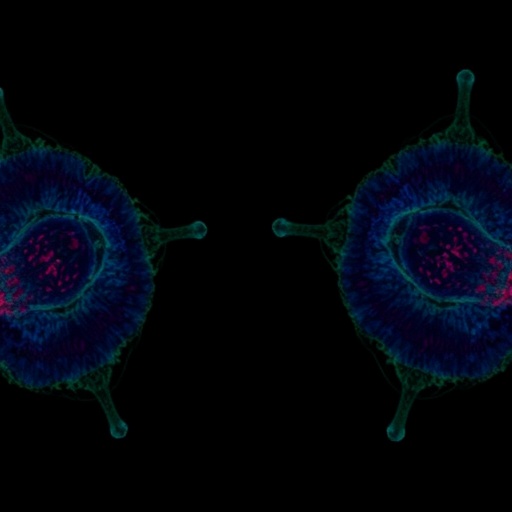
In recent years, the field of oncology has witnessed significant advancements, particularly in developing therapeutic strategies to mitigate the adverse effects of chemotherapeutic agents. Among these agents, cisplatin has been a cornerstone in the treatment of various cancers, renowned for its efficacy. However, its association with severe side effects, notably ovarian damage, has sparked extensive research into protective mechanisms and interventions. A groundbreaking study by Zhao et al. sheds light on the potential of Ulinastatin, suggesting that this agent may safeguard against cisplatin-induced ovarian injury through the Nrf2/Keap1 signaling pathway.
Cisplatin works by forming DNA cross-links leading to apoptosis in rapidly dividing cancer cells, a mechanism that underpins its anticancer properties. However, the collateral damage inflicted on non-cancerous tissue, particularly in reproductive organs, raises significant concerns. Ovarian tissue is particularly vulnerable during chemotherapy, and this susceptibility can lead to long-term reproductive issues and hormonal imbalances. The search for protective agents is, therefore, a pressing need within oncology.
Ulinastatin, a human serum trypsin inhibitor, has garnered interest because of its multifunctional properties, including anti-inflammatory and antioxidant effects. Zhao and colleagues hypothesized that Ulinastatin could leverage these properties to mitigate ovarian damage caused by cisplatin. This hypothesis served as the foundation for their research and subsequent investigations into the underlying mechanisms of action.
The Nrf2/Keap1 signaling pathway plays a pivotal role in cellular defense against oxidative stress. Under normal conditions, Nrf2 is kept in the cytoplasm by Keap1, which marks it for degradation. However, in response to cellular stress, Nrf2 dissociates from Keap1, translocates to the nucleus, and initiates the transcription of various antioxidant genes. The potential for Ulinastatin to activate this pathway offers a plausible explanation for its protective effects against chemotherapy-induced damage.
Zhao et al. meticulously designed their study to assess the protective efficacy of Ulinastatin in a preclinical model. The experimental setup involved administering cisplatin to induce ovarian toxicity, followed by treatment with Ulinastatin. The researchers conducted a series of assessments to evaluate ovarian function, structural integrity, and markers of oxidative stress. Their results were compelling and indicated a considerable reduction in markers of ovarian damage in the Ulinastatin-treated group.
Histological examination further revealed that Ulinastatin treatment preserved ovarian architecture, with a higher number of healthy follicles observed compared to the cisplatin-only group. These findings are significant, as they demonstrate that Ulinastatin not only protects against immediate cellular damage but also sustains the long-term viability of ovarian reserve, which is crucial for fertility.
Moreover, the study articulated the mechanisms through which Ulinastatin exerts its protective effects. By enhancing the expression of Nrf2 and its downstream targets, Ulinastatin effectively shifts the cellular environment towards a more resilient state, equipped to handle the oxidative stress associated with cisplatin treatment. This information holds vital implications for the future of cancer therapies, particularly for female patients facing reproductive challenges post-chemotherapy.
The implications of this research extend beyond mere ovarian protection. By promoting the understanding and potential use of Ulinastatin, Zhao et al. are contributing to a broader narrative of personalized medicine in oncology. As treatments become increasingly targeted and tailored, such protective strategies may significantly enhance the quality of life for cancer survivors, particularly women who face the dual battle of fighting cancer and preserving reproductive health.
In the realm of oncology, the development of supportive therapies that accompany traditional treatments can make substantial differences in patient outcomes. The study’s findings emphasize the importance of considering not only the efficacy of cancer treatments but also their safety profiles and impacts on patient quality of life. This research exemplifies a forward-thinking approach to cancer care, integrating protective strategies into therapeutic protocols.
As further research unfolds, the potential to translate these findings into clinical practice presents an exciting avenue for intervention. The prospect of using Ulinastatin in conjunction with cisplatin awaits validation through clinical trials, where its efficacy and safety can be rigorously tested in human subjects. Such advancements could pave the way for improved treatment regimens that support both cancer control and reproductive health.
In conclusion, the study by Zhao et al. represents a pivotal step toward understanding and mitigating the adverse effects of cisplatin on ovarian health. The evidence supporting Ulinastatin’s protective properties through the Nrf2/Keap1 pathway presents valuable insights for future therapeutic strategies in oncology. As the medical community continues to evolve its approach to cancer treatment, the integration of protective agents such as Ulinastatin could revolutionize the landscape, ensuring that the fight against cancer does not come at the cost of reproductive vitality for women.
This research not only highlights significant scientific advancements but also echoes a growing acknowledgment within the medical field: that the journey through cancer treatment should factor in the holistic needs of patients. Ulinastatin’s promise is just one of the many innovative strategies being developed to safeguard the health of cancer survivors, reflecting a future where oncology care is as compassionate as it is effective.
By forging connections between groundbreaking research and practical applications, Zhao et al. inspire hope for countless patients navigating the complexities of cancer treatment. Their findings mark an essential contribution to the ongoing narrative of advancing cancer therapies that prioritize both survival and quality of life.
Zhao, L., Wu, Y., Zhang, X. et al. Ulinastatin protects against cisplatin-induced ovarian damage via Nrf2/Keap1 pathway.
J Ovarian Res 18, 207 (2025). https://doi.org/10.1186/s13048-025-01760-w
Cite Scienmag News
Nathaniel Bowman. (September 30, 2025). Ulinastatin Shields Ovaries from Cisplatin Damage via Nrf2. Scienmag. https://scienmag.com/ulinastatin-shields-ovaries-from-cisplatin-damage-via-nrf2/
Nathaniel Bowman. "Ulinastatin Shields Ovaries from Cisplatin Damage via Nrf2." Scienmag, 30 September 2025, https://scienmag.com/ulinastatin-shields-ovaries-from-cisplatin-damage-via-nrf2/. Accessed 9 September 2026.
Nathaniel Bowman. "Ulinastatin Shields Ovaries from Cisplatin Damage via Nrf2." Scienmag. September 30, 2025. https://scienmag.com/ulinastatin-shields-ovaries-from-cisplatin-damage-via-nrf2/


