


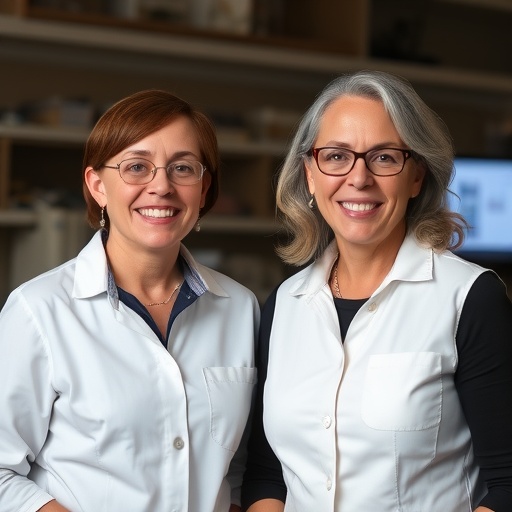
In a groundbreaking achievement, two of the three recipients of the second-ever Sony Women in Technology Award, which honors extraordinary women driving advancements in science and technology, hail from the University of Michigan’s College of Engineering. This distinguished award, accompanied by a $250,000 research grant, is designed to propel the recipients’ innovative endeavors, spotlighting female leaders who are transforming their fields through persevering scientific inquiry and creative breakthroughs.
Assistant Professor Xiwen Gong of the Department of Chemical Engineering and Li Ka Shing Professor Zhen Xu from the Biomedical Engineering Department represent a formidable duo whose research spans revolutionary technologies with profound medical and technological implications. Gong specializes in optoelectronics—devices that generate or detect light—and the development of electrically conductive materials critical for next-generation wearable sensors and implantable medical devices. Meanwhile, Xu is renowned for pioneering histotripsy, a non-invasive cancer treatment modality that harnesses the power of targeted sound waves to selectively obliterate tumor cells without the adverse side effects commonly associated with chemotherapy and radiation.
Histotripsy marks a paradigm shift in oncological therapeutics. Through the precise focusing of ultrasound pulses on micro- and nanoscale gas pockets within malignant tissues, mechanical cavitation occurs. This phenomenon generates microbubbles which rapidly expand and collapse, inducing localized cellular destruction. Beyond direct tumor ablation, exciting evidence suggests this approach primes the immune system to mount an effective systemic response, potentially eliminating residual cancerous cells distant from the initial site of treatment. Xu’s dedicated research is pushing histotripsy towards broader clinical applications, notably extending to cancer types previously untreatable with conventional methods and even vascular-related disorders like blood clots contributing to stroke and cardiovascular pathologies.
The genesis of histotripsy emerged serendipitously during Xu’s doctoral research in 2002. While investigating therapies for congenital heart disease in porcine heart models, she encountered a technical challenge: ultrasound pulses created acoustic noise intolerable to laboratory colleagues. Innovatively, Xu engineered ultrasound bursts at a frequency of 20 kilohertz—beyond the range of typical human hearing—producing potent microsecond pulses. These pulses unexpectedly drilled microscopic perforations in cardiac tissues, triggering a decade-long pursuit to decode and harness this effect. Despite initial skepticism from peers who deemed histotripsy unfeasible, Xu’s persistence ultimately transformed this discovery into a promising clinical technology, exemplifying the power of resilience against scientific doubt.
Complementing Xu’s biomedical marvels, Xiwen Gong has made notable strides in optoelectronic materials science, notably extending the operational longevity of perovskite semiconductors. These materials hold significant promise as cost-effective alternatives to traditional silicon in photovoltaic cells, and Gong’s research advances could accelerate the commercial viability of solar energy technologies. Additionally, Gong has pioneered flexible light-emitting diodes (LEDs) based on nanoscale semiconductor quantum dots. These ultrathin, pliable LEDs open pathways for innovative biomedical applications, including wearable biosensors such as pulse oximetry patches capable of seamless physiological data monitoring.
A particularly transformative aspect of Gong’s work focuses on creating solid-state conductive gels tailored for neurostimulation applications. Current transcranial electrical stimulation treatments, explored for alleviating symptoms in neurodegenerative disorders like Parkinson’s and Alzheimer’s disease, rely on liquid conductive media that must be manually applied in clinical settings. These gels tend to be messy, leave residues, and require cumbersome assembly, limiting their usability in home environments. Gong’s solution—a solid gel with adhesive yet soft consistency—can penetrate through hair, conform to the contours of the scalp, and deliver electrical currents precisely where needed. This innovation promises to democratize neurostimulation therapy, making it more accessible, user-friendly, and affordable for patients outside of hospital settings.
Research into the conductive gel’s capabilities has already demonstrated its effectiveness in detecting subtle physiological signals such as heartbeats, affirming its high fidelity as a bioelectronic interface. Future clinical trials are planned in collaboration with Benjamin Hampstead, a leading neurologist specializing in cognitive disorders, to evaluate the gel’s therapeutic potential for Alzheimer’s patients. If successful, this technology could represent a quantum leap forward in non-invasive brain therapies, fostering greater independence and quality of life for millions affected by chronic neurological diseases.
The Sony Women in Technology Award offers more than financial backing: it provides international recognition from an industry powerhouse and one of the world’s most respected scientific journals. This endorsement not only amplifies Xu and Gong’s voices in the global scientific community but also exemplifies the critical role women continue to play in driving forward the frontiers of science and engineering.
Xu’s recognition reached another milestone recently when she was named among Time Magazine’s 100 Most Influential Health Leaders—a testament to her leadership and impact within the medical sciences. Gong, too, garnered significant distinction as a 2026 Gilbreth Lecturer, an honor bestowed by the prestigious National Academy of Engineering to honor early-career scientific excellence.
Both researchers maintain multifaceted academic roles. Xu holds additional professorships in radiology and neurosurgery at Michigan Medicine, reflecting the interdisciplinary nature of her work that bridges engineering with clinical practice. Gong is affiliated with multiple departments including materials science and engineering, electrical and computer engineering, macromolecular science and engineering, and applied physics, underscoring her comprehensive expertise that spans chemistry, physics, and engineering.
Their stories are powerful narratives of perseverance, innovation, and breaking gender norms in STEM fields. Gong recalls encounters with gender stereotypes in her youth but emphasizes determination and commitment in overcoming barriers, underscoring the importance of fostering diverse, inclusive support systems that empower all aspiring scientists—regardless of gender—to thrive.
Collectively, their groundbreaking work not only advances technology and medicine but also inspires the next generation of women engineers and scientists by demonstrating that resilience, creativity, and vision are the bedrocks of transformative scientific progress.
News Publication Date: Not specified
Web References:
– https://che.engin.umich.edu/people/gong-xiwen/
– https://bme.umich.edu/people/xu-zhen/
– https://news.engin.umich.edu/2026/02/u-ms-zhen-xu-co-inventor-of-histotripsy-named-one-of-times-100-most-influential-health-leaders/
– https://che.engin.umich.edu/2025/12/19/xiwen-gong-selected-as-gilbreth-lecturer-for-the-armstrong-endowment-for-young-engineers/
– https://www.michiganmedicine.org/health-lab/histotripsy-stimulates-immune-system-attack-cancer-cells-outside-liver
References:
– Gong et al., “Extending the Lifetime of Perovskite Semiconductors,” Journal of the American Chemical Society, DOI: 10.1021/jacs.5c15955
– Gong et al., “Flexible LEDs Based on Semiconductor Nanocrystals,” Nature Photonics, DOI: 10.1038/s41566-025-01716-y
– Gong et al., “Wearable and Implantable Biosensors,” ACS Applied Electronic Materials, DOI: 10.1021/acsaelm.2c01791
– Clinical Neurophysiology Reviews, “Noninvasive Brain Stimulation for Treatment of Neurological Disorders,” PMC6262991
Cite Scienmag News
Nathaniel Bowman. (February 19, 2026). Two Women Engineers Celebrated by Sony and Nature for Breakthroughs in Medical and Materials Innovation. Scienmag. https://scienmag.com/two-women-engineers-celebrated-by-sony-and-nature-for-breakthroughs-in-medical-and-materials-innovation/
Nathaniel Bowman. "Two Women Engineers Celebrated by Sony and Nature for Breakthroughs in Medical and Materials Innovation." Scienmag, 19 February 2026, https://scienmag.com/two-women-engineers-celebrated-by-sony-and-nature-for-breakthroughs-in-medical-and-materials-innovation/. Accessed 5 September 2026.
Nathaniel Bowman. "Two Women Engineers Celebrated by Sony and Nature for Breakthroughs in Medical and Materials Innovation." Scienmag. February 19, 2026. https://scienmag.com/two-women-engineers-celebrated-by-sony-and-nature-for-breakthroughs-in-medical-and-materials-innovation/


