Wednesday, October 21, 2026
Science
No Result
View All Result
  • Login
  • HOME
  • SCIENCE NEWS
  • CONTACT US
  • HOME
  • SCIENCE NEWS
  • CONTACT US
No Result
View All Result
Scienmag
No Result
View All Result
Home Science News Psychology & Psychiatry

Turkish Intuitive Eating Scale-3 shows reliable, valid performance in Ankara adults

October 21, 2026
in Psychology & Psychiatry
Glenn Wilkins
By Glenn Wilkins Scienmag Editorial Profile - Clinical Psychology
Reading Time: 2 mins read
0
Turkish Intuitive Eating Scale-3 shows reliable, valid performance in Ankara adults

Turkish Intuitive Eating Scale-3 shows reliable, valid performance in Ankara adults

65
SHARES
587
VIEWS
Share on FacebookShare on Twitter
ADVERTISEMENT

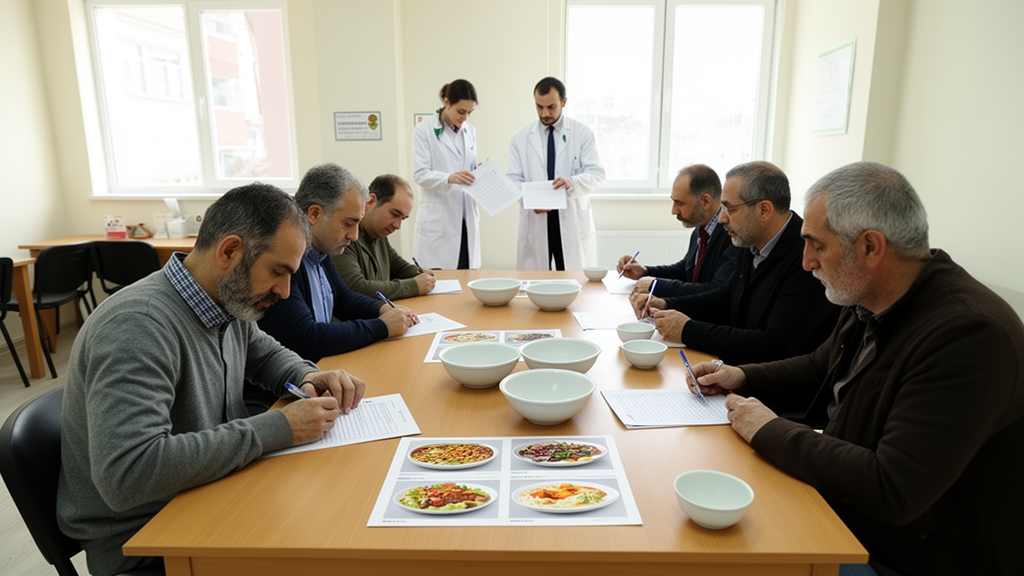
A Turkish adaptation of the 12-item Intuitive Eating Scale–3 showed acceptable to high internal consistency, excellent test–retest reliability and satisfactory fit to the original four-factor model in an online adult sample from Ankara, Türkiye. Researchers recruited 466 participants whose mean age was 28.24 years, with a standard deviation of 10.66 years, and 68.5% identified as female. The methodological study evaluated the translated scale’s factor structure, internal consistency, repeatability and relationship with the earlier Intuitive Eating Scale–2.

Data were collected through a web-based questionnaire containing sociodemographic information, the Turkish IES–3 and the IES–2. The research team adapted the questionnaire using a standardized forward–backward translation protocol and an expert-panel evaluation. Its statistical analyses were designed for the questionnaire’s ordinal data and the observed violation of multivariate normality. Exploratory factor analysis was performed through minimum rank factor analysis, while confirmatory factor analysis used robust maximum likelihood estimation with the Yuan–Bentler correction. The work assessed measurement properties rather than whether intuitive eating affects health or clinical outcomes.

The exploratory analysis supported a four-factor structure consistent with the original instrument, with the factors jointly explaining 92.05% of the common variance. Confirmatory factor analysis provided further support for this structure. The model’s chi-square ratio was 2.310, its comparative fit index was 0.959 and its Tucker–Lewis index was 0.944. The root mean square error of approximation and standardized root mean square residual were both 0.053. The researchers described these results as indicating a satisfactory model fit, providing evidence that the adapted questionnaire broadly reproduced the four-factor organization of the original scale in the sample studied.

Reliability results were also favorable. Cronbach’s alpha values for the component scales ranged from 0.63 to 0.85, while McDonald’s omega values ranged from 0.69 to 0.85, corresponding to acceptable-to-high internal consistency. Test–retest intraclass correlation coefficients ranged from 0.85 to 0.94, which the study characterized as excellent repeatability. These findings show that scores were internally consistent and stable when participants completed the instrument again, although the results do not establish that the questionnaire is equally reliable outside the population and recruitment setting examined.

Concurrent and construct-related validity were examined by comparing IES–3 scores with the IES–2. The two instruments were positively correlated at Spearman’s rho of 0.716, with p less than 0.001. In multiple regression analysis, IES–2 subscales explained 62.1% of the variance in IES–3 scores. These are observed associations between the measures, not evidence that either scale causes changes in eating behavior. Overall, the authors found that the Turkish IES–3 had acceptable validity and reliability within the studied adult sample and described it as a brief practical tool for researchers and clinicians assessing intuitive eating behaviors. They also emphasized that the evidence came from adults recruited online in Ankara, meaning that validation in more diverse national populations remains necessary.

Subject of Research: Psychometric validation of the Turkish Intuitive Eating Scale–3 in Ankara adults

Article Title: Cross-cultural adaptation and psychometric validation of the Turkish intuitive eating scale-3: a methodological study

Article References: Mengi Çelik, Ö., Akçakaya, S. D., Güler, Ü., Türkmen, V., Kaya, S., & Akansel, E. İ. (2026). Cross-cultural adaptation and psychometric validation of the Turkish intuitive eating scale-3: a methodological study. BMC Psychology. https://doi.org/10.1186/s40359-026-05792-9

Image Credits: AI Generated

DOI: 10.1186/s40359-026-05792-9

Keywords: intuitive eating, psychometric validation, Turkish adaptation, scale reliability, factor analysis, concurrent validity, test–retest reliability, adults, Türkiye, questionnaire, Cross-cultural, adaptation

Cite Scienmag News

Glenn Wilkins. (October 21, 2026). Turkish Intuitive Eating Scale-3 shows reliable, valid performance in Ankara adults. Scienmag. https://scienmag.com/turkish-intuitive-eating-scale-3-shows-reliable-valid-performance-in-ankara-adults/


Glenn Wilkins. "Turkish Intuitive Eating Scale-3 shows reliable, valid performance in Ankara adults." Scienmag, 21 October 2026, https://scienmag.com/turkish-intuitive-eating-scale-3-shows-reliable-valid-performance-in-ankara-adults/. Accessed 21 October 2026.

Glenn Wilkins. "Turkish Intuitive Eating Scale-3 shows reliable, valid performance in Ankara adults." Scienmag. October 21, 2026. https://scienmag.com/turkish-intuitive-eating-scale-3-shows-reliable-valid-performance-in-ankara-adults/

Tags: adaptationadult eating behavior assessment in TurkeyAdultsconcurrent validitycross-culturalcross-cultural validation of intuitive eating scalesfactor analysisfactor structure of IES–3 in Ankara adultsimpact of intuitive eating measurement onintuitive eatingIntuitive Eating Scale–3 validation in Turkeymeasurement invariance of IES–3 across culturesonline survey of eating behaviors in Turkeypsychometric properties of Turkish intuitive eating scalepsychometric validationquestionnairereliability of Turkish intuitive eating scalescale reliabilityscale reliability and validity in Turkish populationtest-retest reliabilitytranslation and validation of health measurement toolsTurkish adaptationTurkish adaptation of intuitive eating assessmentTürkiye
Share26Tweet16
Previous Post

Type 2 diabetes adults favor larger, personal physical activity incentives

Next Post

Network and cell study links carboplatin to four melanoma targets

Related Posts

NCRB analysis finds India’s child and adolescent suicide burden rising
Psychology & Psychiatry

NCRB analysis finds India’s child and adolescent suicide burden rising

October 21, 2026
Stress, resilience linked to burnout dimensions in Chinese residency faculty survey
Psychology & Psychiatry

Stress, resilience linked to burnout dimensions in Chinese residency faculty survey

October 20, 2026
Review: Brain models explain 10–40% of cognitive variation
Psychology & Psychiatry

Review: Brain models explain 10–40% of cognitive variation

October 20, 2026
Shared variance across FrACT visual tasks: Robust positive associations but inconclusive latent structure
Psychology & Psychiatry

Shared variance across FrACT visual tasks: Robust positive associations but inconclusive latent structure

October 20, 2026
Sleep Quality Shapes How Personality Links to Teen Depression, Study of 20,000 Chinese Students Finds
Psychology & Psychiatry

Sleep quality modifies associations between four personality traits and depressive symptoms in Chinese adolescents, cross-sectional survey finds

October 20, 2026
Sexual Minority Men in the US Report Double the Mental Distress Days of Heterosexual Men
Psychology & Psychiatry

Population-based study finds health behaviors associated with quality of life among U.S. gay and bisexual men

October 20, 2026
Next Post
Network and cell study links carboplatin to four melanoma targets

Network and cell study links carboplatin to four melanoma targets

  • Mothers who receive childcare support from maternal grandparents show more optimized

    Mothers who receive childcare support from maternal grandparents show more parental warmth, finds NTU Singapore study

    27656 shares
    Share 11059 Tweet 6912
  • University of Seville Breaks 120-Year-Old Mystery, Revises a Key Einstein Concept

    1061 shares
    Share 424 Tweet 265
  • Bee body mass, pathogens and local climate influence heat tolerance

    682 shares
    Share 273 Tweet 171
  • Researchers record first-ever images and data of a shark experiencing a boat strike

    546 shares
    Share 218 Tweet 137
  • Groundbreaking Clinical Trial Reveals Lubiprostone Enhances Kidney Function

    531 shares
    Share 212 Tweet 133
Science

Embark on a thrilling journey of discovery with Scienmag.com—your ultimate source for cutting-edge breakthroughs. Immerse yourself in a world where curiosity knows no limits and tomorrow’s possibilities become today’s reality!

RECENT NEWS

  • Mouse study identifies PLD1 target in non-small cell lung cancer
  • Non-invasive adjunctive diagnostic models incorporating high-frequency ultrasound and shear wave elastography for pediatric Duchenne muscular dystrophy
  • Laboratory HPT study links kinks and dislocations to alloy strengthening
  • HIV prevalence fell among Tanzanian children with tuberculosis, surveillance analysis shows

Categories

  • Agriculture
  • Anthropology
  • Archaeology
  • Athmospheric
  • Biology
  • Biotechnology
  • Blog
  • Bussines
  • Cancer
  • Chemistry
  • Climate
  • Earth Science
  • Editorial Policy
  • Marine
  • Mathematics
  • Medicine
  • Pediatry
  • Policy
  • Psychology & Psychiatry
  • Science Education
  • Science News
  • Social Science
  • Space
  • Technology and Engineering

Subscribe to Blog via Email

Enter your email address to subscribe to this blog and receive notifications of new posts by email.

Join 5,150 other subscribers

© 2025 Scienmag - Science Magazine

Welcome Back!

Login to your account below

Forgotten Password?

Retrieve your password

Please enter your username or email address to reset your password.

Log In
No Result
View All Result
  • HOME
  • SCIENCE NEWS
  • CONTACT US

© 2025 Scienmag - Science Magazine

Discover more from Science

Subscribe now to keep reading and get access to the full archive.

Continue reading